
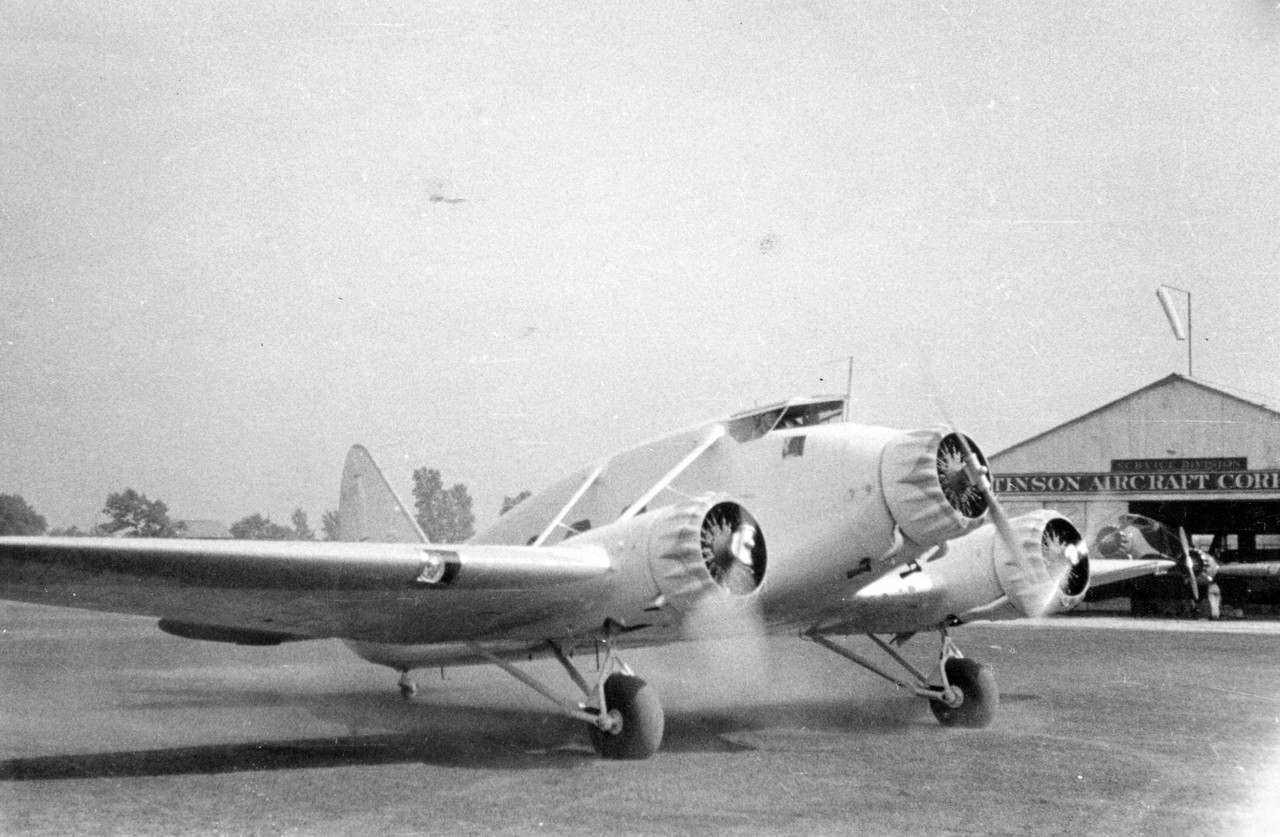
Commercial Service
The SM-6000 filled a crucial gap in American aviation during the economic hardships of the early 1930s. While competitors like Ford's Tri-Motor sold for $65,000, Stinson aggressively priced their airliner at $23,000, later reducing it to as low as $18,000 to attract cash-strapped startup airlines. This pricing strategy made commercial aviation accessible to smaller operators during the Depression.
Major airlines operating the SM-6000 included American Airways (later American Airlines), Century Airlines, Chicago and Southern Airlines, Chesapeake Airways, Pennsylvania Central Airlines, Delta Airlines, and Marquette Airlines. The aircraft proved particularly valuable for operators requiring short-field performance, with takeoff runs of just 700 feet and landing distances of 400 feet. International markets also embraced the design, with two Model A variants rebuilt as twins for Australian service and five second-hand Model As exported to India.
The Manufacturer
Stinson Aircraft Corporation operated primarily during the 1920s and 1930s from their factory in Wayne, Michigan. The company received crucial financial backing from E.L. Cord, who invested capital during the firm's economic challenges and helped refine the original Corman 3000 prototype into the production SM-6000. After company founder Eddie Stinson's death in 1932, the corporation continued briefly before the broader consolidations that swept aviation manufacturing during the Depression era. Stinson Aircraft Corporation is no longer in business today.
Design and Development
Stinson engineers transformed the Corman 6000 prototype into a practical commercial transport focused on safety, affordability, and operational flexibility. The design emphasized engine-out redundancy crucial for passenger safety, low operating costs for Depression-era airlines, and sufficient capacity within the horsepower limitations of 1920s-1930s technology that favored trimotor configurations.
The SM-6000 featured robust welded steel-tube construction with fabric covering and an aluminum-skinned cockpit. Its high-wing braced monoplane configuration provided excellent short-field characteristics. Standard equipment included inertia starters, though electric options became available later. The aircraft offered optional dual controls for two-pilot operations, appealing to airlines implementing crew standardization.
Engine and Performance
Three Lycoming R-680 nine-cylinder radial engines powered the basic SM-6000, each producing 215 horsepower. The later Model U variant upgraded to Lycoming R-680-BA engines rated at 240 horsepower each. These powerplants provided sufficient redundancy for safe flight on two engines - the Model U maintained a 7,000-foot ceiling when fully loaded even with one engine inoperative.
Cruise performance reached 115 mph in standard configuration, increasing to 122-123 mph with optional engine cowlings and wheel fairings. Range extended to 345 miles, while approach speeds remained manageable at 60 mph. The trimotor configuration, while less efficient than contemporary twin-engine designs, offered psychological comfort to passengers and regulatory approval advantages during aviation's early commercial period.
Production Variants
Production began with the SM-6000-A in 1930, followed by the SM-6000-B in 1931, and culminated with the Model U in 1932. The Model U received certification on May 12, 1932, and incorporated significant improvements including the higher-powered engines and distinctive stub wings spanning 14 feet 3 inches for engine and landing gear mounting. Total wingspan increased to 66 feet 2 inches on the Model U compared to the 60-foot span of earlier variants.
At least 23 Model U trimotors were manufactured, with approximately two dozen total aircraft delivered across all variants. Production remained limited due to the Great Depression's economic impact and increasing competition from emerging twin-engine metal airliners that offered superior performance and efficiency.
Military Service
The SM-6000 saw minimal military application. One SM-6000-A bearing serial number 42-79547 was impressed into U.S. military service as the C-91 designation in 1942, though specific operational details remain undocumented. No evidence exists of broader wartime service or combat operations during World War II or other major conflicts.
Legacy and Preservation
The SM-6000's operational career proved brief but significant as an affordable bridge between early wood-and-fabric designs and the modern metal twins that would dominate airline service. By 1933, advanced aircraft like the Boeing 247 and Douglas DC-1 had rendered the trimotor concept obsolete for major airline operations.
Several examples survive in museum collections today. The Golden Wings Flying Museum displays a 1931 SM-6000-B (registration NC-11153) in American Airlines livery from its 1932 service period. Another SM-6000-B (NC10810, nicknamed "Model T") built in April 1931 is preserved, while the EAA formerly operated a 1931 trimotor (N11170/NC11170) for passenger rides at Oshkosh airshows. The number of airworthy examples remaining in current operation is not definitively documented.