
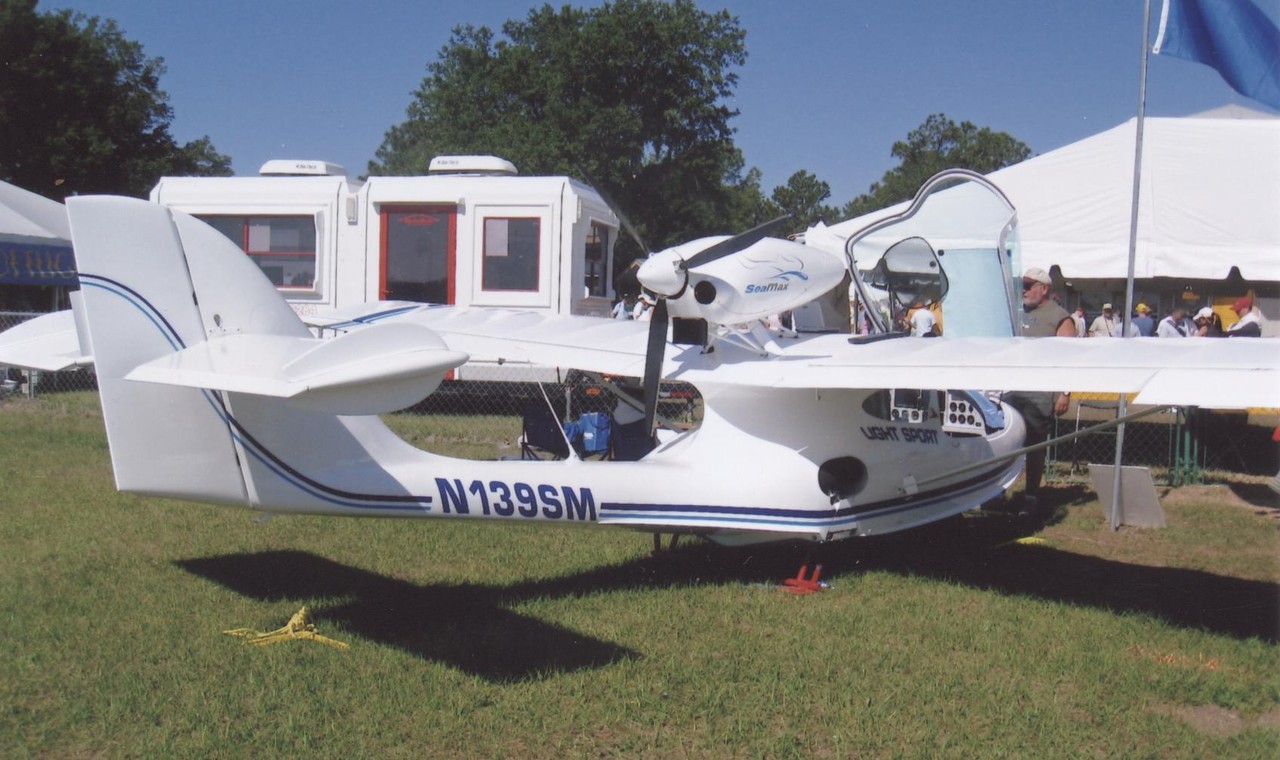
Market Dominance in Amphibious Light-Sport Aviation
The SeaMax M-22 emerged as one of the rare factory-built options in the specialized amphibious light-sport aircraft market, filling a crucial gap between expensive traditional seaplanes and kit-built alternatives. Since entering production in 2001, the aircraft has maintained steady manufacturing for more than 23 years, demonstrating sustained market demand in a niche aviation segment where few manufacturers have achieved long-term success.
The Brazilian Manufacturer
Seamax Construções Aeronáuticas, operating under the trade name AIRMAX in international markets, established itself as a specialist in composite aircraft construction with over 30 years of experience in seaplane development. The São Paulo-based company concentrated exclusively on amphibious aircraft, allowing focused expertise that translated into practical design solutions for water operations. Unlike larger manufacturers who produce amphibians as secondary products, Seamax built its entire reputation on understanding the unique requirements of pilots operating from both water and land surfaces.
Design Innovation and Leadership
Miguel Rosário, serving as both lead designer and Chief Operating Officer, guided the M-22's development from its 1999 design phase through continuous improvements spanning two decades. His design philosophy prioritized operational practicality over theoretical performance, resulting in an aircraft that balanced the competing demands of water handling, land performance, and regulatory compliance within Light-Sport Aircraft limitations.
The pusher-propeller configuration, mounted above the wing, protected the engine and propeller from water spray while providing excellent visibility for water landings. The high-wing design enhanced stability during water operations and allowed the retractable tricycle landing gear to fold cleanly into the fuselage without compromising the aircraft's boat-like hull characteristics.
Engine and Performance Specifications
Powered by the 100-horsepower Rotax 912 water-cooled engine, the M-22 achieved a practical balance between performance and fuel economy. The Austrian-built four-stroke engine, widely proven in light-sport applications, provided reliable operation in the demanding amphibious environment where salt water exposure and variable operating conditions challenge powerplant durability.
The aircraft's 130 mph maximum speed and 115 mph cruise speed positioned it competitively within the light-sport category while maintaining the structural strength necessary for water operations. The side-by-side seating configuration under a bubble canopy provided excellent visibility for both pilots and passengers during the critical phases of water takeoffs and landings.
Technological Evolution
A significant advancement occurred in April 2021 when Seamax introduced carbon-fiber wing structures as standard equipment on all new production aircraft. This upgrade reduced wing weight by 25 percent while improving structural durability and incorporating aluminum unibody fuel tanks designed to eliminate leakage problems common in older designs. The manufacturing efficiency gained through this redesign reduced production labor by 40 percent, allowing the company to maintain competitive pricing despite material upgrades.
The carbon-fiber wings represented more than a simple material substitution, incorporating lessons learned from two decades of operation and customer feedback. The integrated fuel tank design eliminated multiple joints and connections that had previously required maintenance attention, addressing one of the primary concerns of operators using their aircraft in marine environments.
IFR Capability Achievement
In 2020, Seamax achieved a significant milestone by delivering its first Instrument Flight Rules-capable M-22 to Todd Lang, an airline captain and former military fighter pilot. The IFR-equipped variant featured Garmin G3X primary flight displays, a Garmin G5 backup instrument, three-axis autopilot, Garmin 175 GPS navigator, angle-of-attack indication, and ADS-B traffic and weather systems.
This development expanded the aircraft's utility beyond fair-weather recreational flying, enabling owners to use their amphibians for practical transportation in instrument meteorological conditions. The successful certification of IFR equipment in the light-sport category represented a technical achievement that few manufacturers in this market segment have accomplished.
Operational Legacy
The M-22's 25-year production run established it as one of the most successful factory-built amphibious aircraft in the light-sport category. With an approximate price of $150,000 as of 2013, it provided an accessible entry point into amphibious aviation compared to traditional seaplanes costing several times more.
The aircraft's design maturity, demonstrated through continuous production and ongoing development, created confidence among operators who required reliable amphibious capability without the complexity and expense of larger aircraft. Its success validated the market for purpose-built light-sport amphibians and influenced subsequent designs in this specialized aviation sector.