
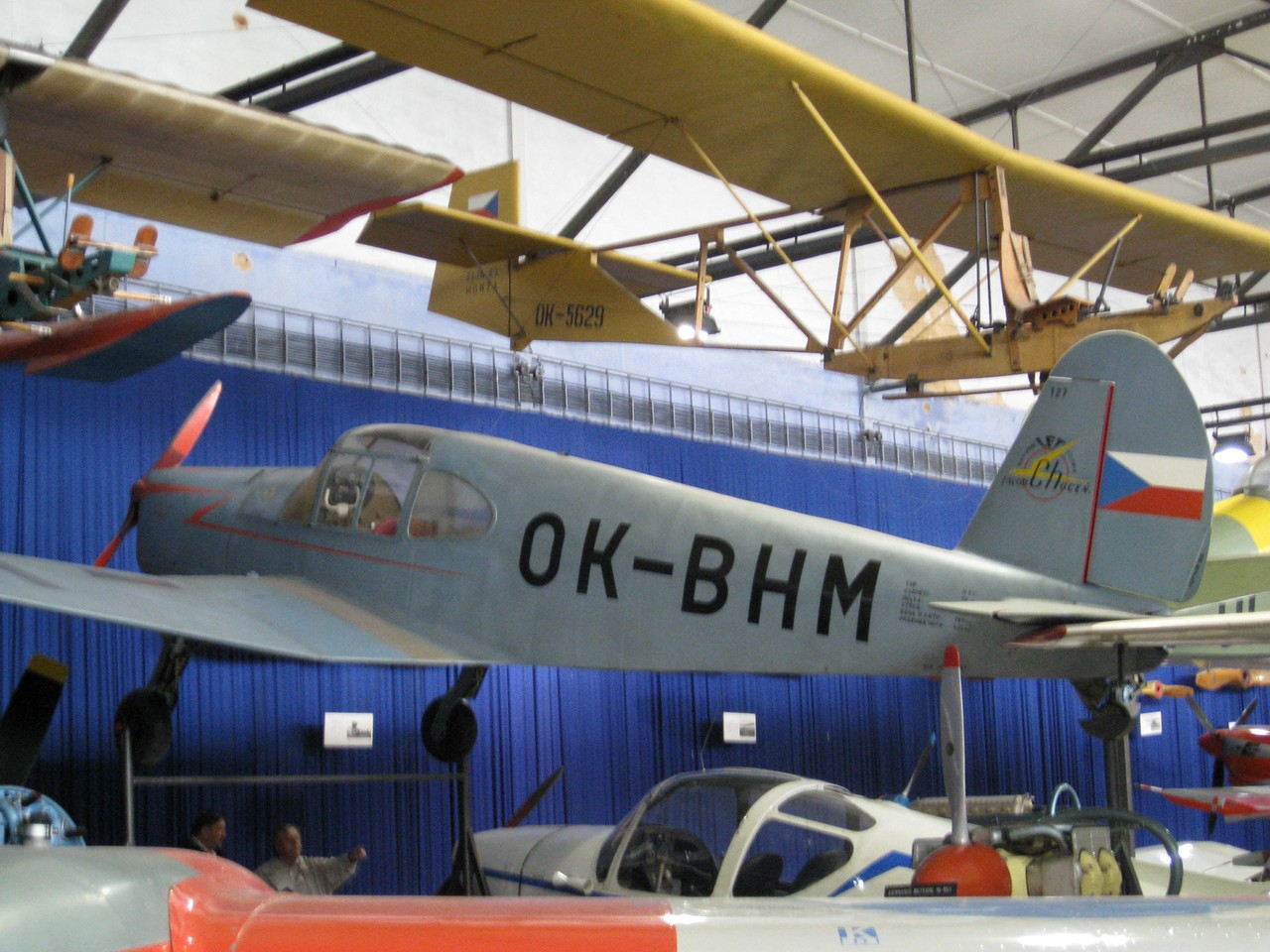
Civil Aviation Success
The Sokol dominated Czechoslovak general aviation in the immediate post-war years, filling a crucial need for reliable civilian aircraft after years of German occupation. Beyond serving the domestic market, the aircraft achieved remarkable international success with exports reaching Western Europe and Australia. By the early 1950s, Sokols were registered across multiple countries including Germany, the United Kingdom, Hungary, Switzerland, Belgium, and Sweden, demonstrating the aircraft's broad appeal and competitive design.
The Designer and Development
Zdeněk Rublič conceived the Sokol design during the German occupation, working clandestinely at the Beneš-Mráz factory. Drawing from the company's pre-war light aircraft expertise, Rublič created a practical design that could be quickly manufactured in post-war Czechoslovakia. The prototype M.1/1, registered as OK-ZHA, validated his approach when it successfully completed its maiden flight on March 9, 1946. Following positive test results, the prototype was redesignated M.1A as the type entered production at the Chocen facility.
Manufacturing Legacy
The Beneš-Mráz factory brought significant aviation heritage to the Sokol project. During the interwar period, the company had established itself as Czechoslovakia's premier developer of sports and utility aircraft, with successful mass-produced models including the Be.50/51 series and the popular Be.55 Bibi throughout the 1930s. When German occupation halted domestic aircraft production, the company survived by manufacturing German designs under license, including the K-65 Cap variant of the Fieseler Storch. This wartime experience maintaining production capabilities proved invaluable for the Sokol's post-war success.
Technical Innovation and Variants
Powered by the reliable Walter Minor 4-III engine producing 78 kilowatts, the Sokol featured conventional but well-executed design principles. The air-cooled, four-cylinder inverted inline piston engine provided dependable power for the 1,720-pound maximum weight aircraft. Rublič's design team continuously refined the aircraft through multiple variants, responding to market demands and operational experience.
The evolution began with the M.1B, which flew on May 19, 1946, featuring an upgraded 105-horsepower ZLAS Toma 4 engine, though production focused on the Walter-powered versions. The M.1C, first flying February 16, 1947, added a third rear seat and became the primary production variant with 183 aircraft built. The M.1D followed on October 4, 1948, incorporating an enlarged single-piece canopy and revised rudder design, with 104 examples manufactured. Specialized variants included the M.1E floatplane, which completed its first flight in September 1949 using locally manufactured pontoons, and the Para-Sokol featuring a rearward-sliding canopy specifically designed for parachutist operations.
Operational Characteristics
Pilots appreciated the Sokol's straightforward handling characteristics and reliable performance. The high-wing configuration provided excellent stability and ground visibility, while the 32-foot 10-inch wingspan delivered solid low-speed performance crucial for general aviation operations. With dimensions of 24 feet 1 inch in length and 7 feet 3 inches in height, the aircraft fit standard hangar facilities while offering reasonable cabin space for its class.
Production Achievements and Challenges
Total production reached 287 aircraft across all variants, representing a significant achievement for post-war Czechoslovak industry. The manufacturing run continued through approximately 1951, with the majority comprising the three-seat M.1C and improved M.1D versions. However, the aircraft's long-term success faced an unexpected technical challenge that would define its legacy.
Structural Limitations and Legacy
Despite initial success, the Sokol fleet faced a critical problem by the early 1960s. The urea-based adhesive used in the aircraft's wooden construction began deteriorating after approximately fifteen years of service. This glue failure compromised structural integrity, forcing aviation authorities to condemn many examples and withdraw them from active use. The widespread nature of this problem effectively ended the type's operational viability despite otherwise sound design principles.
By 2013, only nineteen Sokols remained on civil registers worldwide, with fewer still maintaining airworthy status. This dramatic reduction from 287 built aircraft illustrates how material science limitations could doom an otherwise successful design. The few surviving flyable examples serve as reminders of Czechoslovakia's post-war aviation capabilities and the Sokol's role in rebuilding the nation's civilian aircraft industry.
The Mráz M-1 Sokol stands as both an achievement and a cautionary tale in aviation history, demonstrating how post-war Czechoslovakia successfully designed and manufactured competitive light aircraft while highlighting the critical importance of materials engineering in aircraft longevity.