
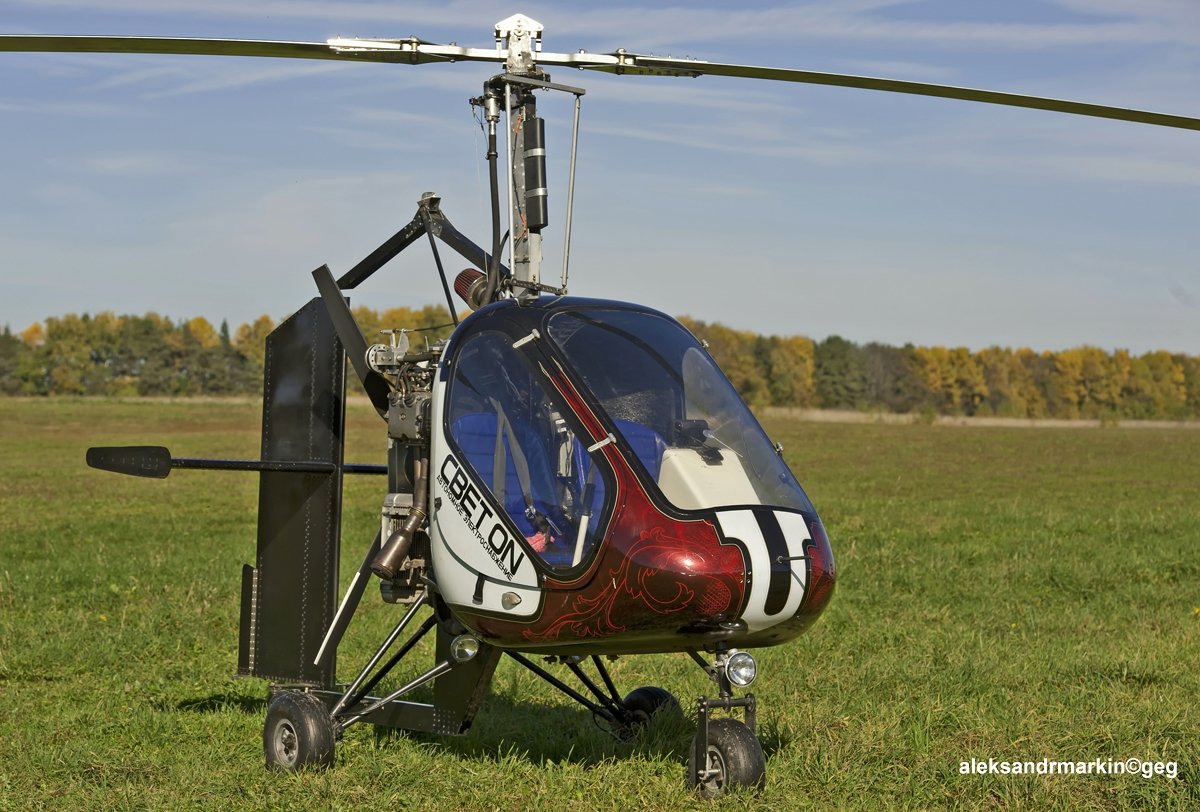
Market Impact and Safety Revolution
The SparrowHawk entered a gyroplane market plagued by fatal accidents caused by dangerous thrust line configurations. Previous designs positioned thrust above the aircraft's vertical center of gravity, creating catastrophic power pushover situations when wind gusts reduced rotor drag. The SparrowHawk's centerline-thrust innovation aligned the propeller's center with the vertical center of gravity, eliminating this deadly characteristic. This design breakthrough proved so effective that competing manufacturers adopted similar configurations, dramatically reducing accident rates and spurring significant growth in the gyroplane industry.
During its initial production run from 2003 to 2007, more than 100 SparrowHawk kits were sold, establishing the aircraft as a commercial success in the experimental aircraft market. The design's safety improvements restored confidence in gyroplane aviation after years of poor industry reputation.
The Manufacturer Evolution
Groen Brothers Aviation originally developed the SparrowHawk, incorporating helicopter design elements and securing three U.S. patents plus several international patents for their variable pitch rotor system. The company established American Autogyro as a dedicated subsidiary to manufacture and distribute SparrowHawk kits as a separate business venture.
In November 2004, Groen Brothers Aviation merged its two subsidiaries, American Autogyro Inc. and Groen Brothers Aviation USA Inc., consolidating operations. The parent company later transformed into Skyworks Aeronautics, continuing development of advanced aircraft technologies. By November 2018, American Autogyro International became a subsidiary of Skyworks Global, which announced the resumption of SparrowHawk III production after an 11-year manufacturing hiatus.
Technical Design and Innovation
The SparrowHawk's aluminum frame construction combined with a wide-molded fiberglass cabin provided structural integrity while maintaining reasonable weight. The aircraft's four-stroke Subaru piston engine delivered reliable power, though later variants offered electric motor options for environmentally conscious operators.
Beyond the critical centerline-thrust placement, engineers incorporated moderate dihedral angles on the rotors and positioned the propeller wash to flow over the large rudder and horizontal stabilizer. This configuration provided static longitudinal stability previously absent in gyroplane designs. The wide cabin accommodated two occupants in adjustable seating arrangements, enhancing comfort during the aircraft's impressive 510-nautical-mile range flights.
Construction and Builder Experience
As an Experimental Amateur-Built aircraft, the SparrowHawk required builders to complete at least 51 percent of construction personally. Early kit versions demanded approximately 300 hours of assembly time, though individual builders typically required between 300 and 500 hours depending on experience and available workshop time.
When production resumed in 2018 with the SparrowHawk III, improved pre-fabrication techniques reduced assembly time to approximately 94 hours, excluding paint application and electrical system installation. This dramatic time reduction made the aircraft more accessible to amateur builders while maintaining the hands-on construction experience required for experimental aircraft certification.
Performance Characteristics
Pilots praised the SparrowHawk's 120-knot maximum speed and docile handling characteristics resulting from its centerline-thrust design. The aircraft's 2,200-pound maximum takeoff weight provided adequate payload for two occupants plus baggage for extended cross-country flights. Unlike earlier gyroplanes prone to dangerous flight characteristics, the SparrowHawk exhibited predictable responses to control inputs and weather conditions.
The 510-nautical-mile range capability positioned the SparrowHawk as a practical recreational aircraft rather than merely a local-area sport machine. This extended range, combined with the aircraft's improved safety record, attracted serious aviators seeking alternatives to traditional fixed-wing aircraft.
Current Status and Legacy
American Autogyro International continues supporting the more than 100 SparrowHawk aircraft delivered during the original production run, occasionally purchasing and refurbishing low-time examples for resale. The company's restart of SparrowHawk III kit production in 2018 demonstrated ongoing market demand for well-designed gyroplane kits.
The SparrowHawk's safety innovations fundamentally changed gyroplane design philosophy, with centerline-thrust becoming the industry standard. This aircraft transformed gyroplanes from dangerous novelties into viable recreational aircraft, establishing a foundation for modern autogyro development and renewed public confidence in rotorcraft alternatives.