
Design and Development
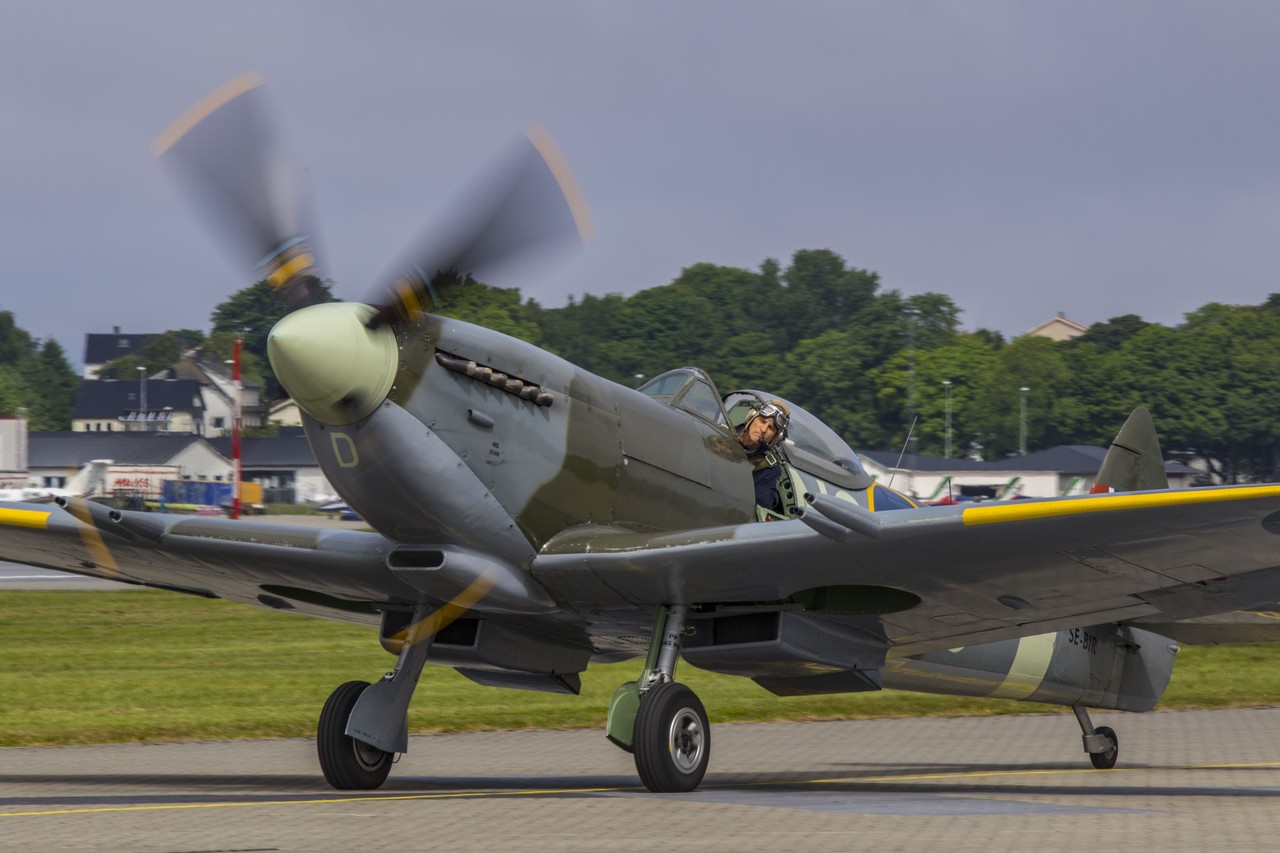
Reginald Joseph Mitchell's design team at Vickers Supermarine created the Spitfire after their earlier Type 224 prototype failed to meet Air Ministry specification F7/30, achieving only 230 mph against the required 250 mph. Mitchell's revolutionary approach incorporated elliptical wings that would become the aircraft's most recognizable feature, optimizing both aerodynamic efficiency and structural strength. The first production Spitfire Mk IA, serial number K9787, made its maiden flight on May 14, 1938, powered by a 1,030-horsepower Rolls-Royce Merlin II engine.
Production Challenges and Triumphs
Spitfire production faced immediate wartime obstacles when German bombers destroyed the primary Supermarine factory at Woolston, Southampton in September 1940, obliterating valuable Mk III blueprints and forcing a complete reorganization. Supermarine's response demonstrated remarkable adaptability, dispersing manufacturing across 28 requisitioned sites including garages, workshops, bus depots, and even a laundry, with final assembly conducted at Southampton Municipal Airport.
The Castle Bromwich Aeroplane Factory in Birmingham emerged as the production powerhouse, ultimately manufacturing over 12,000 Spitfires at peak rates exceeding 300 aircraft monthly by war's end. This facility alone produced nearly sixty percent of all Spitfires built, making it one of Britain's most crucial wartime manufacturing centers.
Combat Evolution and Variants
The Spitfire entered Royal Air Force service in 1938 with 19 and 66 Squadrons, initially armed with eight .303 machine guns mounted four per wing. Early combat experience revealed limitations in this armament configuration, leading to the Mk IB variant equipped with two 20mm cannons, though cannon installations suffered frequent jamming problems that limited production quantities.
The Mk IX became the second most numerous variant with 5,665 units produced, specifically developed to counter the Focke-Wulf Fw 190 threat. This variant incorporated strengthened airframes to accommodate increasingly powerful Merlin engines and expanded fuel capacity. The Mk VIII, with 1,658 airframes completed, featured the optimal combination of two cannons and four machine guns that proved most effective in combat.
Global Service and Impact
Spitfires served across multiple theaters including the Mediterranean, Soviet Eastern Front, and Pacific campaigns. The United States Army Air Forces' 4th Fighter Group operated Spitfires during their early European deployment, while numerous Allied nations adopted the type for their air forces. The naval variant, designated Seafire, entered Royal Navy Fleet Air Arm service on June 15, 1942, continuing operations until November 23, 1954, when No. 764 Naval Air Squadron disbanded.
Combat effectiveness varied by theater and variant, with documented examples like Silver Spitfire MJ271 completing 51 combat missions. The aircraft's adaptability allowed continuous upgrades throughout the war, incorporating 13 different propeller designs as engine power increased from the original 1,030-horsepower Merlin II to engines exceeding 2,000 horsepower in final variants.
Manufacturing Legacy
Total Spitfire production reached between 20,334 and 20,351 aircraft across 24 distinct marks, making it the most numerous British aircraft ever produced. Manufacturing continued until 1948, when the final Spitfire F.24, serial VN496, completed its first flight on February 24, 1948. This ten-year production run encompassed continuous design evolution, with later variants bearing little resemblance to Mitchell's original concept beyond the iconic elliptical wing planform.
Technical Innovation
The Rolls-Royce Merlin engine provided the Spitfire's heart throughout most variants, with some later marks experimenting with the larger Griffon powerplant. The inline configuration allowed for the aircraft's sleek nose profile and optimal center of gravity placement, contributing significantly to the Spitfire's renowned handling characteristics and combat maneuverability.
Pilots consistently praised the Spitfire's responsive controls and forgiving flight characteristics, though later variants with increased weight and power required more careful handling. The elliptical wing design provided excellent lift characteristics while maintaining structural integrity under combat stresses, though manufacturing complexity made production more challenging than conventional wing designs.
Enduring Heritage
Today, examples like the Silver Spitfire MJ271, built at Castle Bromwich in 1943, represent some of the most original airworthy Spitfires remaining worldwide. This aircraft carries both its historic registration MJ271 and modern registration G-IRTY, serving as a flying testament to Mitchell's enduring design excellence. Museums and private collectors maintain dozens of airworthy examples, ensuring the Spitfire's distinctive Merlin engine sound continues inspiring new generations of aviation enthusiasts.