
The Supermarine Seagull encompasses two separate eras of amphibious aircraft design, both led by chief designer R.J. Mitchell. These aircraft were produced by the Supermarine Aviation Works at Woolston, near Southampton, England.
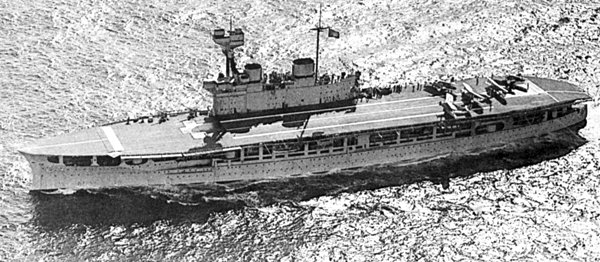
The Supermarine Seagull (1921 Series) Developed from the experimental Supermarine Seal II, the 1921 Seagull (Marks I–III) made its maiden flight in May 1921. This early flying boat was a three-seat reconnaissance and artillery-spotting biplane powered by a single liquid-cooled Napier Lion piston engine and armed with one .303 in Lewis gun. The British Air Ministry placed an initial order for two aircraft in February 1922, with further small batches produced through the 1920s. Production totals for this series are uncertain; while some sources state 25 aircraft were built for the Air Ministry and Royal Navy, others suggest a total of 34 airframes, including those used in Australia. These aircraft served with the Royal Navy's No. 440 Flight aboard HMS Eagle and the Royal Australian Air Force (RAAF) from 1929 to 1933, operating from HMAS Albatross. The 1921 series was critical to Supermarine's economic survival, indirectly enabling the later development of the Spitfire. Most military examples were withdrawn or scrapped by 1936, though some were converted for civilian utility use.
The Supermarine Seagull V / Walrus Introduced in 1933, the Seagull V was the original designation for the aircraft that became the Supermarine Walrus. This advanced amphibious biplane featured an all-metal hull (on the Walrus I) and was the first British service aircraft to combine an all-metal fuselage, a fully retractable main undercarriage, and completely enclosed crew accommodations. It was designed for catapult-launching from warships for reconnaissance and gunnery spotting. The Seagull V/Walrus was powered by a Bristol Pegasus radial piston engine, with the 750 hp Pegasus VI becoming the standard fit from 1937.
Production of the Seagull V/Walrus variants totaled approximately 740 aircraft. This included 27 Seagull V aircraft for the RAAF, 281 Walrus I aircraft built at Woolston, and 270 Walrus II aircraft, which featured a wooden hull and were manufactured by Saunders-Roe on the Isle of Wight. These aircraft saw extensive service during WWII with the RAF, Royal Navy, RAAF, RNZAF, and RNZN, as well as the Irish Air Corps, performing coastal patrols and air-sea rescue. A former RAAF Seagull V (A2-4) is preserved at the Royal Air Force Museum in Hendon.