
Service History
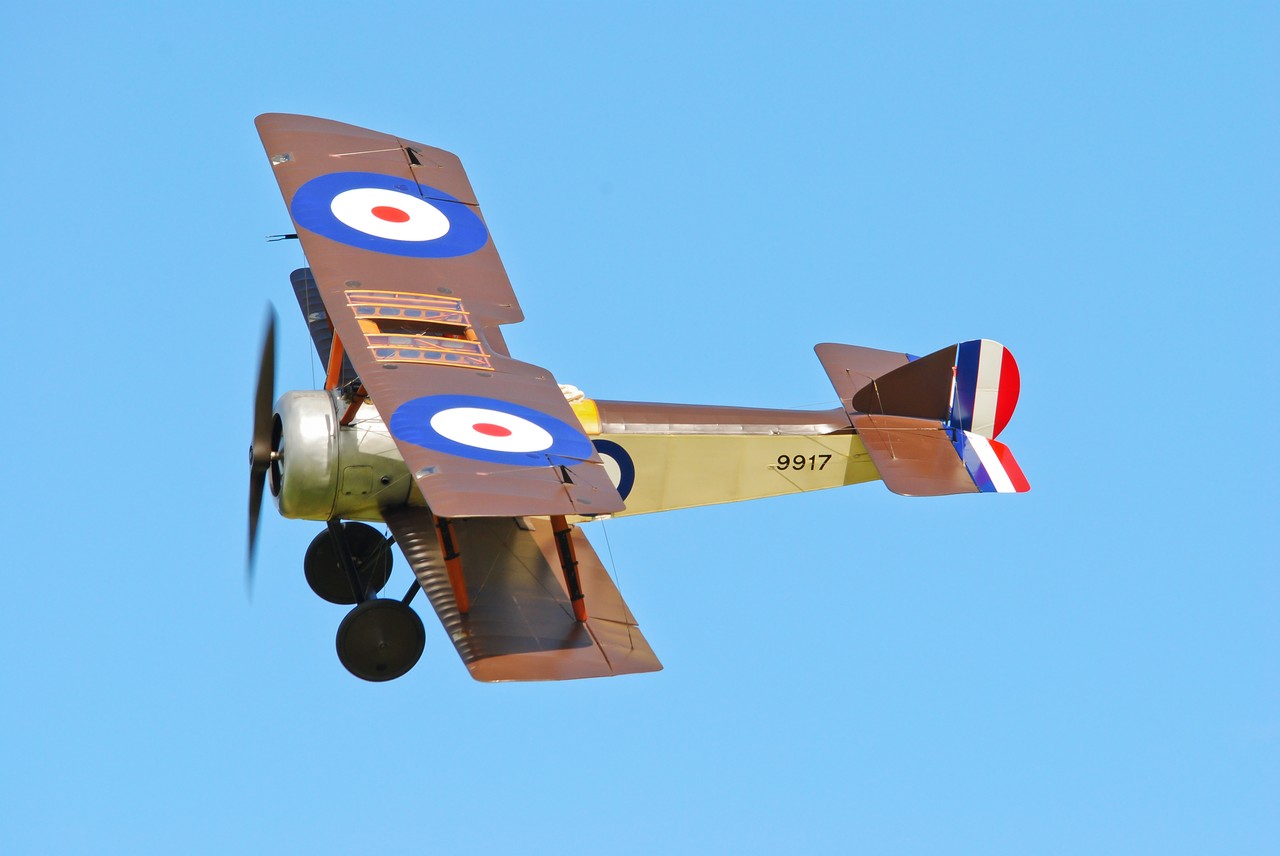
The Pup entered Royal Naval Air Service squadron service in August 1916, followed by Royal Flying Corps deployment in early 1917. During its operational peak in autumn 1916, RNAS Pups dominated German fighters and successfully intercepted Zeppelin raids over Britain. The aircraft's exceptional maneuverability and docile handling characteristics made it the preferred mount for both experienced aces and newly trained pilots transitioning from training aircraft.
By late 1917, newer German fighters like the Albatros D.III had outclassed the Pup in performance, relegating it primarily to training duties and home defense operations. Despite this obsolescence, the type remained valuable for pilot instruction through 1918, with many flight schools preferring its forgiving flight characteristics over more temperamental alternatives.
Wartime Operations
The Pup served exclusively during World War I with both major British air services. RNAS pilots including Albert McMinn and Ronald Graham achieved multiple victories flying Pups during 1916 and early 1917 combat operations. The aircraft proved particularly effective in the interceptor role, with several RNAS squadrons using Pups to down German airships threatening British cities.
Beyond its fighter role, the Pup became the first practical carrier-based aircraft. Naval aviators successfully operated Pups from five aircraft carriers and seven cruisers, conducting the early experiments that established carrier aviation doctrine. The Beardmore W.B.III variant featured folding wings specifically for shipboard storage, with 100 of these specialized naval fighters produced alongside the standard land-based model.
The Manufacturer
Sopwith Aviation Company, established in late 1912 by Thomas Sopwith, became Britain's most prolific wartime aircraft producer despite building only 96 of the 1,796 Pups manufactured. The company prioritized production of the two-seat Sopwith 1½ Strutter, subcontracting Pup manufacturing to Standard Motor Company (850 aircraft), Whitehead Aircraft (820 aircraft), and William Beardmore & Company (30 aircraft).
This distributed production strategy proved remarkably successful, with Sopwith-designed aircraft reaching 5,200 units by early 1918. The company's output doubled from 374 aircraft in 1916 to 849 in 1917, demonstrating the rapid industrial expansion that characterized British wartime manufacturing. Sopwith Aviation merged into Sopwith Aviation and Engineering Company in 1920, later becoming part of Hawker Aircraft in 1934, eventually evolving into today's BAE Systems.
Engine and Technical Innovation
Harry G. Folland led the Sopwith design team that developed the Pup from the earlier two-seat Strutter configuration. The prototype, serial number 3691, completed construction in February 1916 and conducted its maiden flight at Upavon in late March 1916. Folland's team prioritized lightweight construction and exceptional handling qualities over maximum performance, creating an aircraft that remained controllable even in inexperienced hands.
The Le Rhône 9J rotary engine, manufactured by Gnome et Rhône in France and under license in Britain, provided 80 horsepower through its innovative air-cooled nine-cylinder design. This rotary configuration used centrifugal force for both lubrication and cooling, though it consumed considerably more fuel than contemporary stationary engines. The single synchronized Vickers .303-inch machine gun provided adequate firepower for 1916 combat conditions.
Pilot Experience
Pilots consistently praised the Pup's gentle flying characteristics and exceptional maneuverability, qualities that made it ideal for both combat and training operations. The aircraft's light wing loading and responsive controls allowed experienced pilots to outmaneuver heavier German fighters through superior agility rather than speed or firepower. Student pilots appreciated the Pup's resistance to spinning and its predictable stall characteristics.
The compact single-bay biplane configuration contributed to structural integrity while maintaining excellent visibility for the pilot. Unlike many contemporary fighters that required careful handling, the Pup forgave pilot errors and remained controllable throughout its flight envelope, earning it the affection of pilots at all experience levels.
Production Legacy
Manufacturing occurred at four primary locations: Sopwith's Kingston-upon-Thames facility, Standard Motor Company's Canley works near Coventry, Whitehead Aircraft's Richmond plant in Surrey, and William Beardmore's Dalmuir factory in Scotland. This geographically distributed production system reduced vulnerability to enemy action while leveraging existing industrial capacity.
Today, no original Pups remain airworthy, though several museums display restored examples and accurate replicas. The Fleet Air Arm Museum at Yeovilton houses replica N6542 (registration G-BIAU), representing the type that pioneered British naval aviation. Various UK collections preserve original components and partial airframes, maintaining the Pup's legacy as both a significant combat aircraft and the foundation of carrier-based fighter operations.