
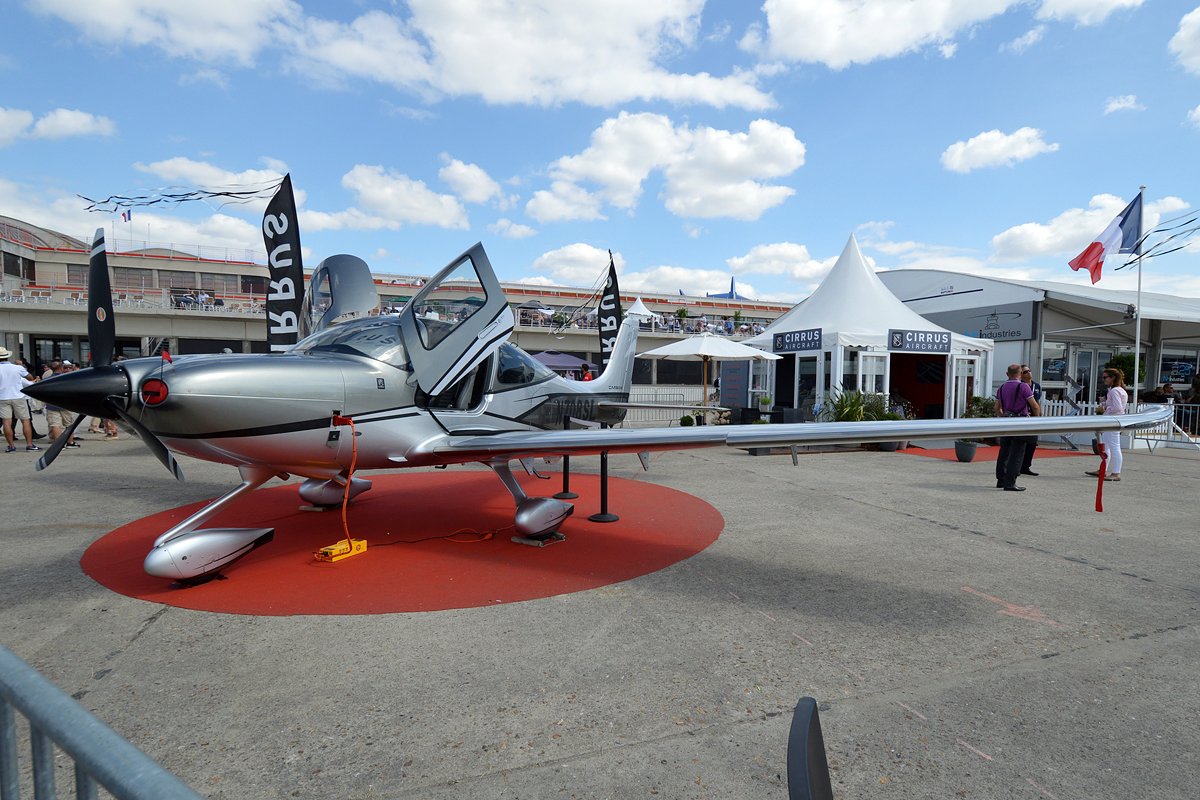
Development History
The Cirrus SR-10 emerged as a conceptual aircraft during Cirrus Aircraft's period of rapid expansion following the success of their SR20 and SR22 models. While specific development timelines remain undocumented, the proposal likely originated after Cirrus established their dominant position in the general aviation market, having become the leading piston aircraft manufacturer by 2013.
Unlike the company's successful certified aircraft, the SR-10 never advanced beyond initial design concepts. No prototype construction occurred, no test flights were conducted, and no manufacturing facilities were allocated to the project. This represents a rare instance where Cirrus, known for bringing innovative designs to market, chose not to pursue a proposed aircraft through to completion.
The Manufacturer's Foundation
Cirrus Aircraft was founded in 1984 by brothers Alan Klapmeier and Dale Klapmeier, who began their aviation venture in a barn at Baraboo–Wisconsin Dells Airport in Wisconsin. Their first project, the VK-30 kitplane, achieved its maiden flight on February 11, 1988, establishing the foundation for the company's future composite aircraft expertise.
The company's expansion accelerated rapidly through the 1990s. In 1994, Cirrus moved to a 30,000-square-foot research and development facility in Duluth, Minnesota, adding composite production capabilities. A significant milestone came in August 1996 with the announcement of a manufacturing plant in Grand Forks, North Dakota, followed by the construction of a 111,000-square-foot manufacturing facility in Duluth.
Revolutionary Innovations
Cirrus's approach to aircraft design fundamentally changed general aviation safety standards. The company pioneered the Cirrus Airframe Parachute System (CAPS), which underwent critical testing in 1998 when chief test pilot Scott D. Anderson successfully deployed the system in an SR20 prototype. This innovation became standard equipment on all Cirrus production aircraft.
The company also introduced the first glass cockpit systems in small certified aircraft, replacing traditional analog instruments with integrated flight displays. Combined with their composite airframe construction and distinctive side-yoke controls, these innovations established Cirrus as a technology leader in general aviation.
Production Success
While the SR-10 never materialized, Cirrus achieved remarkable success with their certified models. The SR20 first flew in 1995, received certification on October 23, 1998, and began deliveries in July 1999. The larger SR22 followed with certification in 2000. These aircraft became the best-selling general aviation aircraft since 2002, with Cirrus delivering their 10,000th SR-series aircraft by July 2024.
Production statistics demonstrate the company's dominance: over 1,932 SR20 aircraft have been delivered, contributing to total SR-series production exceeding 10,000 units. This success made the SR-10's cancellation less critical to the company's overall strategy.
Corporate Evolution
Cirrus experienced significant leadership changes throughout its growth. In 2001, Terry Lee assumed the CEO position, followed later by Patrick Waddick. The founding Klapmeier brothers eventually departed amid corporate disputes, though Dale Klapmeier briefly returned as CEO in 2019 before leaving again.
A major transformation occurred in 2011 when China Aviation Industry General Aircraft (CAIGA) acquired Cirrus for $100 million. Despite foreign ownership, the company maintained its United States-based operations and continued operating under its original name.
Market Position and Legacy
Cirrus Aircraft remains active today, having established itself as the leading manufacturer of piston-powered aircraft since 2013. Their success eliminated any pressing need to develop additional trainer aircraft like the proposed SR-10, as existing models adequately served multiple market segments.
The SR-10's legacy exists purely as a testament to Cirrus's continuous innovation efforts during their most successful period. While no examples exist in museums or private collections, the proposal demonstrates the company's willingness to explore new market opportunities even while dominating their primary segments.
Current Operations
Today, Cirrus continues manufacturing SR20 and SR22 aircraft alongside their SF50 Vision Jet, which entered service in 2016. The company's focus on certified, technologically advanced aircraft with integrated safety systems has proven more profitable than pursuing additional trainer variants like the SR-10, validating their decision to abandon the project during its conceptual phase.