
Design Philosophy and Heritage
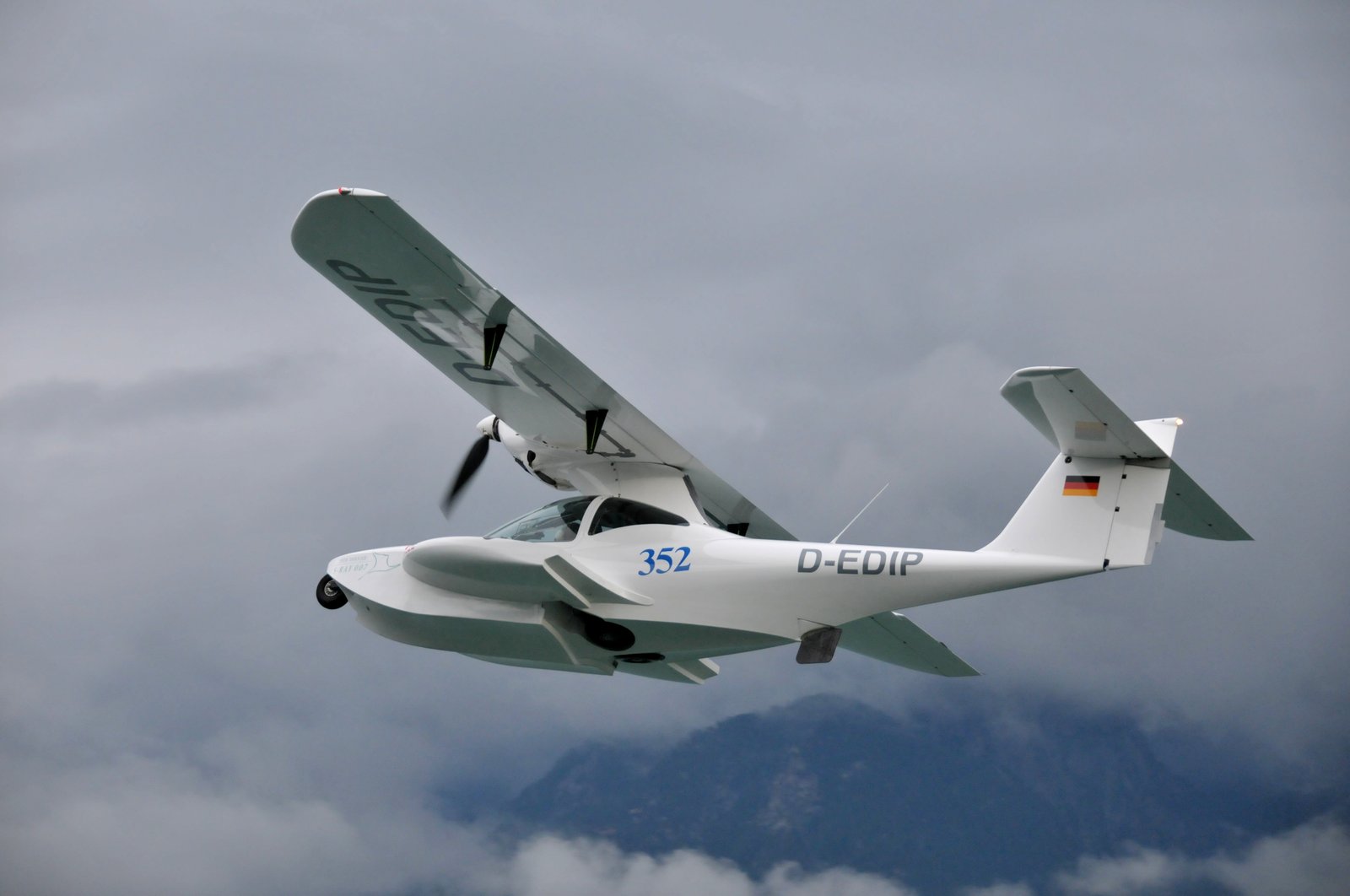
The S-Ray 007 emerged as Iren Dornier's ambitious attempt to modernize his grandfather's pioneering amphibious aircraft concepts from the 1920s. Working through Dornier Technologie, Iren specifically drew inspiration from Claude Dornier's iconic Libelle flying boat, seeking to apply 21st-century materials and manufacturing techniques to the proven formula of versatile land-and-water operations. The project represented both a personal homage to family aviation heritage and a technical exploration of contemporary composite construction methods.
Technical Innovation
The aircraft incorporated several advanced design elements that distinguished it from traditional amphibians. Engineers constructed the one-piece wing from reinforced plastics and carbon fiber composites, eliminating the aluminum corrosion and fatigue issues that plagued earlier seaplanes operating in saltwater environments. Computational fluid dynamics analysis validated both the aerodynamic and hydrodynamic characteristics during the design phase, ensuring optimal performance in dual operational environments.
The high-wing configuration featured a centrally mounted Rotax 912S engine positioned on a pylon above the fuselage. This 100-horsepower, four-cylinder powerplant provided the S-Ray with a cruise speed ranging between 185 and 206 km/h, depending on source specifications. Two 50-liter fuel tanks gave the aircraft an operational range extending from 850 to 1,300 kilometers, suitable for extended coastal touring missions.
Flight Testing and Development
Test pilot Gerhard Thalhammer conducted the maiden flight on July 14, 2007, at Friedrichshafen Airport in Germany, the same location where Claude Dornier had established his aviation legacy decades earlier. The prototype demonstrated a stall speed as low as 68 km/h and a maximum speed of 230 km/h, with a rate of climb reaching 213 meters per minute. These performance figures positioned the S-Ray competitively within the light sport aircraft category.
The retractable landing gear system enabled seamless transitions between land and water operations, while the composite construction provided the corrosion resistance essential for sustained marine use. Empty weight specifications varied between sources, ranging from 400 to 510 kilograms, with maximum takeoff weights between 650 and 800 kilograms depending on configuration.
The Dornier Legacy
Iren Dornier's involvement represented the continuation of a remarkable aviation dynasty spanning nearly a century. Claude Dornier had founded his original company in 1914, producing revolutionary flying boats that dominated long-distance aviation during the interwar period. Following post-World War II restrictions and multiple corporate restructurings, the Dornier name had evolved through various incarnations, including the larger Dornier Seastar program of the 1980s and 1990s.
Dornier Technologie operated independently from these larger corporate entities, focusing specifically on reviving the amphibious aircraft market segment that had largely disappeared from general aviation. The company's narrow focus on the S-Ray project reflected both limited resources and specialized expertise in composite amphibian construction.
Engine and Powerplant
The selection of the Rotax 912S engine proved particularly appropriate for the S-Ray's mission profile. BRP-Rotax GmbH & Co. KG of Austria had developed this powerplant series beginning in the early 1990s, accumulating over 40,000 units produced across all variants by the time of the S-Ray's development. The liquid-cooled, four-cylinder design offered exceptional fuel efficiency and reliability characteristics crucial for overwater operations where engine failure could prove catastrophic.
The 75-kilowatt output provided sufficient power for single-engine amphibian operations while maintaining the weight constraints necessary for the light sport aircraft category. This engine choice reflected modern general aviation's trend toward proven, certified powerplants rather than experimental or custom-built alternatives.
Production Challenges and Market Reality
Despite successful flight testing, the S-Ray 007 never progressed beyond prototype status. No series production commenced, and no additional aircraft were constructed following the initial demonstrator. This outcome reflected the challenging economics of specialized amphibian aircraft manufacturing, where limited market demand struggles to support the substantial development and certification costs required for new designs.
The amphibious aircraft market had contracted significantly since the 1960s, with few manufacturers successfully sustaining production in this niche segment. Even established companies like Cessna had discontinued their amphibian models due to insufficient sales volumes and complex liability considerations associated with water operations.
Current Status and Legacy
The fate of the single S-Ray 007 prototype remains unclear, with no confirmed information about its current location or airworthiness status. Dornier Technologie appears to have ceased operations following the conclusion of the S-Ray program, though definitive information about the company's current status is unavailable.
While the S-Ray 007 failed to achieve commercial success, it represented a meaningful attempt to apply modern materials and manufacturing techniques to traditional amphibian design concepts. The project demonstrated both the technical possibilities and market limitations facing contemporary amphibious aircraft development, serving as a case study in the challenges of reviving specialized aviation market segments.