
Market Dominance
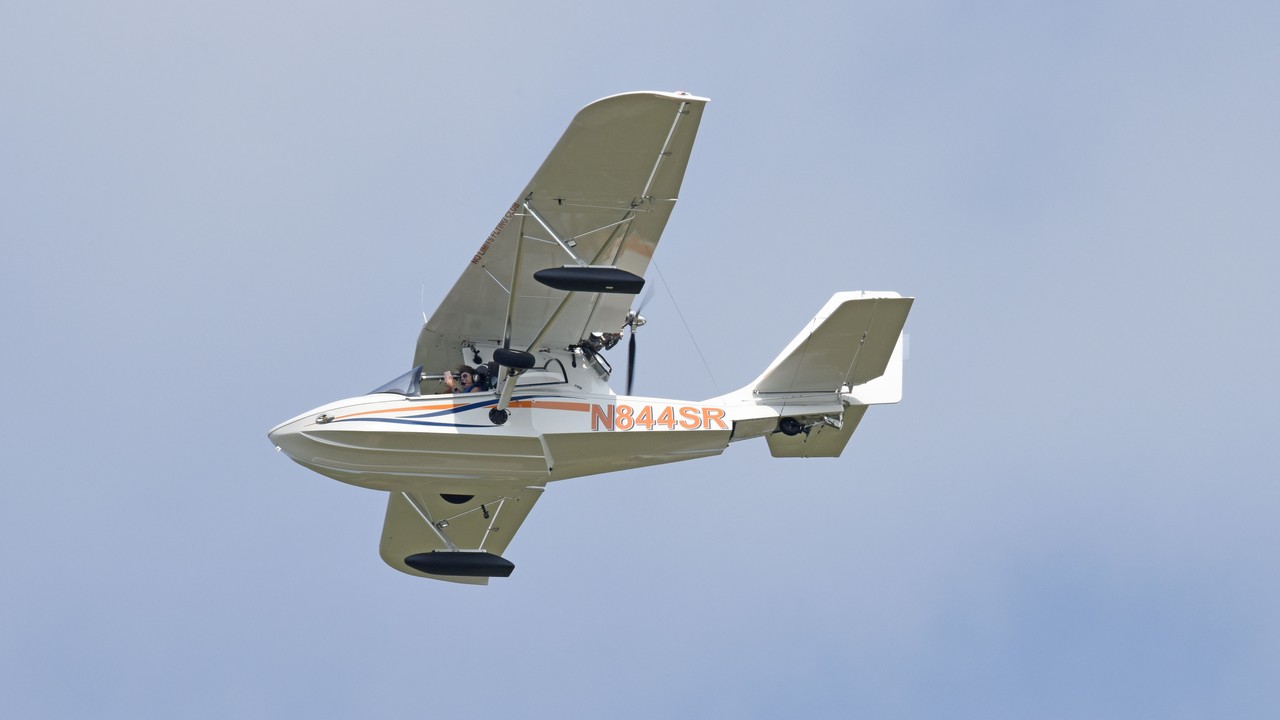
The SeaRey achieved remarkable success in the experimental amphibian market, with approximately 500 aircraft currently flying worldwide as of 2024. This represents the most successful modern light amphibian design, demonstrating sustained market appeal over three decades of continuous production. The aircraft's kit-built nature democratized amphibian ownership, making water-capable aviation accessible to amateur builders who previously faced prohibitively expensive factory-built alternatives.
The Manufacturer
Progressive Aerodyne Inc. was established in 1991 by Kerry Richter, his father Wayne Richter, and Paige Lynette, all with extensive ultralight aircraft backgrounds. Kerry Richter's popular Cobra ultralight and involvement in the Buccaneer flying boat project provided crucial amphibian design experience. The company relocated from Orlando to a larger facility on Lake Idamere near Tavares, Florida in 2010, expanding operations to meet growing demand. International expansion began in 2011 with a Shanghai sales office under CEO Adam Yang, targeting Asian markets.
Design Evolution
Kerry Richter led the SeaRey's design throughout 1991, achieving first flight in November 1992 and public introduction of the SeaRey Classic in 1993. The initial design proved so successful that two years of orders were secured immediately upon market introduction. Richter's previous amphibian experience contributed to the aircraft's exceptional first-flight performance, requiring minimal development modifications.
Continuous refinements have marked the SeaRey's production history. Early models featured relatively flat hulls optimized for calm water operations. The "B" hull introduced a deeper V-shape for improved rough-water handling, followed by the "C" hull design by 2001, featuring a bluffer bow with double-V step configuration that remains standard today.
Engine Specifications
Rotax engines power all SeaRey variants, reflecting the Austrian manufacturer's dominance in light aircraft propulsion. The original Rotax 582 two-stroke engine produced 65 horsepower, later superseded by the 80-horsepower Rotax 912 UL four-stroke as the standard powerplant. Higher-performance options include the 100-horsepower Rotax 912 ULS and the turbocharged 115-horsepower Rotax 914, providing operators with power choices matching their performance requirements and budget constraints.
Technical Innovations
The SeaRey employs metal tube construction with fabric covering and composite fuselage sections, balancing strength with manageable amateur construction techniques. The retractable tailwheel undercarriage operates via a single lever with overcenter locks, enabling smooth transitions between land and water operations. In July 2014, Frise-type slotted ailerons eliminated adverse yaw while reducing control forces and harmonizing flight controls.
Vortex generators reduce stalling speed by approximately 7 mph, enhancing low-speed handling characteristics crucial for water operations. The LSX version, introduced in 2010, features strengthened wing construction and enlarged tail surfaces to meet Light Sport Aircraft certification requirements, expanding the aircraft's market appeal.
Performance Characteristics
The SeaRey demonstrates impressive performance for its size and power, achieving a rate of climb of 650 feet per minute and a service ceiling of 13,000 feet. With 87 liters of fuel capacity, the aircraft provides a range of 363 miles with 30-minute reserves at 75 percent power. Empty weight of 750 pounds allows a useful load of 490 pounds, accommodating two occupants with baggage for extended cross-country flights.
Notable Achievements
In April 2015, a SeaRey named Southern Sun departed Melbourne, Victoria, recreating the historic 1930s Qantas Empire flying boat route from Sydney to London. The ambitious journey extended across North America and the Pacific Ocean, spanning seven months and 210 days while visiting 25 countries. The pilot completed 83 flights totaling 480 hours and consuming 9,700 liters of fuel, earning the Australian Geographic Adventurer of the Year Award for 2015.
Legacy and Modern Production
The SeaRey's evolution from experimental kit aircraft to factory-produced Special Light Sport Aircraft reflects the maturation of recreational aviation. The SeaRey Elite represents the culmination of 30 years of refinement, offering factory completion with optional glass cockpit instrumentation. This progression demonstrates how successful amateur-built designs can transition into certified aircraft categories while maintaining their original accessibility and performance characteristics.
With over 600 kits sold and 500 aircraft flying worldwide, the SeaRey established Progressive Aerodyne as the premier manufacturer of light sport amphibians, proving that innovative design and continuous improvement can sustain market leadership across multiple decades.