
Design and Development
Lloyd Stearman personally led the design of the Model 6 Cloudboy as his company's entry into the primary trainer market during the economically challenging early 1930s. The aircraft emerged from Stearman's determination to create a rugged, utilitarian biplane that could serve both commercial flight schools and military training programs. The spartan design featured tandem seating in an open cockpit, emphasizing practicality over comfort—a philosophy that would prove instrumental in later Stearman successes.
The Cloudboy's development occurred during a period of significant transition at Stearman Aircraft Company. Despite growing management tensions, Lloyd Stearman pushed forward with the project, recognizing the potential market for a reliable primary trainer to replace aging aircraft like the Consolidated PT-3 in U.S. Army Air Corps service.
Military Evaluation and Rejection
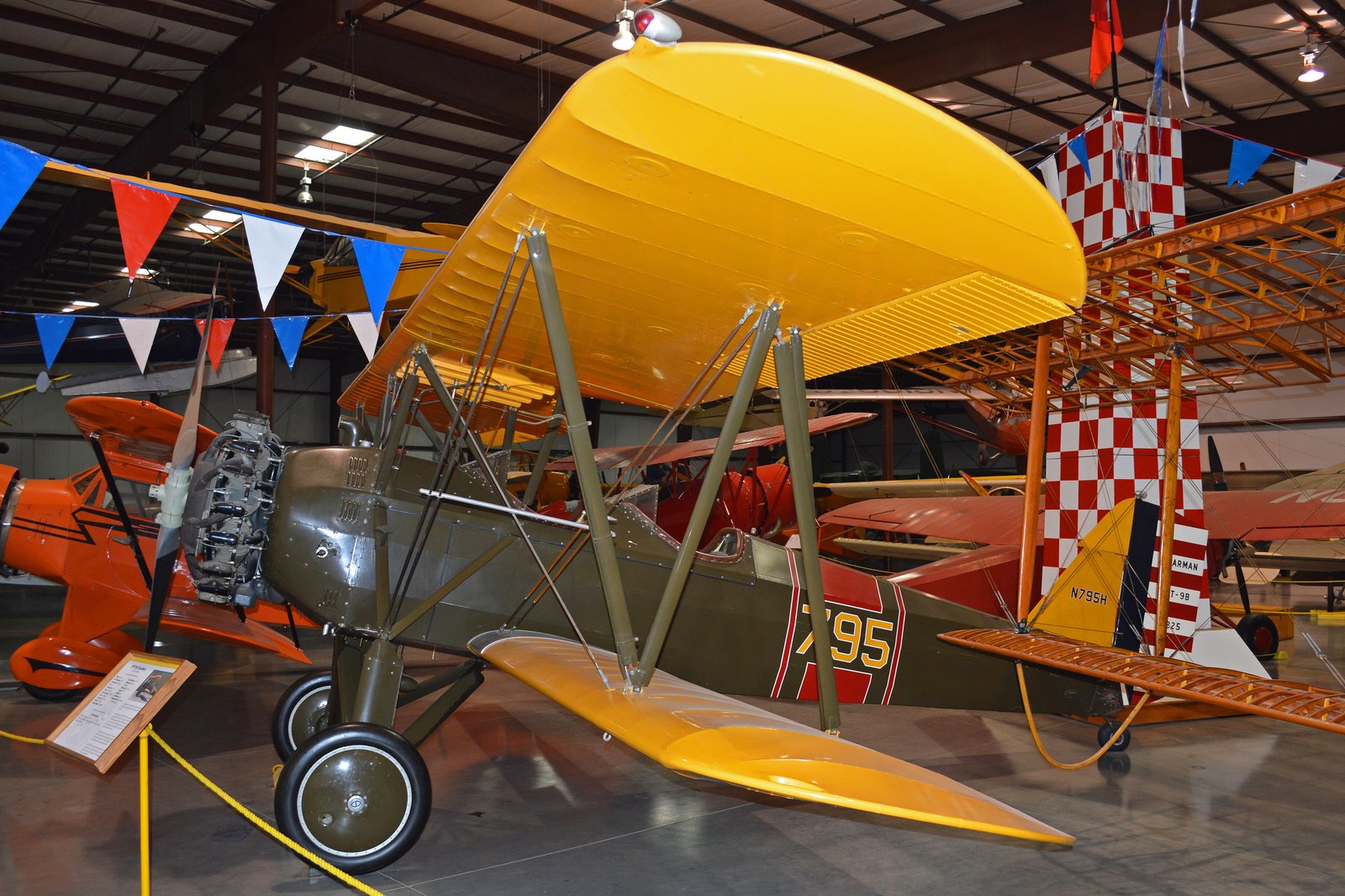
The U.S. Army Air Corps showed initial interest in the Cloudboy, ordering four Model 6A aircraft (airframes 6005 through 6008) for evaluation under the military designation YPT-9 in late 1930. The Model 6A had received Approved Type Certificate A-365 on September 16, 1930, validating its airworthiness for both military and civilian operations.
However, the Army ultimately rejected the YPT-9 in favor of the Consolidated YPT-11, dealing a significant blow to Stearman's military ambitions. The four evaluation aircraft were not wasted—they became testbeds for various engine configurations and modifications. One YPT-9 was converted to YPT-9A specification, while another became the YPT-9B (airframe 6003), which gained fame decades later when it was restored in the mid-1960s and declared Grand Champion Antique at the 1967 aviation event.
Two aircraft received more dramatic modifications: airframe 6006 became the YBT-3 with a 300-horsepower Wright J-6-9 engine, while airframe 6001 was designated YBT-5 and fitted with a 300-horsepower Pratt & Whitney Wasp Jr. engine, demonstrating the airframe's versatility across different powerplants.
Engine Variants and Certification
The Cloudboy's adaptability was evident in its multiple engine configurations. The baseline Model 6A used the 165-horsepower Wright J-6-5 Whirlwind, while the Model 6H employed the 170-horsepower Kinner C-5. The Continental A-70 powered the Model 6F, and the Wright J-5 Whirlwind generating 220 horsepower drove the Model 6P variant.
The most sophisticated version was the Model 6C, which became the final Cloudboy delivered. This aircraft was initially delivered without an engine but was later fitted with a 300-horsepower Wright J-6-9 complete with full NACA cowling, wheel pants, and canopy—representing a significant departure from the spartan open-cockpit design of earlier variants. The Model 6C received Approved Type Certificate A-402 on August 18, 1933, marking the end of Cloudboy development.
Limited Production and Commercial Service
Stearman Aircraft Company produced exactly 10 Cloudboys between 1930 and 1933, with production severely constrained by Great Depression economics. Three civil models were built initially, followed by the four military evaluation aircraft and additional variants created through engine conversions. All 10 aircraft were eventually sold to commercial customers, finding service in civilian flight training operations.
One notable commercial conversion occurred in September 1934 when airframe 6002, originally the second Model 6A, was sold to a new owner who replaced its 165-horsepower Wright J-6-5 with a 220-horsepower Wright J-5 Whirlwind, creating the Model 6P variant and demonstrating the continued interest in upgrading these versatile airframes.
Legacy and Influence on Future Success
While the Cloudboy failed to achieve commercial success, its design principles directly influenced Stearman's subsequent triumph. The lessons learned from the Cloudboy's rugged construction, reliable handling characteristics, and maintenance simplicity were incorporated into the Model 70 prototype in 1934 and the Model 75, which made its maiden flight the same year.
The Model 75 became the legendary PT-13/N2S primary trainer that trained the majority of American pilots during World War II. From July 1939 to August 1945, the Army Air Forces graduated 768,991 pilots, with 233,198 completing primary training—most earning their wings in Stearman trainers that traced their lineage directly to the Cloudboy's design philosophy.
Manufacturing Excellence
By the time Stearman Aircraft Company (then part of Boeing's Wichita Division) reached peak wartime production, the manufacturing lessons learned during Cloudboy production had evolved into remarkable efficiency. At peak production in April 1943, the factory completed nine airplanes per day and 275 that month. Production hours per aircraft fell from 2,512 hours in April 1940 to just 878 hours by July 1943, representing a nearly three-fold improvement in manufacturing efficiency.
By the end of World War II, the Stearman facilities had built 8,584 primary trainers, representing approximately 44 percent of all primary trainer aircraft manufactured during the war—a testament to the foundational design work accomplished with the modest Cloudboy program over a decade earlier.