
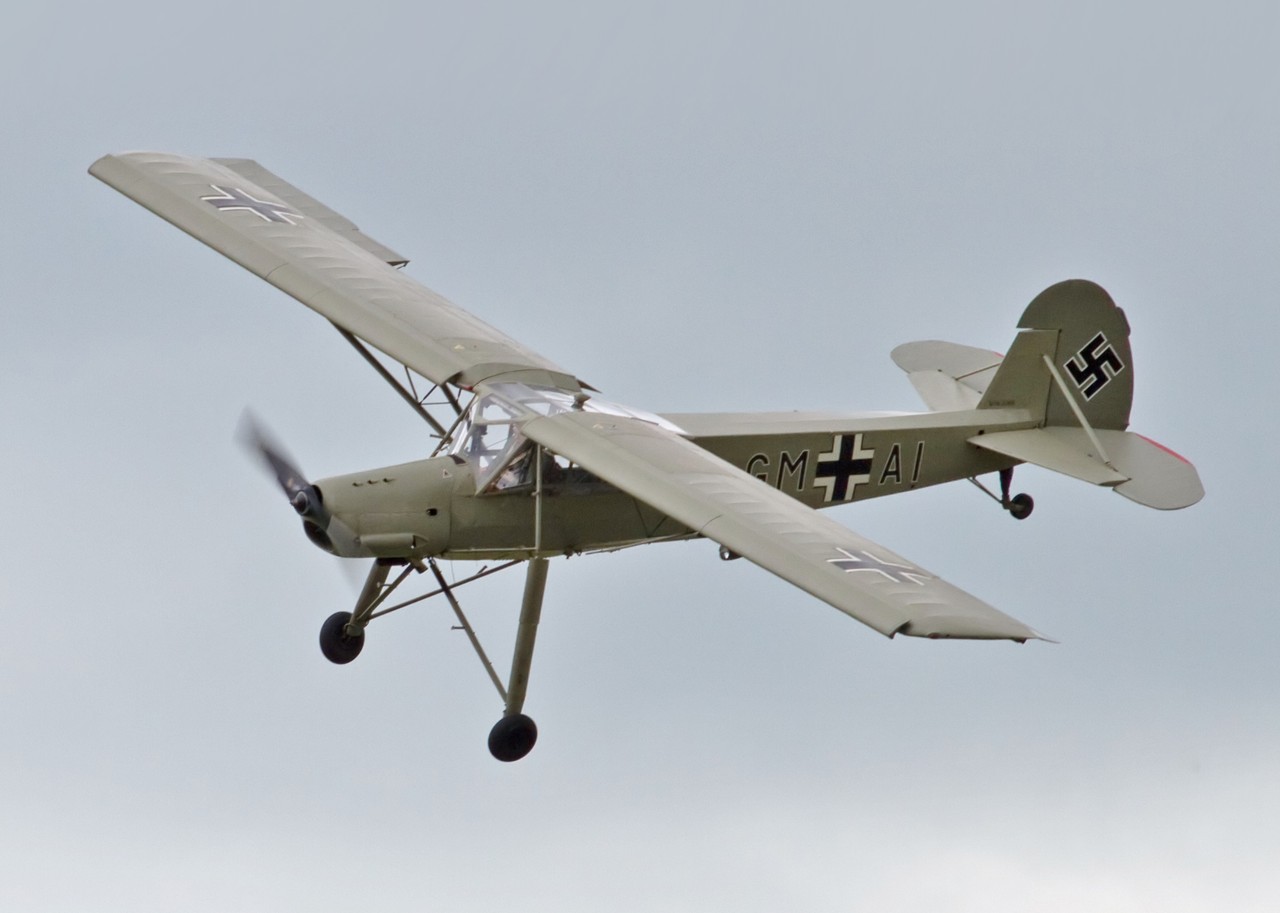
Service History
The Storch achieved remarkable success in the recreational aviation market, with over 1,100 units delivered worldwide and accumulating approximately 800,000 flying hours since production began. More than 400 aircraft were sold specifically for training purposes, establishing the type as a cornerstone of ultralight pilot education. The aircraft found particular favor in markets including New Zealand, where six units were registered, and Australia, which received its first Storch HSJ (construction number 297A-353, registered VH-VFL) in mid-2005.
The Manufacturer
Fly Synthesis S.r.l. was founded in the late 1980s in Gonars, Italy, launching the Storch as their inaugural aircraft design in 1990. The company relocated to a 3,000-square-meter facility in Mortegliano, Italy, in 2006, establishing operations beside a former World War II military base. Following a change of ownership in 2000, the company continued operations under the same name and expanded their product line to include the Texan (1999), Syncro (2009), Catalina (2010), and Wallaby. The manufacturer pioneered the use of composite-aluminum hybrid construction in ultralight aircraft, bridging the gap between traditional "tubes and fabric" designs and full composite structures.
Engine & Technical Details
The Storch is powered by the Rotax 912 UL2, an 80-horsepower, four-stroke inline engine manufactured by BRP-Rotax GmbH & Co. KG of Austria. This powerplant, weighing just 59 kilograms dry, features liquid-cooled cylinder heads and has proven exceptionally reliable across tens of thousands of units produced since 1989. Alternative engine options include various Jabiru powerplants from Jabiru Aircraft Pty Ltd of Australia.
The aircraft incorporates several innovative design features, including a cantilever high-wing configuration with a laminar airfoil, folding wings for storage, and marine-grade aluminum alloys for enhanced durability. Early production models featured Junkers-style flaperons, while the later Storch S variant adopted conventional slotted flaps with separate ailerons. The forward fuselage combines composite construction with a steel safety cage, providing excellent visibility through large glazed areas.
Pilot Perspective
Pilots praise the Storch for its exceptional short-field performance and stable handling characteristics. The aircraft requires only 110 meters for takeoff and can land in 90 to 130 meters, with amphibious variants capable of water takeoffs in just 65 meters and landings in 145 meters. At 75 percent power, the Storch S cruises at 190 kilometers per hour, while earlier variants achieve 159 kilometers per hour. The aircraft stalls at a remarkably low 65 kilometers per hour and maintains a climb rate of 240 meters per minute.
With dual controls and side-by-side seating, the Storch provides an ideal training environment. Pilots appreciate the aircraft's ability to provide "helicopter-like views" even in unstable air conditions, making it particularly suitable for scenic flights and observation missions. The 90-liter fuel capacity of the S model enables a range of 1,050 kilometers, significantly extending the aircraft's touring capabilities.
Production & Legacy
The Storch achieved a significant milestone on April 16, 1993, when aircraft PH-2L8 (serial number ST11004304) established a microlight altitude record of 7,143 meters, taking off from Udine, Italy. This achievement demonstrated the aircraft's performance potential beyond typical ultralight operations.
Production continues today at the Mortegliano facility, with the aircraft available in multiple configurations including land-based, amphibious, kit-built, and ready-to-fly variants. The Storch's maximum takeoff weight of 472.5 kilograms and empty weight of 248 kilograms provide a useful load of 197 to 224 kilograms, accommodating pilot and passenger with baggage.
The aircraft's influence on ultralight design extends beyond its production numbers. Its successful integration of composite materials with traditional aluminum construction techniques influenced a generation of ultralight manufacturers and helped establish Italy as a center for innovative light aircraft design. Active examples continue flying worldwide, including OK-PUS 33 based in Prague, a 1998 model with construction number I-3674, demonstrating the type's enduring appeal and reliability in recreational aviation.