
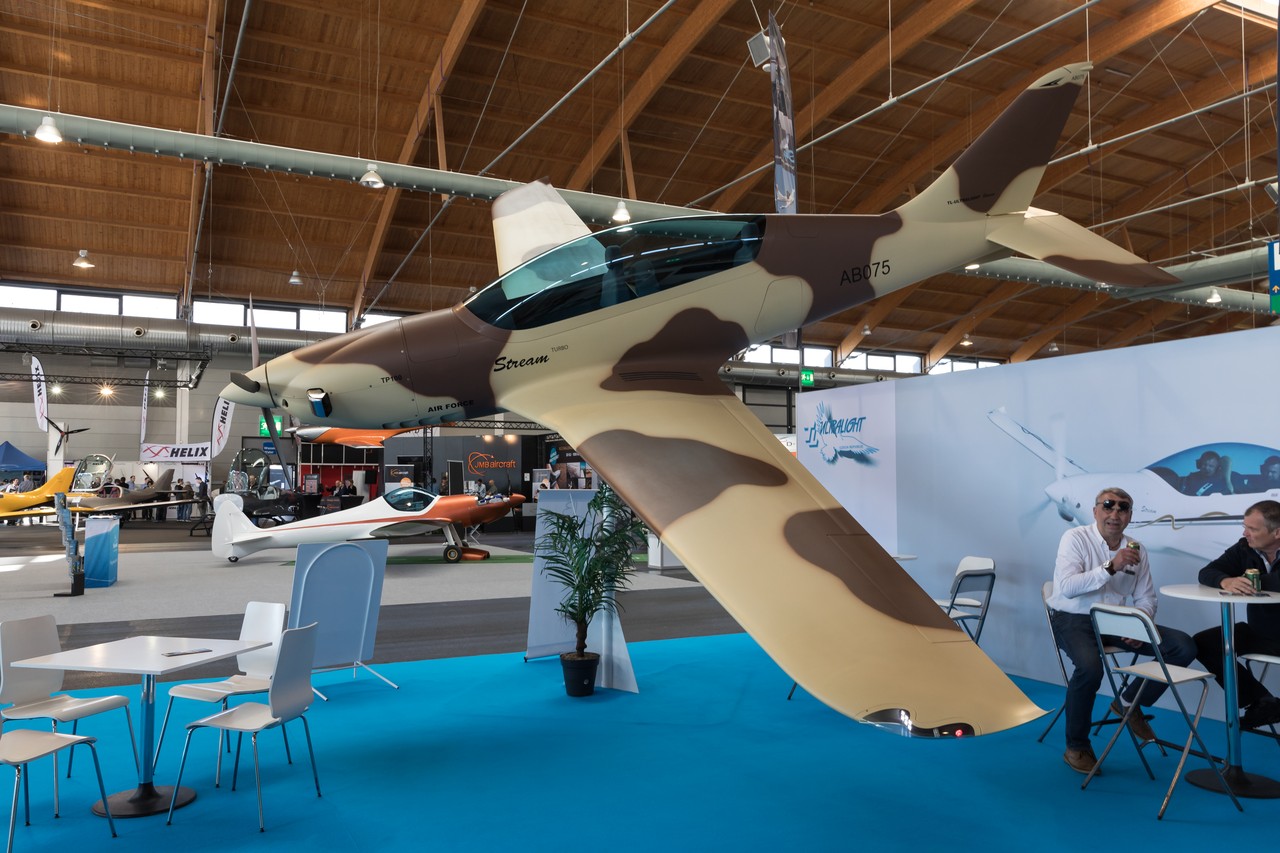
Development and Design
TL-Ultralight launched the Stream project to create their most aerodynamically sophisticated aircraft, targeting pilots seeking jet-like performance within ultralight regulations. The company's engineering team focused on maximum speed potential while maintaining compliance with Fédération Aéronautique Internationale microlight rules. The prototype, registered OK-UUA-99, completed its maiden flight on September 8, 2015, marking the culmination of TL-Ultralight's three-decade evolution from simple motor tricycles to advanced composite aircraft.
The Stream's design emphasizes aerodynamic efficiency through its composite construction combining Kevlar and carbon fiber materials. The cantilever low-wing configuration incorporates flaps for improved short-field performance, while the bubble canopy provides exceptional visibility for both occupants in the tandem seating arrangement. The retractable tricycle landing gear significantly reduces drag compared to fixed-gear configurations, contributing to the aircraft's impressive maximum speed of 335 kilometers per hour.
The Manufacturer
TL-Ultralight established operations in Hradec Králové, Czech Republic, in 1989, beginning with gliders and motor tricycles before advancing to fixed-wing ultralights. The company achieved its first major success with the TL 32 Typhoon, entering series production in 1991 and ultimately manufacturing over 200 units. This success provided the financial foundation for developing the Condor series, with the TL 132 and TL 232 variants totaling more than 300 units produced.
The manufacturer's product line expanded through models including the TL Star, various Sting configurations featuring the TL 2000 Sting Carbon with LSA, fixed-gear, and retractable-gear variants, and the Sirius launched in 2009. TL-Ultralight invested heavily in advanced manufacturing technologies including CAD/CAM systems, CNC machinery, and composite materials expertise, establishing itself among the world's largest ultralight and light sport aircraft manufacturers with global distribution networks.
Engine and Performance
The Stream utilizes proven Rotax powerplants, with the standard installation being the 912ULS producing 100 horsepower. Operators can specify the fuel-injected 912iS or the turbocharged 914 variant generating 115 horsepower for enhanced high-altitude performance. All engines feature four-cylinder, horizontally opposed, four-stroke configuration with combined liquid and air cooling systems, driving three-bladed PowerMax propellers optimized for the Stream's speed range.
With the Rotax 912ULS installation, the Stream achieves a cruise speed of 250 kilometers per hour while consuming 18.5 liters per hour at 75 percent power settings. The aircraft's 90-liter fuel capacity provides up to five hours endurance, translating to a maximum range of 1,700 kilometers. The Stream's climb rate reaches 360 meters per minute, while maintaining a low stall speed of 69 kilometers per hour with flaps deployed.
Operational Characteristics
The Stream's tandem seating arrangement positions the pilot in the forward cockpit with the passenger behind, following fighter aircraft conventions. Modern Garmin G3X Touch avionics provide comprehensive flight instrumentation, while dual controls allow instruction or shared piloting responsibilities. The aircraft's empty weight of 297 kilograms permits a maximum gross weight between 472.5 and 600 kilograms depending on configuration and regulatory category.
Takeoff performance requires only 175 meters of runway, making the Stream suitable for operations from smaller airfields. The combination of retractable landing gear, advanced composite construction, and refined aerodynamics delivers handling characteristics described as precise and responsive, though requiring competent piloting skills appropriate to its performance level.
Production and Legacy
TL-Ultralight commenced Stream production around 2018, with initial deliveries focused on European markets before expanding internationally. The aircraft reached Australian markets through TL-Ultralight Australia Pty Ltd and KG Aviation Australia, with the first examples arriving in early 2019. While exact production numbers remain undisclosed, the Stream continues active manufacture at TL-Ultralight's Czech Republic facilities.
The Pima Air & Space Museum in Tucson, Arizona, displays Stream serial number 18-STR-07, registered N34RJ, representing the type's recognition as a significant development in high-performance ultralight design. Although originally conceived with potential military trainer applications for developing nations, the Stream serves exclusively in civilian roles for sport flying and advanced pilot training, representing TL-Ultralight's successful transition from basic ultralights to sophisticated composite aircraft competing with traditional general aviation manufacturers.