
Service History
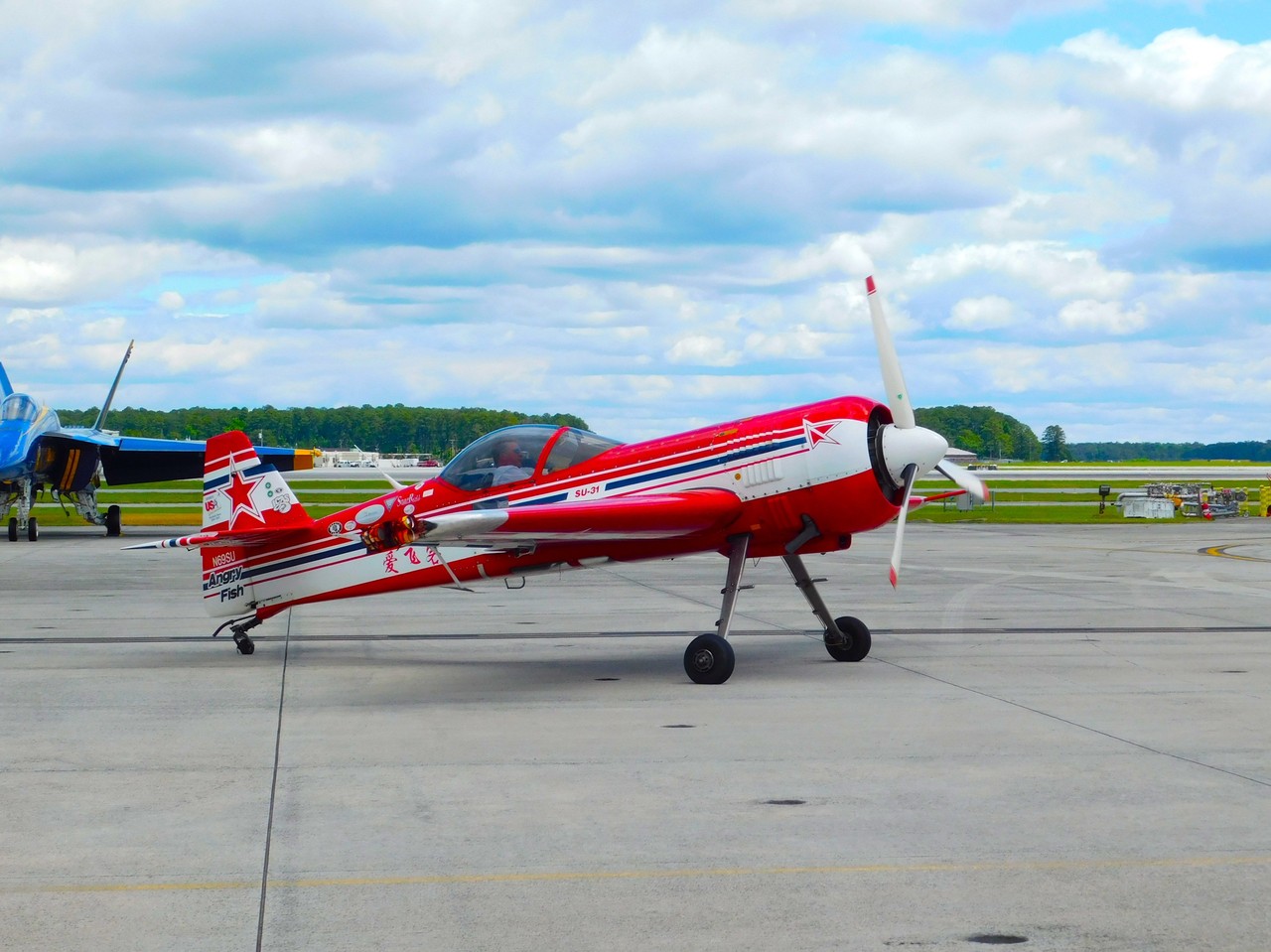
The Su-31 quickly established itself as a dominant force in international aerobatic competition following its 1994 production debut. Building on the success of its predecessor, the Su-26, which had already begun accumulating World and European aerobatic championships, the Su-31 continued this winning tradition across both men's and women's categories. The aircraft found homes with aerobatic teams, competition pilots, and flying clubs across at least ten countries, including Australia, Brazil, Italy, Lithuania, South Africa, Spain, Switzerland, Ukraine, the United Kingdom, the United States, and the Czech Republic.
Two Su-31M2 variants reached American shores between 1999 and 2000, while Switzerland and the Czech Republic each received aircraft during the early 2000s production run. The aircraft's exceptional performance capabilities made it a natural choice for serious aerobatic competitors who demanded the ultimate in precision and capability.
The Manufacturer
Sukhoi Advanced Technologies, part of the renowned Pavel Osipovich Sukhoi Design Bureau in Moscow, originally developed and manufactured the Su-31. The Sukhoi bureau had entered the aerobatic aircraft market in the early 1980s with the groundbreaking Su-26 program, marking a dramatic departure from their traditional military fighter aircraft focus. This civilian venture proved that fighter aircraft engineering principles could revolutionize sport aviation.
In early 2001, production responsibility transferred to RSK 'MiG' at their LAPIK facility in Lukhovitsy, reflecting the complex relationships within Russia's aviation industry. Sukhoi itself underwent significant corporate changes, including integration into the United Aircraft Corporation (UAC) in 2006. Today, operating as Sukhoi Company (JSC Sukhoi), the organization has returned its primary focus to military jet development, though their aerobatic aircraft legacy remains significant.
Engine & Technical Innovation
The Su-31's heart was the Vedeneyev M-14PF nine-cylinder radial piston engine, manufactured by VOKBM in Voronezh and producing 294 kW (400 horsepower). This powerplant drove an MTV-9 three-bladed constant-speed propeller, enabling the aircraft's remarkable performance capabilities. The radial engine configuration proved ideal for aerobatic flight, providing the reliability essential for extreme maneuvers while enabling rotorcraft-like hovering stunts that amazed airshow audiences.
Sukhoi's engineers incorporated numerous fighter-aircraft innovations into the Su-31's design. The aircraft featured up to 70 percent composite construction, dramatically reducing weight while maintaining structural integrity under extreme loads. The cockpit incorporated a 35-degree seat backrest specifically designed for high-g tolerance, allowing pilots to better withstand the punishing forces of competition aerobatics.
Most remarkably, the Su-31M variant introduced the Zvezda SKS-94M ejection seat system, making it the first aerobatic aircraft equipped with such safety equipment. This innovation, first tested on the Su-29KS testbed in 1994, represented the ultimate application of military technology to civilian aviation.
Pilot Perspective
Pilots praised the Su-31 for its exceptional control response and seemingly unlimited performance envelope. The aircraft's +12/-10 g operational limits, backed by structural testing to 23 g, provided confidence for the most demanding competition sequences. Its 401 degrees per second roll rate set new standards for aerobatic capability, while the 106 km/h stall speed offered excellent low-speed handling characteristics.
With a maximum speed of 331 km/h and never-exceed speed of 450 km/h, the Su-31 provided ample performance margin for any aerobatic sequence. The aircraft's 1,100-kilometer range, enabled by its basic 78-liter fuel capacity or optional tanks up to 300 liters total, allowed for extended training flights or competition travel without frequent fuel stops.
Production & Legacy
Sukhoi manufactured approximately 25 Su-31s by late 1998, including five of the improved Su-31M variants. Production continued with five Su-31M2s built between 1999 and 2000, followed by two Su-31Ms and one standard Su-31 in 2001. Plans for 2002 included six additional aircraft, with two destined for the Czech Republic and one for Switzerland, while two more were scheduled for UK delivery in 2003.
Serial production ceased in 2007, with the entire Su-26/29/31 family reaching an estimated 200-250 total units. The Su-31's $220,000-260,000 price tag in 2003 reflected its sophisticated engineering but ultimately limited market penetration as costs continued rising.
Today, at least some Su-31s remain airworthy, with low-time examples occasionally appearing on the market. A 1992-built aircraft with only 86 total flight hours was recently advertised, demonstrating the type's longevity when properly maintained. The Su-31's legacy lies in its revolutionary application of fighter aircraft technology to civilian aerobatics, establishing new standards for performance and safety that influenced subsequent aerobatic aircraft development worldwide.