
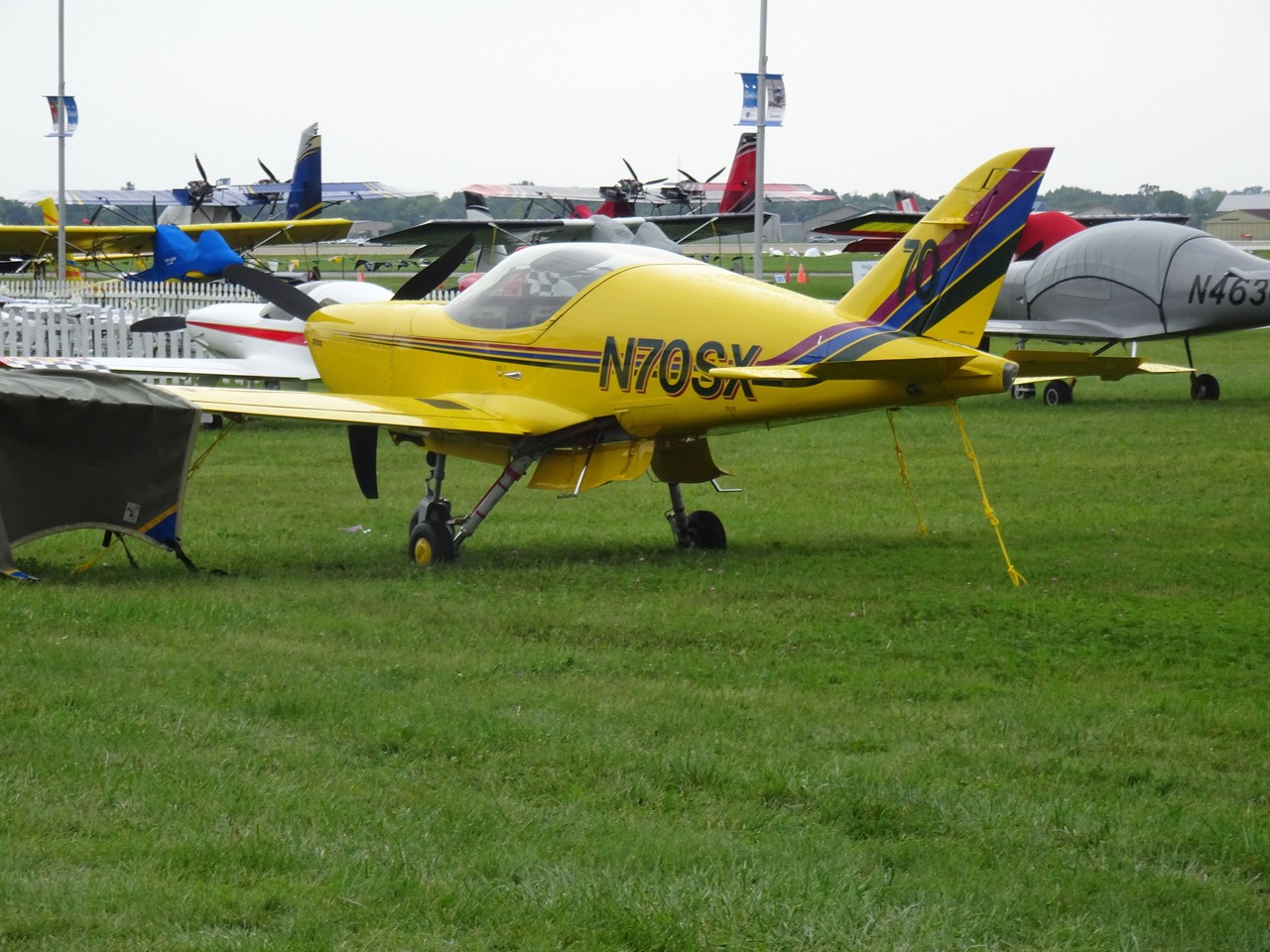
Development and Design Philosophy
Ed Swearingen, the self-taught aeronautical engineer behind the design, conceived the SX-300 as his 29th aircraft project, initially designated S29-300 in 1983. Despite being an eighth-grade dropout, Swearingen had already established himself as an innovator in aviation, having developed exhaust gas temperature monitoring for reciprocating engines and created successful designs like the turbine-powered Merlin series and 19-seat Metro. His vision for the SX-300 centered on creating a high-speed, two-seat kit aircraft that would eventually achieve type certification, though this goal was never realized.
The design philosophy emphasized traditional aluminum construction while achieving the smoothness and minimal drag typically associated with composite aircraft. Swearingen stressed the airframe for +6/-3g loads, making it suitable for spirited flying. The aircraft featured wet wings with fuel capacity of 30 gallons per side, providing 66 usable gallons total, and incorporated a unique retractable landing gear system that folded rearward into the fuselage.
Production History and Market Response
Swearingen Aircraft produced SX-300 kits from 1986 to 1989 at their San Antonio, Texas facility. The company sold approximately 80 to 90 kits during this three-year production run, though only 48 sets of landing gear were manufactured, creating a bottleneck that limited completed aircraft numbers. Of the kits sold, about 45 aircraft were actually completed and flown, reflecting both the complexity of the design and the advanced building skills required.
The kit's complexity made it suitable only for experienced builders, as the sophisticated retractable gear system and high-performance design demanded precision assembly. This selectivity in the builder market, combined with the limited landing gear production, contributed to the relatively small number of completed aircraft despite the initial interest in the design.
The Manufacturer's Legacy
Swearingen Aircraft, founded by Ed Swearingen in 1959, operated with headquarters in Cedar City, Utah, and manufacturing facilities in San Antonio, Texas. The company built its reputation through innovative aircraft modifications and original designs, including transforming the Piper PA-30 Twin Comanche and developing the Swearingen Merlin from the Beech Twin Bonanza platform. Beyond the SX-300, Swearingen's portfolio included the SA26 Merlin series, the Metro commuter aircraft, and later the SJ30 business jet.
The company evolved through various partnerships and ownership changes, including the Sino Swearingen venture for SJ30 development. After facing challenges including Hurricane Ike's destruction of an SJ30 prototype in 2008, the company was eventually acquired and rebranded. By 2013, it had become part of MSC Aerospace, with SyberJet Aircraft continuing operations from Cedar City, Utah, and Texas, focusing on the SJ30 series.
Technical Innovation and Performance
The heart of the SX-300's performance lay in its Lycoming IO-540 powerplant, a six-cylinder, air-cooled, horizontally-opposed piston engine producing 300 horsepower. This engine, manufactured by Lycoming Engines (a division of Textron Aviation), drove a three-bladed constant-speed propeller with a diameter of 6 feet 2 inches. The horizontally-opposed configuration provided smooth operation essential for the aircraft's high-speed mission profile.
Swearingen's attention to drag reduction and aerodynamic efficiency resulted in what enthusiasts described as "blisteringly fast" performance for a light aircraft. The clean lines, retractable gear, and powerful engine combination created performance levels that stood out even among high-end homebuilt aircraft of the era.
Safety Record and Operational Challenges
Despite its performance capabilities, the SX-300 developed a concerning safety record that affected its reputation. At least seven fatal accidents were recorded in NTSB databases, including crashes of N336SX on December 27, 1992, N2H on June 12, 1994, and N357SX on March 7, 1997, among others. Additionally, the type experienced five documented gear collapses attributed to main landing gear trunnion failures, highlighting a recurring structural weakness.
These safety issues, combined with the aircraft's demanding flight characteristics and complex systems, contributed to its reputation as an aircraft requiring experienced, proficient pilots. The high accident rate served as a sobering reminder that exceptional performance often came with increased operational demands.
Current Status and Legacy
As of 2023, approximately 30 SX-300s remained in flying condition, representing about two-thirds of the aircraft that were originally completed and flown. Parts support continues through Midwest Aero, located at 32627 Airport Drive, Paola, Kansas 66071, providing ongoing maintenance support for the surviving fleet.
The SX-300's influence on homebuilt aviation extended beyond its production numbers. It demonstrated that kit aircraft could achieve airline-level performance while maintaining traditional construction methods. A 2023 AVweb review praised it as "one of Swearingen's finest" achievements, recognizing its role in advancing light aircraft performance capabilities. The design philosophy of prioritizing speed over ease of construction influenced subsequent high-performance homebuilt designs, establishing benchmarks that continue to inspire aircraft designers today.