
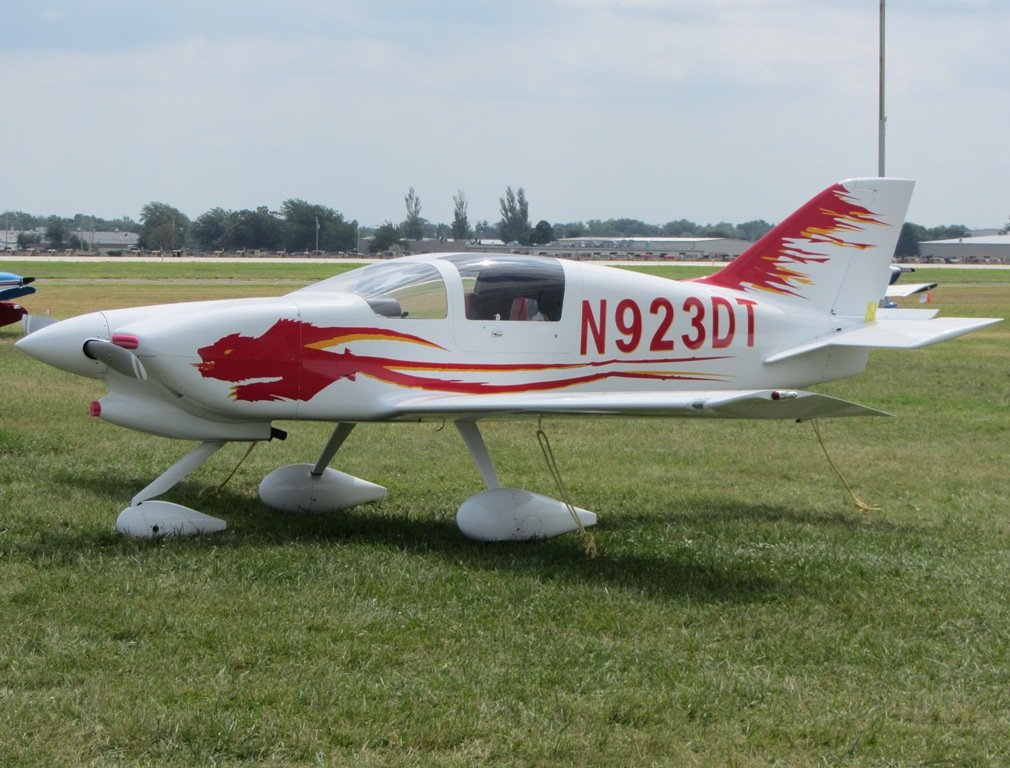
Development and Design Evolution
The Tango-2 emerged from the evolution of the 1983 Aero Mirage TC-2 design, undergoing significant development through the 1990s before reaching production readiness. Team Tango refined the original concept into a sophisticated homebuilt kit, with the first kit-built example N23WE constructed by William N. Wheeler serving as the development prototype. The aircraft's design philosophy centered on delivering exceptional performance within the experimental amateur-built category, targeting builders seeking a fast, sporty aircraft with fighter-like characteristics.
Design objectives emphasized creating a side-by-side two-seat aircraft completable in approximately 1,000 hours of construction time. The engineering approach utilized composite construction throughout, featuring a molded single-piece fuselage, main wing, and horizontal stabilizer spars for exceptional strength-to-weight ratios. This construction method, advanced for its era in kit aircraft, enabled the distinctive gull-wing configuration that contributes to both the aircraft's performance and striking appearance.
Performance Characteristics
The Tango-2's performance envelope places it among the fastest homebuilt aircraft in its class. With the popular Lycoming IO-360 180-horsepower engine installation, the aircraft achieves cruise speeds between 180 and 210 miles per hour, with maximum speeds reaching 220 miles per hour in optimal configurations. The aircraft demonstrates impressive climb capabilities with rates between 1,800 and 3,000 feet per minute, reaching service ceilings of 24,000 feet.
Handling characteristics earned particular praise from pilots, with the aircraft delivering a snappy 120-degree-per-second roll rate that creates what enthusiasts describe as "fighter-like" responsiveness. The stall speed of approximately 60 miles per hour provides reasonable approach speeds for a high-performance design, though the aircraft demands respect and proficiency from its pilots.
Engine Options and Technical Specifications
The Tango-2 accommodates multiple powerplant options within the 150 to 200 horsepower range. The most popular installation remains the Lycoming IO-360, a 180-horsepower four-cylinder air-cooled engine that has powered general aviation aircraft reliably for over six decades. Alternative engines include the Lycoming O-320 (150 hp), O-360 (180 hp), and even the experimental installation of a Geared Drives 205-horsepower EcoTech 2.2-liter supercharged engine from the Chevrolet Cobalt SS.
The aircraft's dimensions reflect its emphasis on efficiency and performance. The 26-foot wingspan supports 78 square feet of wing area, contributing to the aircraft's 2,000-pound gross weight capacity. Empty weight of 1,150 pounds allows for reasonable payload while maintaining the structural integrity essential for high-speed flight. Standard fuel capacity of 58 gallons provides range capabilities exceeding 1,250 nautical miles.
Production History and Variants
Production began around 1999 when DFL Holdings, Inc. initially marketed the kit before Team Tango assumed manufacturing and marketing responsibilities. Based in Williston, Florida, Team Tango continued kit production through at least 2008, with aircraft like N923DT receiving its Certificate of Airworthiness on January 22, 2008, registered to Arthur A. Duvall of Whitehouse, Ohio.
By December 2013, 18 Tango-2 kits had been completed and were flying, with total airframe count reaching 21 by early 2014 including prototypes and variants. The relatively modest production numbers reflect the specialized nature of high-performance homebuilt aircraft and the significant commitment required for construction.
Team Tango expanded the design concept with the Tango XR variant introduced in 2007. The XR features extended range capabilities through increased fuel capacity of 90 gallons, enabling coast-to-coast flights exceeding 2,000 miles. The company also developed the Team Tango Foxtrot, a four-seat derivative that applies the same design philosophy to a larger aircraft configuration.
The Manufacturer
Team Tango represents the evolution from enthusiast-driven aircraft development into a specialized kit manufacturer. The company took over the design from its original developers, focusing exclusively on composite homebuilt aircraft that emphasize performance and construction quality. Based in Williston, Florida, Team Tango operates as a small, specialized firm dedicated to serving the experimental aviation community.
Unlike major aircraft manufacturers, Team Tango's business model centers on providing comprehensive kits that enable amateur builders to construct professional-quality aircraft. The company's approach includes detailed construction manuals, technical support, and component manufacturing that maintains consistency across builds while allowing for individual customization.
Current Status and Legacy
As of the most recent available data, at least 18 Tango-2 aircraft and one XR variant were actively flying, though current numbers may have changed since 2014 records. The aircraft maintains a presence at experimental aviation gatherings and has developed a reputation within the homebuilt community for exceptional performance and distinctive appearance.
The Tango-2's significance within experimental aviation extends beyond its production numbers. It represents successful evolution of 1980s composite technology into practical, buildable kits that deliver airline-level cruise speeds to private builders. The aircraft influenced subsequent sport aircraft development and demonstrated that small manufacturers could produce sophisticated designs rivaling certified aircraft performance while remaining accessible to amateur builders.