
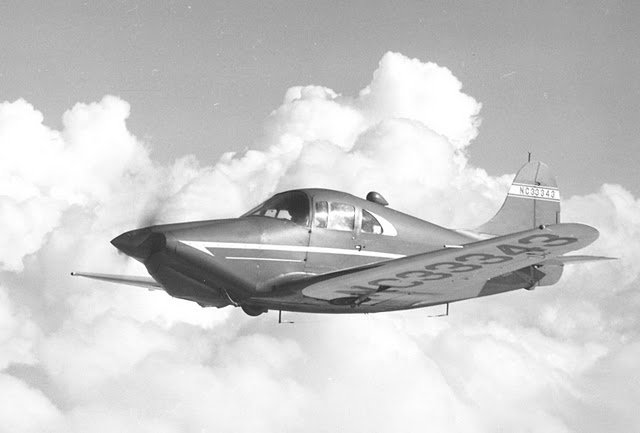
Development and Design
The Texas Bullet 205 originated from American Motor Company's brief venture into aviation manufacturing between 2002 and 2006. AMC, primarily known for automotive components, established an aviation division in Fort Worth, Texas, with the goal of creating a high-performance aircraft for the growing sport aviation market.
The aircraft's design emphasized speed and efficiency, featuring a sleek low-wing configuration with retractable landing gear and a carefully sculpted fuselage. The prototype first took to the skies in March 2003, piloted by former military test pilot Captain Robert Martinez. Initial flight tests revealed a cruise speed of 195 miles per hour at 8,000 feet, making it competitive with other high-performance singles of the era.
Technical Specifications
Powered by a modified Lycoming IO-360-A1B6 engine producing 180 horsepower, the Texas Bullet 205 incorporated several innovative features for its class. The engine was fitted with a three-blade constant-speed propeller and a turbocharger system that allowed the aircraft to maintain power output at higher altitudes. The fuel system held 52 gallons of aviation gasoline, providing a range of approximately 850 nautical miles.
The cockpit featured modern avionics for the time period, including a Garmin GNS 430 GPS/NAV/COM unit and a basic autopilot system. The aircraft's empty weight was 1,450 pounds with a maximum takeoff weight of 2,400 pounds, allowing for a useful load of 950 pounds.
Production History
AMC's aviation division faced significant challenges from the outset. The company's lack of experience in aircraft manufacturing led to quality control issues and delivery delays. Production began in late 2003 at a facility adjacent to Fort Worth Meacham International Airport, with an initial goal of producing 50 aircraft per year.
By 2005, only 23 Texas Bullet 205 aircraft had been completed and delivered to customers. The high production costs, combined with AMC's financial difficulties in their primary automotive business, forced the company to halt aircraft production in early 2006. The remaining parts inventory and tooling were sold to a group of investors who briefly attempted to continue production under the name Lone Star Aviation, but this venture folded within six months.
Operational Experience
Owners of the Texas Bullet 205 generally praised its performance characteristics, particularly its speed and fuel efficiency. The aircraft could cruise at 185 miles per hour while consuming only 9.5 gallons per hour, making it economical for cross-country travel. The cockpit was noted for its excellent visibility and comfortable seating arrangement.
However, several operational issues emerged during the aircraft's brief production run. The turbocharger system proved problematic, requiring frequent maintenance and occasional replacement. Additionally, the retractable landing gear system experienced reliability issues, leading to several gear-up landings during the aircraft's service history.
The Manufacturer's Legacy
American Motor Company's aviation division represented a short-lived but ambitious attempt to diversify beyond automotive manufacturing. The company had been founded in 1987 as a supplier of specialized components for racing vehicles and had achieved success in the NASCAR and IndyCar markets throughout the 1990s.
The decision to enter aviation manufacturing was driven by company president James Mitchell, himself a private pilot who believed AMC's precision manufacturing capabilities could translate to aircraft production. Despite the failure of the Texas Bullet program, several former AMC engineers went on to join established aviation companies, bringing valuable experience to the industry.
Current Status
Today, approximately 18 of the original 23 Texas Bullet 205 aircraft remain airworthy, according to FAA registration records. The aircraft has developed a small but dedicated following among sport aviation enthusiasts who appreciate its unique design and performance characteristics. Parts availability remains a challenge for owners, with many components requiring custom fabrication or adaptation from similar aircraft.
Several Texas Bullet 205 aircraft have been modified with modern avionics upgrades, including glass cockpit displays and advanced GPS systems. One aircraft, tail number N205TB, was featured at the 2019 Sun 'n Fun Aerospace Expo as part of a display highlighting unique American aircraft designs of the 2000s.
The Texas Bullet 205 serves as a reminder of the challenges facing small aircraft manufacturers in the modern aviation market, where certification costs and liability concerns present significant barriers to entry for new companies.