
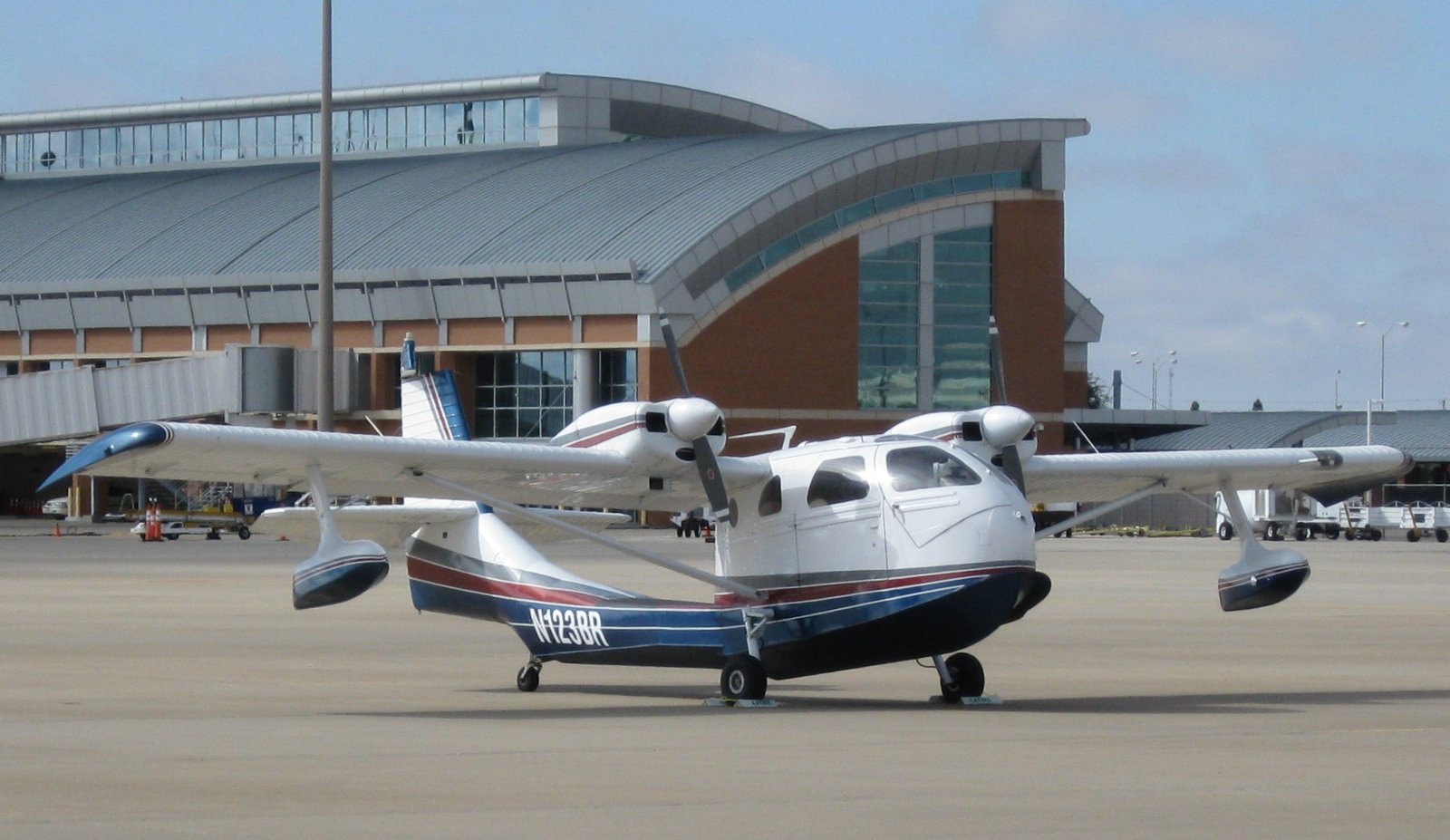
Development and Design
The UC-1 Twin Bee emerged from the vision of Joseph W. Gigante, a former Helio Company engineer who recognized the fundamental shortcomings of the Republic RC-3 Seabee's underpowered 215-horsepower Franklin engine. In 1960, Gigante established United Consultants Corporation in Norwood, Massachusetts, specifically to develop a twin-engine conversion that would transform the Seabee into a more capable amphibious aircraft. His engineering solution involved replacing the original single pusher engine with twin 180-horsepower Lycoming IO-360-B1D engines mounted in tractor configuration close to the cabin.
Gigante's design incorporated several significant modifications to the basic Seabee airframe. The fuselage was stretched four feet aft of the cockpit to accommodate a fifth seat, while the wings received 2.5-foot extensions on each tip to improve handling characteristics with the new powerplant configuration. The removal of the pusher engine created space for additional passenger capacity, addressing one of the original Seabee's limitations. Full-feathering Hartzell propellers enhanced single-engine safety, a critical improvement for overwater operations.
Production History
The prototype UC-1 achieved first flight in 1962, leading to FAA type certification on June 25, 1965. United Consultants Corporation initiated production that same year, manufacturing aircraft through the late 1960s before ceasing direct production operations. The company's focus remained narrow, concentrating solely on amphibious modifications rather than expanding into other aviation sectors.
Production rights subsequently transferred to STOL Aircraft Corporation, which continued manufacturing through the 1980s. Combined production between both companies totaled 23 aircraft, with STOL Aircraft building 24 examples including prototypes and conversions during their manufacturing period. This modest production run reflected the specialized nature of the amphibious aircraft market and the relatively high costs associated with twin-engine conversions.
Technical Innovation
The Twin Bee's engineering solutions addressed several challenges inherent in converting a single-engine amphibian to twin-engine configuration. The twin Lycoming engines provided 360 total horsepower compared to the original Seabee's 215 horsepower, dramatically improving takeoff performance on both water and land surfaces. However, the new powerplant arrangement created center-of-gravity challenges that Gigante solved through an innovative fuel system incorporating an 85-gallon main tank supplemented by a 16-gallon tail tank for balance adjustments.
The aircraft retained the Seabee's amphibious capabilities while adding short takeoff and landing performance that made it attractive for operations from confined waterways and airports. Notable design features included a locking tailwheel system for operations on both water and land surfaces, and specially designed cabin doors with safety lights and fasteners to prevent propeller strikes during ground operations.
Operational Service
The UC-1 Twin Bee served exclusively in civilian roles, finding its primary market among private owners seeking enhanced amphibious capabilities. By April 2009, fifteen examples remained registered in the United States, with additional aircraft operating in Switzerland and the Philippines. The type never entered commercial airline service or military operations, instead carving out a niche in the private seaplane community.
Operational characteristics included a maximum speed of 147 mph and cruising speed of 131 mph, with an impressive range of 900 miles. The aircraft's service ceiling reached 19,000 feet, though most operations occurred at much lower altitudes typical of amphibious flying. The remarkably low stall speed of 38 mph contributed to its short-field performance capabilities.
Legacy and Current Status
The Twin Bee holds the distinction of being among the last multi-engine flying boats produced in the United States, with STOL Aircraft's 1980s production marking the end of an era in American amphibious aviation. Joseph W. Gigante continued his involvement in the type until his death in 2012, having advertised the design rights for sale as late as September 2006.
As of recent FAA registry data, approximately 13 UC-1 Twin Bees remain registered, with an estimated nine aircraft maintaining airworthy status. Several examples have been lost to accidents over the decades, including three destroyed aircraft and one salvaged for parts. Notable surviving examples include Hull #23, recognized as the newest flying example and considered a historical artifact of American amphibious aviation development.
The Twin Bee's contribution to aviation history lies not in production numbers but in its role as an innovative engineering solution that extended the operational life and capabilities of the Republic Seabee design. While United Consultants Corporation and STOL Aircraft Corporation no longer exist, their twin-engine conversion concept demonstrated the possibilities for improving existing aircraft designs through creative engineering approaches.