
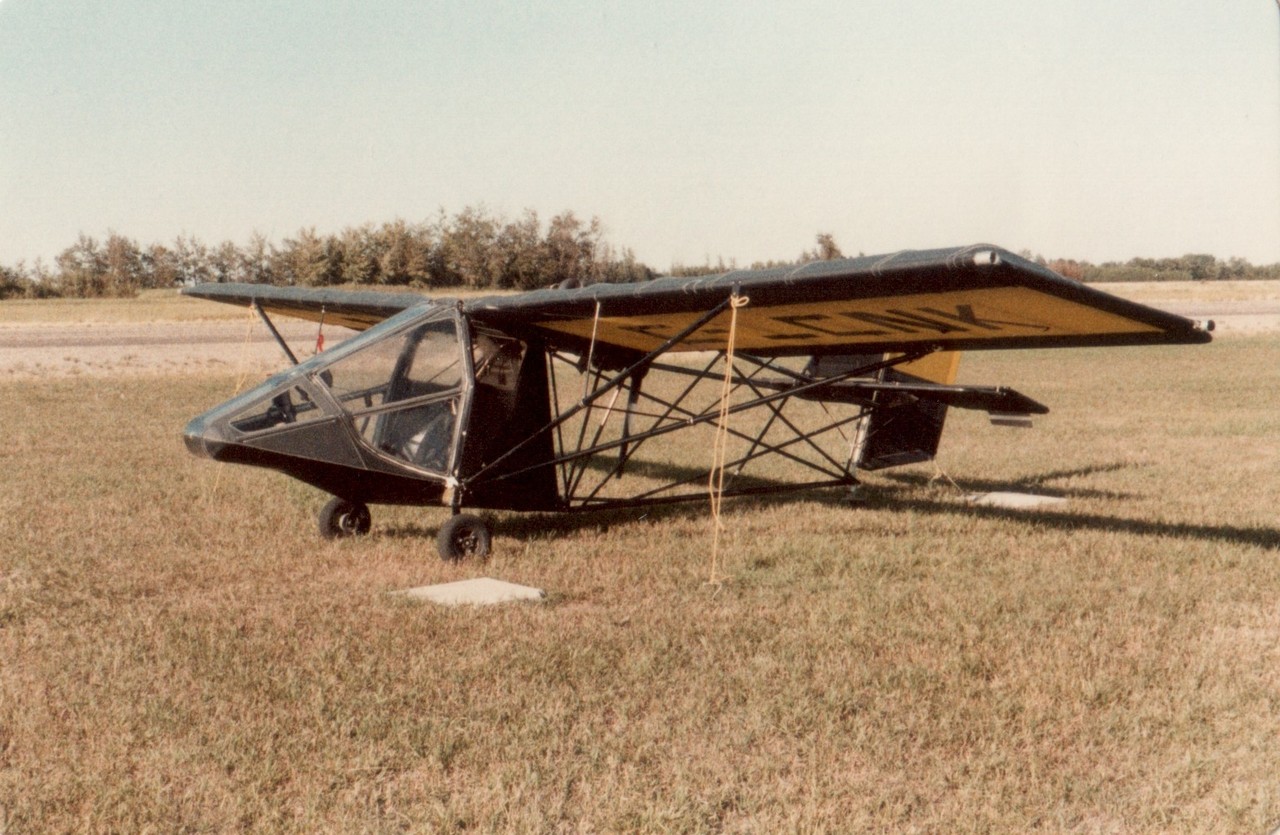
Design Evolution and Development
The T-Bird III represented the culmination of a design lineage that began with the original Teratorn Tierra family in the early 1980s. When Teratorn Aircraft of Clear Lake, Iowa ceased operations in 1989, Golden Circle Air of De Soto, Iowa acquired the proven designs and immediately began developing expanded variants. The company recognized the market potential for a three-seat configuration that could serve both recreational flying and commercial agricultural applications.
Golden Circle Air's engineers retained the fundamental high-wing, strut-braced pusher configuration that had made the T-Bird family successful while extending the cabin to accommodate three occupants. The aircraft featured two front seats arranged side-by-side with a single rear seat, though operators could substitute extended cargo space for agricultural or utility work. This flexibility made the T-Bird III particularly attractive to commercial operators who needed seasonal versatility.
Manufacturing and Production
Construction followed proven methods established by the earlier T-Bird models, utilizing 6061-T6 aluminum tubing assembled with bolted connections rather than welding. This approach simplified manufacturing while allowing field repairs and modifications. The aircraft incorporated a two-bladed ground-adjustable propeller driven by the standard 64-horsepower Rotax 582 engine, an Austrian-manufactured two-cylinder, two-stroke powerplant that had gained widespread acceptance in the ultralight community.
Production commenced in 1990, with Golden Circle Air building aircraft steadily through the 1990s and into the 2000s. By 2004, company records indicated 78 T-Bird III aircraft were operating worldwide, representing a modest but consistent market presence. The aircraft appealed particularly to operators requiring agricultural capabilities, with optional spray gear available for crop-dusting operations.
Agricultural Applications
The T-Bird III found its primary commercial niche in agricultural aviation, where its three-seat configuration allowed for pilot training while maintaining spray capability. The aircraft's 36-mph stall speed and docile handling characteristics made it suitable for low-level agricultural work, while the pusher configuration kept the propeller away from chemical spray patterns. Optional equipment included comprehensive agricultural spray systems, strut fairings for improved performance, and tundra tires for operations from unprepared airstrips.
The extended cargo variant, marketed as the T-Bird Cargo, provided additional utility for operators requiring freight capability rather than passenger seating. This configuration proved popular with agricultural operations that needed to transport supplies and equipment to remote locations.
Performance Characteristics
With its Rotax 582 powerplant, the T-Bird III achieved a maximum cruise speed of 70 mph at optimum altitude, balancing fuel efficiency with reasonable travel times. The aircraft's never-exceed speed of 85 mph provided an adequate safety margin while maintaining structural integrity within ultralight design parameters. Its 36-mph stall speed contributed to short-field performance and enhanced safety margins during agricultural operations.
The pusher configuration, while creating some unique handling characteristics, offered advantages in visibility and center-of-gravity management. Pilots reported stable flight characteristics and predictable stall behavior, though the rear-mounted engine required attention to weight and balance calculations when loading the extended cargo area.
Corporate Transitions
Golden Circle Air maintained production through the late 1990s and into the 2000s, but market pressures and regulatory changes affecting ultralight aircraft manufacturers led to the company's closure around 2006. The T-Bird designs entered a dormant period until 2011, when Indy Aircraft of Independence, Iowa acquired the production rights and technical data.
Indy Aircraft held the T-Bird rights for a decade, providing parts and support for existing aircraft while exploring potential production restart options. In 2021, Tbird Aircraft acquired the complete T-Bird portfolio from Indy Aircraft, including rights to all variants and accumulated technical improvements.
Current Status and Legacy
Tbird Aircraft continues supporting existing T-Bird III operators with parts, technical assistance, and aircraft refurbishment services. While no new T-Bird III aircraft are currently in production, the company maintains the technical capability to manufacture components and assemblies for the 78 aircraft still operating.
The T-Bird III contributed to the broader success of the T-Bird family, which achieved production of more than 4,000 aircraft across all variants since 1983. This production volume established the design as one of the most successful ultralight families in aviation history, with examples operating on every continent.
Tbird Aircraft has announced development of the Tbird TU, a new design conforming to FAR Part 103 ultralight regulations, suggesting the company's commitment to continuing the T-Bird legacy with modern regulatory compliance and updated technology.