
Design Innovation and Construction
Wilbur L. Smith's approach to aircraft design broke conventional engineering traditions when he laid out the Termite's blueprints using chalk directly on his basement floor. This unorthodox method proved effective, as Smith drew upon his extensive experience as a wooden aircraft builder, having previously constructed a Pietenpol Sky Scout in 1930. Don Cookman later formalized Smith's chalk drawings into proper construction plans, preserving the design for posterity.
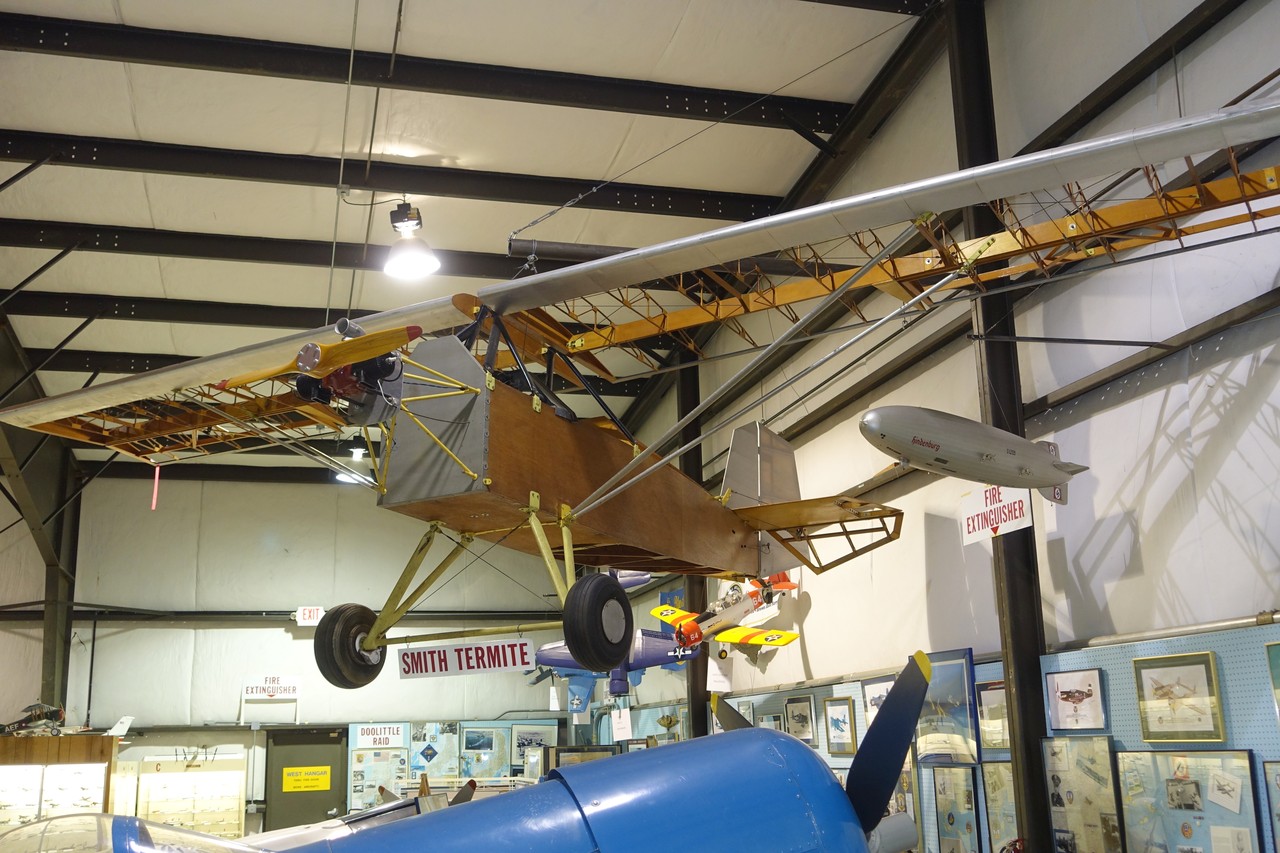
The Termite embodied pure wooden aircraft construction philosophy, utilizing spruce as the primary structural material with birch plywood covering. Smith demonstrated resourcefulness by salvaging wing spars from a derelict Aeronca K aircraft and adapting control systems from a Piper Cub. Only essential components departed from the all-wood construction: the motor mount, wing struts, and landing gear were fabricated from steel. The aircraft's minimalist design philosophy extended to eliminating traditional amenities like wheel brakes and a tailwheel, reducing both weight and complexity.
Flight Testing and Engine Evolution
The Termite's maiden flight on February 10, 1957, marked the culmination of Smith's basement-to-sky engineering approach. Initial flight testing revealed the aircraft's docile handling characteristics, with a remarkably low stall speed of just 32 mph enabled by the proven Clark Y airfoil section. However, the original Aeronca E113-C powerplant, producing 36 horsepower from its inline configuration, proved problematic during the test program.
An engine failure during testing resulted in a forced landing that flipped the aircraft inverted, demonstrating both the hazards of experimental aviation and the aircraft's structural integrity. Following repairs, Smith upgraded the powerplant to a Continental A-40 engine, providing more reliable operation for continued flight testing. This engine change reflected the common homebuilder practice of iterative improvement based on operational experience.
Performance Characteristics
Despite its modest power output, the Termite achieved impressive performance figures that validated Smith's lightweight construction approach. The aircraft's 628-pound gross weight enabled a maximum speed of 93 mph and a comfortable cruise speed of 80 mph. More significantly, the efficient design delivered a service ceiling of 8,000 feet and a range of 200 miles, making it suitable for local recreational flying.
The Termite's rate of climb of 450 feet per minute compared favorably with contemporary production light aircraft, demonstrating that thoughtful design could overcome power limitations. The parasol wing configuration provided excellent visibility for the single pilot while maintaining structural simplicity compared to low-wing alternatives requiring complex landing gear arrangements.
The Builder's Legacy
Wilbur L. Smith represented the archetypal American homebuilder of the 1950s experimental aviation movement. His transition from the earlier Pietenpol Sky Scout project to the original Termite design illustrated the evolution of homebuilt aircraft from simple ultralights toward more sophisticated recreational aircraft. Smith's willingness to salvage components from existing aircraft reflected both economic necessity and the practical approach that characterized successful amateur builders.
The decision to create formal plans through Don Cookman's draftsmanship ensured that Smith's unconventional design process would be preserved in conventional engineering drawings. However, the Termite remained a one-off project rather than spawning additional examples, typical of many innovative homebuilt designs that served primarily as proof-of-concept aircraft for their builders.
Museum Preservation and Educational Value
The Oregon Air & Space Museum in Eugene, Oregon, recognized the Termite's historical significance by adding it to their permanent collection. The museum's decision to display the aircraft with fabric covering removed provides visitors with an exceptional view of wooden aircraft construction techniques. This presentation allows observers to study the spruce framework, birch plywood skin attachment methods, and the integration of salvaged components into Smith's original design.
The museum display serves as a tangible link to the post-World War II era when surplus aviation materials enabled ambitious homebuilders to create aircraft using primarily hand tools and workshop facilities. The Termite's survival contrasts with many experimental aircraft that were eventually scrapped or destroyed in accidents, making its preservation particularly valuable for aviation historians studying the homebuilt movement's development.
Historical Context
The Smith Termite emerged during a golden age of American experimental aviation when regulatory frameworks encouraged amateur construction and military surplus components were readily available. The aircraft's 1957 first flight placed it among the pioneering designs that established homebuilt aviation as a legitimate recreational pursuit. Smith's successful integration of salvaged military aircraft components with original wooden construction demonstrated the hybrid approach that many builders adopted during this period.
The Termite's single-example production run reflected the personal nature of 1950s homebuilt aviation, where builders typically constructed aircraft for their own use rather than commercial distribution. This approach fostered innovation and experimentation while creating a diverse population of unique aircraft that contributed to general aviation's technological advancement.