
Market Dominance and International Success
Since entering production in 1999, the Texan has established itself as a premier choice in the competitive light-sport aircraft segment. The aircraft achieved international recognition when it made its Australian debut at the Avalon Air Show in March 2005, marking the beginning of its global expansion. By 2006, the type had gained certification in New Zealand, where five aircraft were registered within the first operational years. The Texan's market penetration extended across Europe, with documented registrations in Belgium, Hungary, and numerous other nations.
Manufacturing Evolution
Fly Synthesis Srl, headquartered in Mortegliano, Italy, originally developed the Texan as part of their specialized carbon fiber aircraft lineup. The company's expertise in composite construction made them a significant player in the ultralight market, with the Texan joining a family that included the Storch (introduced 1990), Syncro (2009), and the amphibious Catalina (2010). Production initially began in the Czech Republic before operations consolidated in Italy.
In a major corporate restructuring, Gryphen Aircraft Industries acquired Fly Synthesis, continuing production under the designation Gryphen Aircraft Industries Srl (ex-Fly Synthesis). This transition ensured continuity of the Texan line while maintaining the engineering standards that made the aircraft successful. As of 2026, manufacturing remains active with ongoing deliveries to international customers.
Engineering Excellence and Construction
The Texan's all-carbon fiber construction represents advanced composite engineering rarely seen in the light-sport category. This material choice provides exceptional strength-to-weight ratios while enabling the sleek aerodynamic profile that contributes to the aircraft's impressive performance figures. The 11.80 square meter wing area generates efficient lift characteristics, supporting gross weights up to 1,323 pounds in current configurations.
The aircraft measures 22 feet 8 inches in length with its 28 feet 3 inch wingspan creating an elegant proportion that enhances both appearance and aerodynamic efficiency. The low-wing configuration provides stability in cruise flight while maintaining responsive handling characteristics valued by sport pilots.
Powerplant Evolution
Throughout its production history, the Texan has utilized Austrian Rotax engines as its primary powerplant option. The base Texan Club variant employs the reliable 80-horsepower Rotax 912UL, while more performance-oriented models feature the 100-horsepower 912ULS. An alternative 85-horsepower Jabiru 2200 four-stroke engine has been offered for operators preferring this Australian-manufactured powerplant.
The most significant advancement came in 2022 with the introduction of a new Texan variant powered by the 141-horsepower Rotax 915 turbocharged engine. This configuration transforms the aircraft's performance envelope, achieving maximum speeds of 180 mph and cruise speeds of 140 mph. The enhanced power enables a service ceiling increase and impressive climb rates of 1,400 feet per minute.
Variant Development
Fly Synthesis developed multiple Texan configurations to address different market segments and operational requirements. The Texan TC features fixed tricycle landing gear for simplified ground operations, while the Texan RG incorporates retractable gear operated by compressed air with manual backup systems. The Texan Top Class variant was specifically designed for European microlight regulations, featuring a reduced gross weight of 1,042 pounds while maintaining fixed landing gear.
The Texan 600, released in 2007, represented a significant upgrade with increased useful load capacity, reinforced landing gear incorporating toe-operated brakes, and refined aerodynamic improvements. This variant addressed operator feedback while expanding the aircraft's utility for cross-country flying.
Performance Capabilities
Modern Texan variants demonstrate impressive performance specifications that rival much larger aircraft. The latest 915-powered model achieves a maximum range of 810 miles from its dual 65-liter fuel tanks, providing genuine cross-country capability. The aircraft's 35-knot stall speed ensures manageable approach speeds, while structural limits of +4/-2 G permit aerobatic maneuvering.
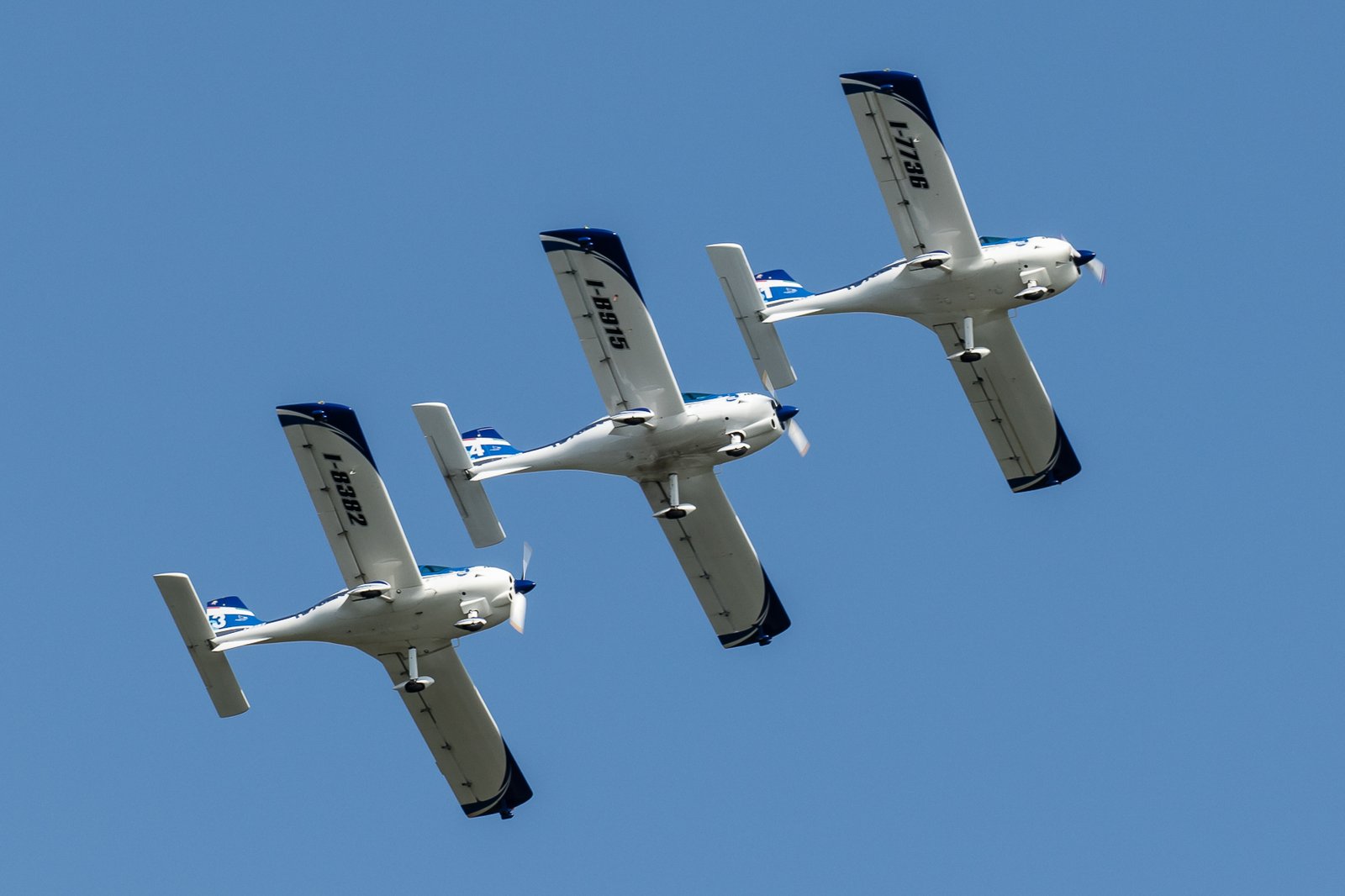
These performance figures enabled the Texan to achieve a notable aviation record on November 23, 2013, when six aircraft established a Guinness World Record for the lowest flying formation. The formation flew at 1,385 feet below sea level over the Dead Sea in Israel, demonstrating both the aircraft's capabilities and pilot confidence in its systems.
Current Operations and Legacy
Today, Texans continue operating across multiple continents in roles ranging from flight training to recreational flying. The aircraft's combination of modern avionics compatibility, efficient operation, and impressive performance has maintained its relevance in an increasingly competitive market. Production under Gryphen Aircraft Industries ensures continued parts support and technical development for existing operators while attracting new customers seeking high-performance light-sport aircraft.