
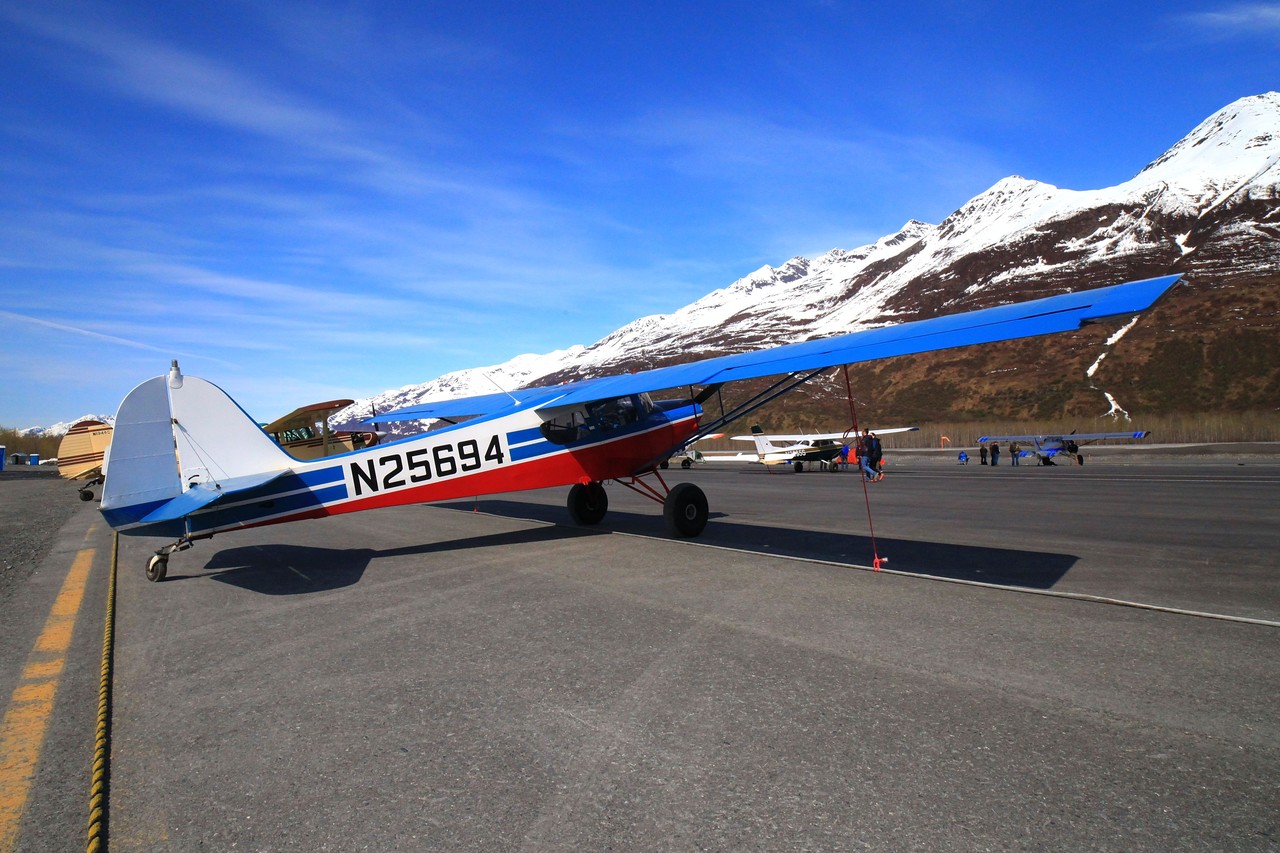
The Return of Taylorcraft
The F-19 Sportsman emerged during a renaissance period for general aviation, as Charles Feris acquired the dormant Taylorcraft name and factory in Alliance, Ohio in 1971. After forming Taylorcraft Aviation Corporation in 1968 initially for parts support, Feris assembled a team of veteran engineers who drew upon C.G. Taylor's original 1930s designs to create a modern interpretation of the classic Taylorcraft formula. The result was an aircraft that bridged four decades of aviation development while maintaining the fundamental characteristics that had made Taylorcraft popular before World War II.
Design Philosophy and Innovation
The F-19's design team focused on updating the pre-war Model 19 and BC-12D with contemporary performance expectations. They retained the proven steel-tube fuselage construction with fabric covering and wooden-spar wings, but increased the powerplant from 85 to 100 horsepower with the Continental O-200 engine. This power increase, combined with a higher gross weight of 1,500 pounds, delivered a cruise speed of 115 mph and maximum speed of 127 mph at sea level.
Key improvements over earlier models included a 24-gallon fuel system that was later expanded to 42 gallons in some variants, an overhead skylight for enhanced visibility, upgraded brake systems, and a larger baggage compartment. These modifications transformed the basic trainer concept into a more capable cross-country tourer while preserving the docile handling characteristics and short-field performance that defined the Taylorcraft lineage.
The Continental O-200 Powerplant
The choice of Continental's O-200 engine proved ideal for the F-19's mission profile. This four-cylinder, horizontally-opposed powerplant had entered production in 1963 and powered thousands of light aircraft including the popular Cessna 150. Producing 100 horsepower at 2,750 rpm, the O-200 provided reliable operation with smooth characteristics well-suited to training operations. The engine's carburetor system and straightforward maintenance requirements aligned with Taylorcraft's philosophy of keeping aircraft ownership accessible to private pilots.
The Taylorcraft Legacy
Taylorcraft's aviation heritage stretched back to 1929 when C.G. Taylor and his brother founded Taylor Brothers Aviation Corporation. The company had produced thousands of light aircraft before a devastating factory fire in Alliance, Ohio led to bankruptcy in 1946. Multiple attempts at revival followed, including C.G. Taylor's own effort in Conway, Pennsylvania in 1949, but none achieved sustained success until Charles and Dorothy Feris acquired the type certificates and returned production to the original Alliance facility.
The F-19 represented more than just another light aircraft - it symbolized the continuity of American general aviation manufacturing through multiple economic cycles and corporate transitions. By the time production began in 1973, the aviation industry was experiencing unprecedented growth in private flying, creating demand for affordable training and personal aircraft.
Production and Performance
During its seven-year production run from 1973 to early 1980, Taylorcraft Aviation Corporation completed approximately 120 F-19 Sportsman aircraft. Each aircraft measured 22 feet 1.25 inches in length with a height of 6 feet 6 inches and wing area of 183.71 square feet. The resulting aspect ratio of 7.05 provided efficient lift characteristics for short-field operations.
Performance specifications included a service ceiling of 18,000 feet and range of 400 miles, making the F-19 suitable for both local training flights and modest cross-country trips. With an empty weight of 900 pounds, the aircraft could carry two occupants and baggage up to its 1,500-pound gross weight limit.
Operational Service
The F-19 Sportsman found its primary role serving private owners who valued its combination of classical flying characteristics and modern reliability. Flight training schools appreciated the side-by-side seating arrangement, which provided better instructor-student communication compared to tandem designs. The aircraft also proved popular for personal transportation and recreational flying, particularly among pilots who preferred conventional landing gear and fabric-covered construction.
Unlike earlier Taylorcraft models such as the DCO-65 that served with British and Canadian air observation post squadrons during World War II, the F-19 remained exclusively in civilian service. Its design priorities emphasized comfort and cross-country capability rather than the austere military requirements that had influenced earlier variants.
Legacy and Survival
When F-19 production ended in 1980, Taylorcraft Aviation Corporation transitioned to manufacturing the F-21 model, which continued until 1994. The company's assets were subsequently acquired by Harry Ingram in 2002, who formed a new Taylorcraft Aviation in La Grange, Texas with plans to develop light sport aircraft variants.
Today, the F-19 Sportsman occupies a unique position in aviation history as one of the final expressions of 1930s design philosophy adapted for modern general aviation. While exact numbers of airworthy examples remain unknown, the type continues to attract enthusiasts who appreciate its connection to aviation's golden age and its role in preserving traditional construction methods in an increasingly composite-dominated industry.