
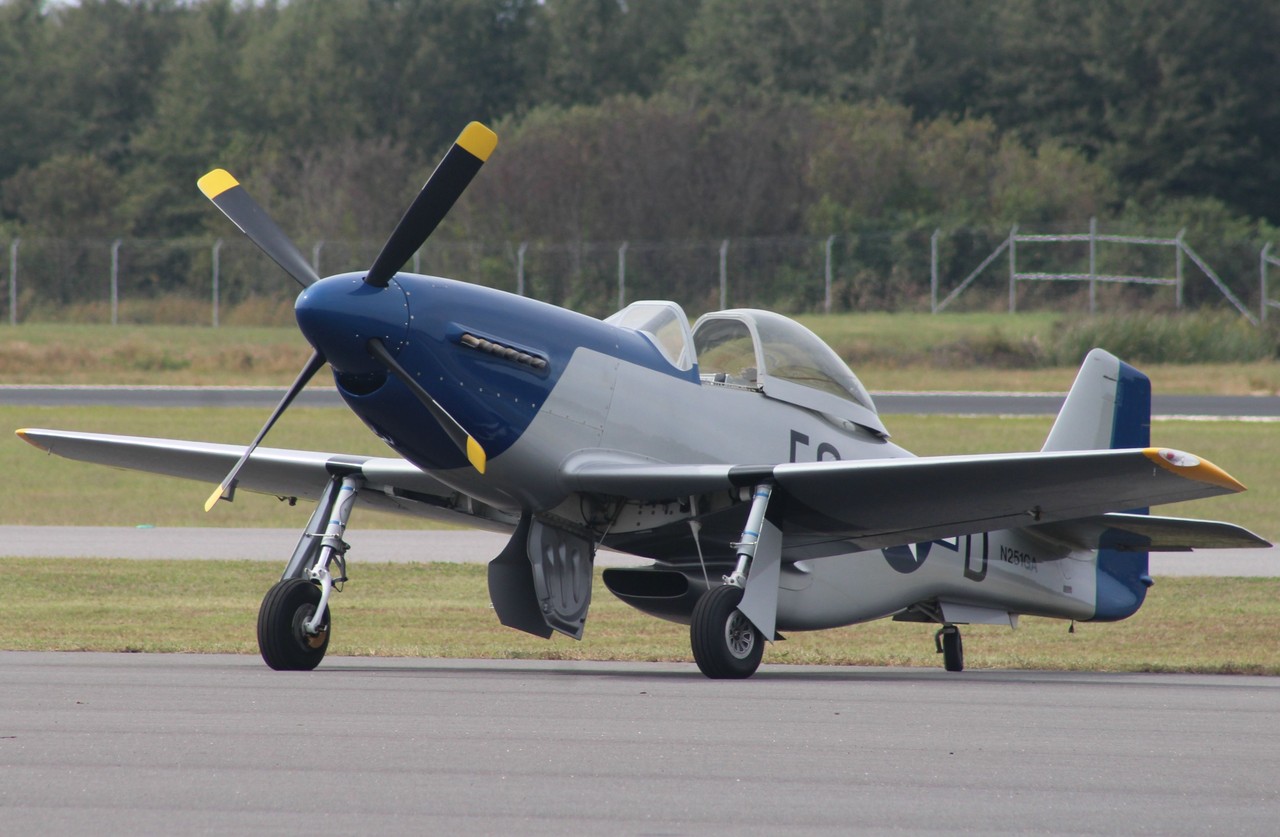
Racing Dominance and Performance
The Thunder Mustang quickly established itself as the ultimate expression of homebuilt aircraft performance, regularly competing at the Reno Air Races where it demonstrated capabilities that surpassed the original P-51D Mustang. Racing variants achieved qualifying speeds between 320 and 380 mph, with modified examples exceeding 400 mph in top configuration. Notable racing aircraft included Blue Thunder (Race 351/N351BT), which secured second place in the 2002 Sport class Gold race, showcasing the design's competitive potential against purpose-built racing machines.
By 1997, Thunder Mustangs were actively competing in air racing circuits, with pilot Dan Parker among the early adopters who proved the aircraft's racing credentials. The combination of modern composite construction and the powerful Falconer V-12 engine created a formidable racing platform that attracted serious competitors seeking maximum performance in the kit aircraft category.
The Manufacturer's Brief History
Papa 51 Ltd. Co. emerged in 1995 with the specific mission of bringing three-quarters scale P-51D performance to the homebuilt market. Operating from Idaho, the company represented an ambitious attempt to commercialize cutting-edge composite kit technology for civilian builders. During its brief operational period from 1995 to approximately 1998-1999, Papa 51 managed to sell exactly 37 complete kits before financial difficulties forced closure.
The company's demise created a crisis for kit builders with incomplete projects, leading to the formation of the Thunder Mustang Builders Group (TBG), which acquired Papa 51's assets to provide ongoing support. In September 2010, TBG transferred the molds and intellectual property to Dean Holt Construction L.L.C. of Mount Vernon, Washington, in an attempt to resume production, though sustained manufacturing never materialized under the new ownership.
Engineering Excellence: The Falconer V-12
The heart of the Thunder Mustang's exceptional performance lay in its powerplant—the Falconer V-12 liquid-cooled engine producing 600 horsepower. Ryan Falconer Racing Engines developed this specialized aviation engine based on modified Chevrolet small-block V8 architecture, incorporating long-runner electronic sequential tuned-port fuel injection and a 10.9:1 compression ratio optimized for aviation use.
The engine featured a hydraulic roller camshaft designed for superior low-RPM torque delivery and exhaust spacing scaled to three-quarters dimensions to match the Merlin-like sound characteristics that made the original P-51D famous. This powerplant drove a Hartzell 101.5-inch three-blade constant-speed propeller equipped with a 60-degree high-pitch stop to prevent dangerous overspeed conditions during racing operations.
Pilot Experience and Handling
Pilots praised the Thunder Mustang for delivering authentic P-51D flying characteristics while incorporating modern safety and performance enhancements. The all-composite construction provided exceptional strength-to-weight ratios that enabled the aircraft to exceed the performance envelope of its wartime inspiration. The two-seat configuration allowed for training flights and passenger experiences, making the warbird experience accessible to civilians.
Despite its high-performance nature, the Thunder Mustang demonstrated remarkable reliability in racing applications. Even when mechanical issues occurred, pilots consistently achieved safe landings, testimony to both the robust design and the predictable handling characteristics that made emergency procedures manageable even at racing speeds.
Production Legacy and Current Status
Of the 37 kits sold by Papa 51, approximately 15 aircraft were confirmed flying as of 2018, representing a completion rate typical of complex homebuilt projects. The active Thunder Mustang community, coordinated through the Thunder Mustang Builders Group, continues providing technical support and parts availability for existing aircraft, ensuring the type's continued airworthiness despite the original manufacturer's absence.
The aircraft's legacy extends beyond raw performance numbers to encompass its role in advancing homebuilt aviation technology. The Thunder Mustang proved that kit aircraft could achieve professional-level performance while remaining within the experimental amateur-built certification category, influencing subsequent high-performance kit designs.
Accidents and Safety Record
The Thunder Mustang's operational history includes notable accidents that underscore both the aircraft's demanding nature and the inherent risks of high-performance experimental aviation. Three hull losses occurred during the type's service life: N151TM on May 30, 1998, resulting in two fatalities; N351F on September 3, 2007, with no fatalities; and N352BT (Blue Thunder II) on May 1, 2018, at Reno/Stead Airport, resulting in one pilot fatality.
The September 2007 incident involving the original Blue Thunder race aircraft occurred following brake failure that led to a post-landing fire, destroying the airframe but demonstrating the effectiveness of emergency egress procedures. These incidents, while tragic, contributed valuable safety data that benefited the broader experimental aircraft community and influenced ongoing maintenance and operational procedures for surviving aircraft.