
Development and Design Philosophy
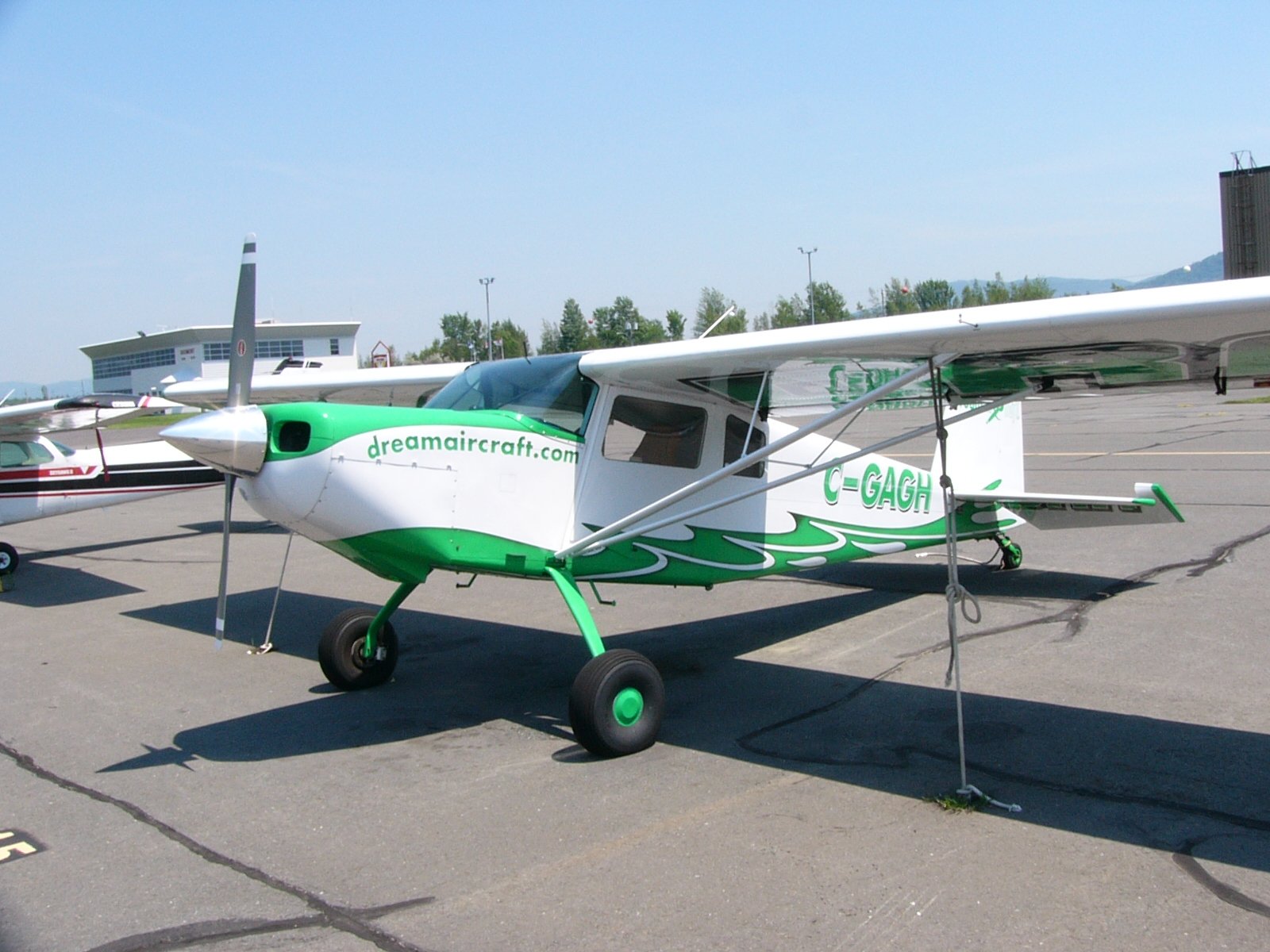
The Dream Tundra emerged from founder Yvan Desmarais's extensive study of bush planes and his vision to create a robust four-place aircraft suitable for the demanding conditions of backcountry flying. Desmarais, serving as both company founder and lead designer, prioritized ruggedness above all else, incorporating construction techniques typically reserved for certified aircraft. The design featured solid rivets similar to those used by Cessna, Piper, and Beechcraft, along with reinforced firewalls and double cabin floors for enhanced sound insulation and structural durability.
The prototype, registered as C-GIPN, completed its maiden flight at Bromont, Quebec, on 12 May 2001. Experimental certification followed rapidly on 7 June 2001, demonstrating the thoroughness of the initial design work. By 3 October 2001, the aircraft had successfully completed its first floatplane flight, proving its versatility across multiple operational environments including land, water, snow, and rough airstrips.
Manufacturing Innovation
Dream Aircraft revolutionized homebuilt construction by implementing CNC-machined aluminum parts that arrived pre-punched, pre-cut, and pre-bent using a computerized 220-ton hydraulic press. This precision manufacturing approach reduced assembly time to approximately 1,000 hours, significantly less than comparable scratch-built aircraft. The company marketed this as "assembly-only" construction, comparing the process to building with Meccano sets due to the precise fit of components.
The semi-monocoque aluminum structure featured composite wingtips and incorporated several innovative design elements. The constant-chord wings included 2 degrees of washout for improved stall characteristics, while V-struts provided structural support. Four-position Fowler flaps offered exceptional low-speed performance, complemented by horn-balanced controls throughout. The spacious cabin, accessed through gull-wing doors, measured 44 inches wide and included a port baggage door for practical loading.
Engine Options and Performance
The Tundra 180, powered by the 134-kilowatt (180-horsepower) Lycoming O-360-A flat-four engine, served as the initial production variant with bungee gear suspension. The more popular Tundra 200 featured the 150-kilowatt (200-horsepower) IO-360 and upgraded to sprung steel landing gear. Optional powerplants included the 175-kilowatt (235-horsepower) O-540-B4B5 flat-six, though this came with weight and cost penalties.
The IO-360 configuration achieved impressive performance figures, cruising at 110-115 knots while consuming 9.5 gallons per hour at 75 percent power. When operated lean-of-peak at 55 percent power, fuel consumption dropped to 6.8-7 gallons per hour. The aircraft's exceptional short-field capabilities included takeoff and landing rolls of just 125 meters (400 feet), with a stall speed of only 26 knots indicated and approach speeds as low as 40 knots.
Production History and Market Performance
By August 2009, Dream Aircraft had sold 35 kits with 11 aircraft flying. Final production estimates suggest approximately 36 kits were sold total, with 15-18 completed and flying by the mid-2010s. The relatively low completion rate reflected common challenges in homebuilt aviation, with some builders requiring up to eight years to finish their aircraft.
The Tundra's design specifications included a maximum gross weight of 2,550 pounds (1,156 kilograms) with an empty weight ranging from 1,450 to 1,651 pounds (658-750 kilograms). This provided a useful load of 1,100 pounds (500 kilograms), accommodating full 58-gallon fuel capacity while maintaining approximately 720 pounds available for occupants and baggage.
Operational Capabilities
The aircraft's versatility extended to multiple landing gear configurations, supporting conventional wheels, floats, and skis for year-round Canadian operations. The reflex flap system, capable of -8 degrees for cruise flight, contributed to both performance and efficiency. At maximum gross weight, the Tundra demonstrated exceptional STOL characteristics while maintaining comfortable loiter speeds as low as 50 knots.
The four-seat configuration featured two side-by-side rows, making it practical for family flying or commercial backcountry operations. The robust construction and certified-aircraft-quality components provided reliability essential for remote area flying where maintenance support might be hundreds of miles away.
Legacy and Current Status
Dream Aircraft continues operations today, promoting the Tundra kit for STOL utility in both taildragger and tricycle configurations. The design influenced modern homebuilt aviation by demonstrating how CNC precision manufacturing could deliver certified-aircraft durability at homebuilt prices. Featured extensively in aviation publications including Kitplanes magazine, the Tundra became synonymous with precision-built amateur aircraft for serious backcountry work.
The surviving fleet of 15-18 aircraft represents the Tundra's enduring appeal among pilots seeking rugged, versatile aircraft for challenging operational environments. While production numbers remained modest, the aircraft's technical innovations and construction philosophy influenced subsequent homebuilt designs throughout the 2000s and beyond.