
Design Origins and Development
The 550 Trener emerged from the expertise of Adam Kurbiel, a former engineer with SZD sailplane company, who began the design process in 1996. Kurbiel evolved the aircraft from his earlier EOL-VLA design with the specific goal of creating a versatile two-seat trainer that could satisfy the certification requirements of three major aviation markets simultaneously. The prototype, registered SP-PUP, completed its maiden flight on February 5, 2000, marking the culmination of nearly four years of development work.
Extensive testing validated the design's airworthiness, with JAR-VLA certification tests completed by May 16, 2000, and comprehensive static and fatigue testing conducted from October 1999 through January 2000. By May 2001, the prototype had accumulated 150 flight hours, demonstrating the aircraft's reliability and performance characteristics.
The Manufacturer
The 3Xtrim Aircraft Factory derived its distinctive name from "triple trimmed," reflecting the company's philosophy of conducting triple testing during design, prototype, and production phases. The name also emphasized the aircraft's capability to operate in extreme conditions, with "3Xtrim" pronounced as "Three-Extreme" in English marketing materials. Based in Poland, the company focused exclusively on producing completed aircraft rather than kit versions, targeting the growing ultralight and light sport aircraft markets of the early 2000s.
Technical Innovation
Kurbiel's sailplane background influenced several key design features that distinguished the 550 Trener from conventional ultralight trainers. The fuselage and vertical tail were constructed as a single fiberglass structure, providing exceptional strength while maintaining light weight. Carbon fiber construction was incorporated in some variants to further reduce empty weight, which stood at just 717 pounds.
The aircraft featured an innovative wing attachment system using removable wings secured by single locking pins with quick-disconnect controls, facilitating easy transport and storage. The cockpit measured 47.5 inches wide, providing generous space for two occupants accessed through upward-hinging doors on both sides supported by gas struts. Manual flight controls utilized pushrod systems for ailerons and elevator, with cable-operated rudder control.
Powerplant and Performance
The Rotax 912 ULS flat-four engine, manufactured by BRP-Rotax GmbH in Austria, provided 98.6 horsepower to drive the 550 Trener. This air-cooled, horizontally-opposed powerplant enabled the aircraft to meet ultralight weight restrictions while delivering sufficient performance for training operations. Propeller options included the MT-Propeller MT170R135-A2 two-blade fixed-pitch unit, or more advanced three-blade configurations including the KA-1/3P hydraulically controllable and SR-2000 electrically controllable systems.
The wing incorporated TsAGI R-3 airfoil sections with 15.5 percent thickness ratio, featuring 1 degree 30 minutes of dihedral and flap settings of 0, 15, and 30 degrees for takeoff and landing configurations. The tailplane was set at -2 degrees 30 minutes incidence, with elevator trim tabs providing pitch control assistance.
Market Success and Operations
By December 2002, five 550 Treners had been ordered, with France representing a significant market where 30 aircraft of the related 450 Ultra variant and five 550 Treners were purchased. The aircraft found its primary market among aero clubs and flying schools conducting Private Pilot License training, priced at €61,000 including VAT in 2002.
For the American market, 3Xtrim developed the Navigator 600 variant specifically to meet US Light Sport Aircraft regulations, featuring an increased gross weight of 1,320 pounds. The company also planned a floatplane version to expand operational capabilities, though production details of this variant remain unclear.
Production Legacy
Combined production of the 550 Trener and related 3X47 Ultra family reached approximately 60 aircraft by summer 2006, representing a modest but successful entry into the competitive ultralight trainer market. Type certification for the 550 Trener was anticipated by the end of 2003, with French and German regulatory approvals proceeding in parallel.
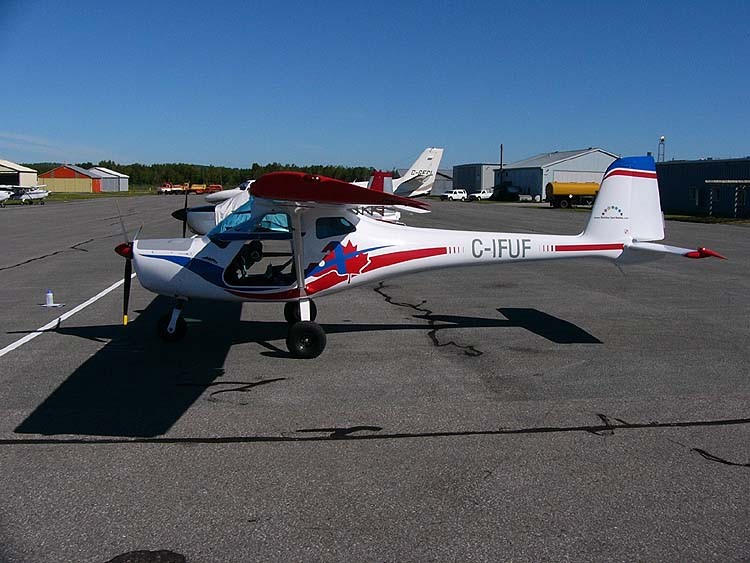
Known examples include SP-YBS operating in Poland and C-IFUF registered in Canada, demonstrating the aircraft's international appeal. The 550 Trener represents a notable achievement in modern Polish aviation, combining sailplane engineering expertise with contemporary ultralight aircraft requirements to create a versatile training platform for the 21st century aviation market.