
Design Philosophy and Development
Tomas Podesva conceived the Trener Baby as more than just a scaled-down replica—he aimed to capture the essence of Czechoslovakia's renowned aerobatic training aircraft in a package accessible to modern recreational pilots. The original Zlín 126 Trener had established itself as a premier aerobatic trainer, and Podesva's 80% scale interpretation promised to deliver similar handling characteristics while conforming to Fédération Aéronautique Internationale microlight regulations.
The design process focused on maintaining aerodynamic fidelity to the original while adapting structures and systems for ultralight construction methods. Podesva's team employed welded steel tube construction for the fuselage, a proven technique that balanced strength with the weight constraints of ultralight certification. The aluminum sheet wings incorporated flaps, preserving the low-speed handling characteristics that made the original Trener such an effective trainer.
Technical Excellence
The Trener Baby's specifications reveal careful engineering optimization. At 653 pounds empty weight, the aircraft achieved a maximum gross weight of 1,042 pounds, providing a useful load of 389 pounds—sufficient for two occupants and 21 gallons of fuel in dual 40-liter tanks. The Walter Mikron IIIb engine, producing 75 horsepower from its four-cylinder, air-cooled configuration, matched perfectly with the aircraft's 116 square feet of wing area.
Performance figures demonstrated the design's success in translating classic aerobatic capability to ultralight specifications. The 140 mph maximum speed and 109 mph cruise speed provided respectable cross-country capability, while the 40 mph stall speed and 790 feet per minute climb rate ensured safe low-speed handling. Wing loading of just 9.0 pounds per square foot contributed to the aircraft's impressive maneuverability.
Manufacturing and Market Approach
Podesva Air of Uničov adopted a flexible manufacturing strategy to serve different market segments. The company offered the Trener Baby as construction plans for amateur builders, as partially completed kits requiring assembly, or as fully manufactured ready-to-fly aircraft. This approach allowed customers to choose their preferred level of involvement while managing costs according to their budgets and capabilities.
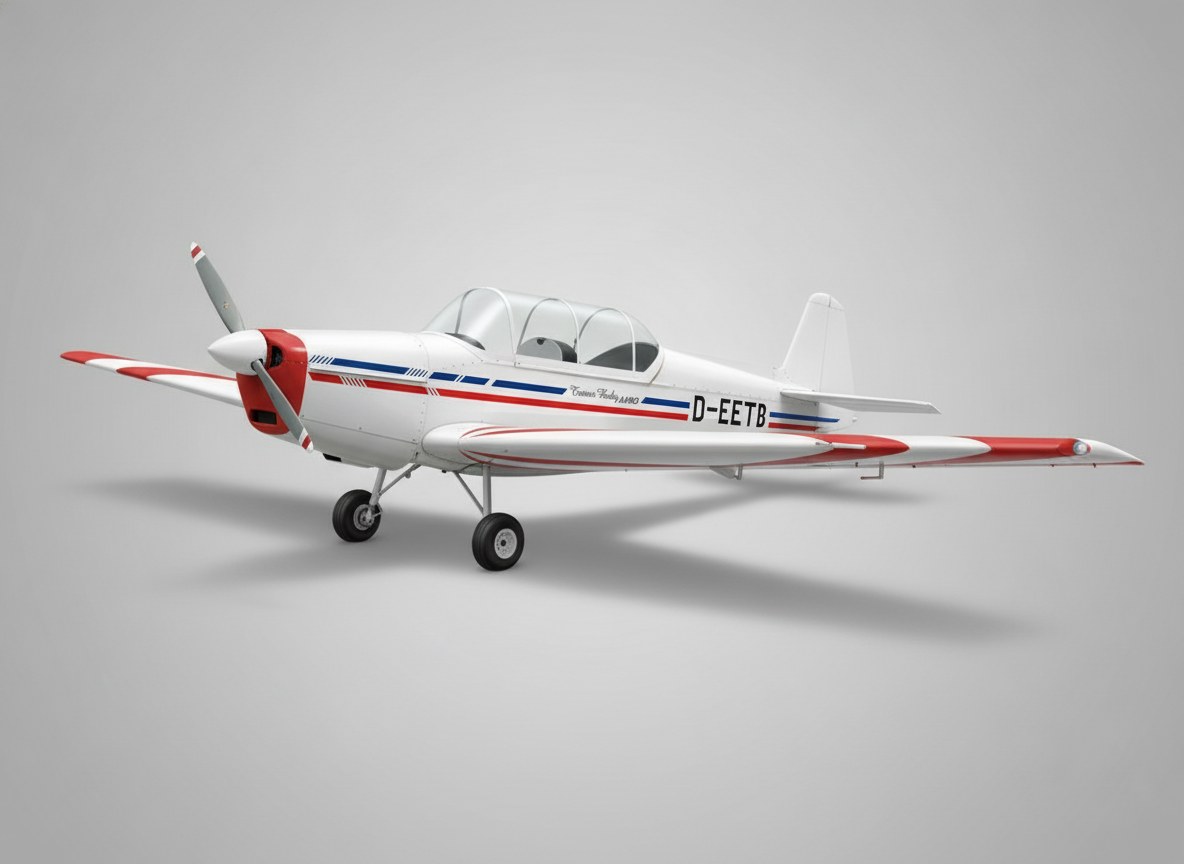
The tandem seating arrangement under a framed canopy provided excellent visibility for both occupants, essential for the aircraft's intended role in recreational aerobatics and training. The fixed conventional landing gear simplified maintenance while preserving the classic aesthetic that attracted customers seeking authentic vintage aircraft experience.
Operational Experience
Pilots who flew the Trener Baby consistently praised its handling characteristics, with aviation reviewers noting impressive performance for a two-seat ultralight. The aircraft's faithful reproduction of Zlín 126 design elements translated into predictable, confidence-inspiring flight behavior that appealed to both experienced aerobatic pilots and those learning advanced maneuvers.
The two-blade wooden propeller complemented the aircraft's traditional aesthetic while providing efficient thrust conversion from the Walter engine. Fuel capacity of 21 US gallons delivered respectable range for local flights and regional cross-country journeys, though the aircraft was primarily designed for recreational and training missions rather than long-distance travel.
Legacy of a Niche Manufacturer
Podesva Air represented the specialized end of aircraft manufacturing, focusing on high-quality reproductions of classic designs rather than mass production. The company's expertise in custom aircraft construction attracted customers worldwide seeking alternatives to standard ultralight designs. Beyond the Trener Baby, Podesva offered custom reproduction services, building scaled versions of other famous aircraft types according to customer specifications.
The cessation of production in April 2018, marked by the company website's removal, reflected the challenges facing small aircraft manufacturers in increasingly competitive markets. While exact production numbers remain undisclosed, the Trener Baby's brief production run demonstrated both the appeal of classic aircraft reproductions and the economic difficulties of serving such specialized market segments.
Continuing Influence
Despite its limited production run, the Trener Baby established important precedents in ultralight aircraft design. The successful translation of full-scale aerobatic aircraft characteristics to microlight specifications proved that recreational pilots need not compromise on handling quality or aesthetic appeal. The aircraft's emphasis on traditional construction methods and classic styling influenced subsequent designs targeting pilots seeking authentic vintage aircraft experience within modern regulatory frameworks.