
Service History
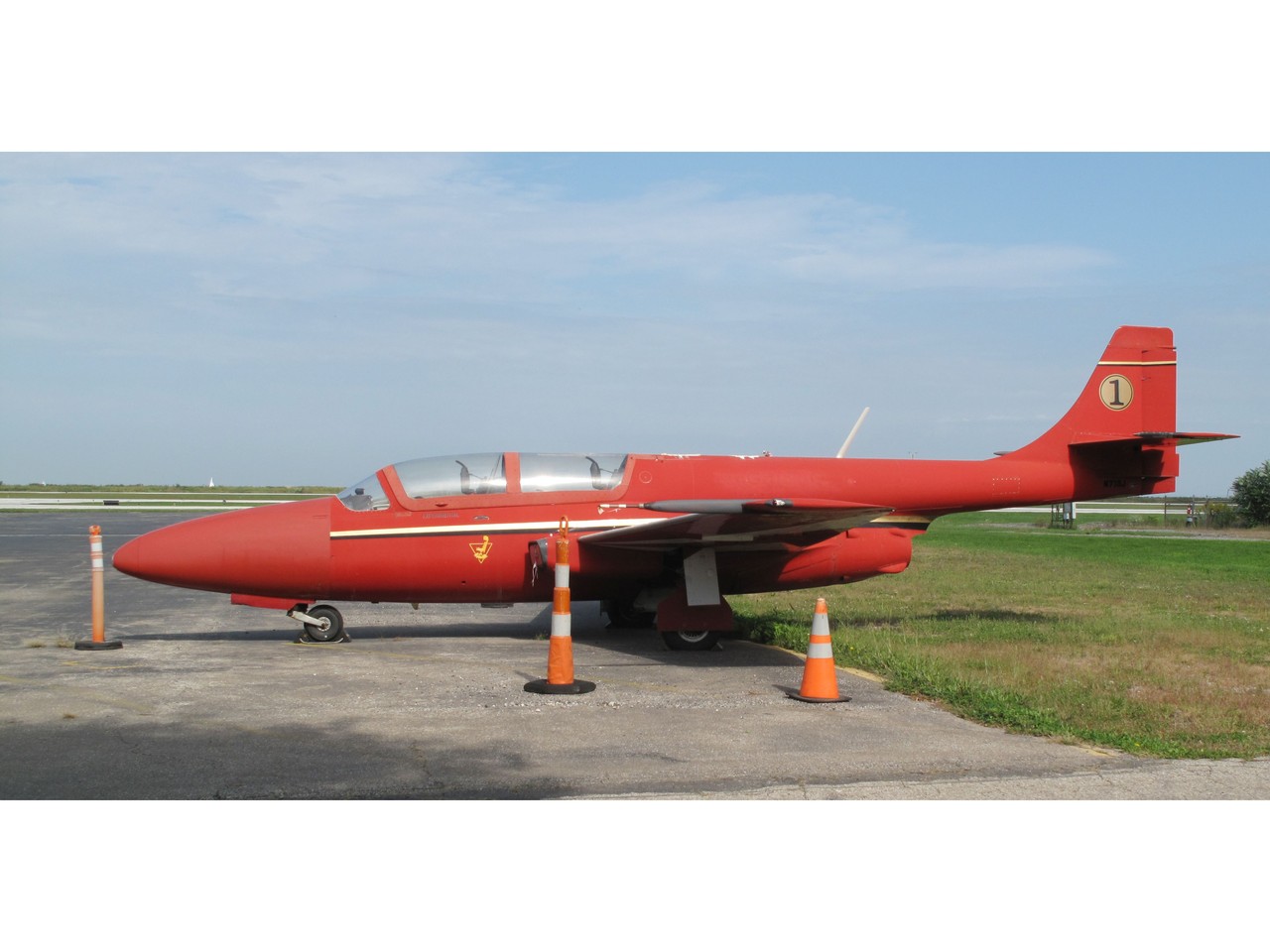
The TS-11 Iskra dominated Polish military aviation training from 1963 through the 1980s and beyond, representing the backbone of jet pilot instruction for the Polish Air Force. With 449 aircraft produced over 25 years, the Iskra achieved international recognition when Poland exported 76 examples to India beginning in 1975, marking one of the Eastern Bloc's few successful military aircraft export programs. The aircraft's exceptional service record includes breaking four FAI world records in its class, demonstrating performance capabilities that exceeded expectations for a trainer aircraft.
Operational Variants
WSK-PZL Mielec developed several specialized variants to meet evolving military requirements. The TS-11 bis B served as the standard training configuration, while the bis C reconnaissance variant incorporated three AFA-39 cameras for surveillance missions. The bis D and DF models featured enhanced armament capabilities with four underwing pylons capable of carrying two 500-kilogram bombs and eight missiles in dedicated containers. Indian Air Force examples, designated with serials from 3H-1501 to W1761, represented the most advanced export configuration with improved avionics and weapons systems.
The Manufacturer
WSK-PZL Mielec emerged as Poland's premier aircraft manufacturer during the Cold War era, operating as the State Aircraft Works in the southeastern city of Mielec. The company achieved particular significance as the only Warsaw Pact nation to successfully develop and produce an indigenous jet trainer design, breaking Soviet dependence in this crucial training aircraft category. Production resumed in 1982 after a three-year hiatus, driven by aircraft attrition and escalating arms race demands. Today, the facility operates as PZL Mielec under Lockheed Martin ownership since 2007, continuing Poland's aerospace manufacturing heritage.
Engine and Technical Innovation
The Iskra utilized the SO-3B turbojet engine, generating between 1,079 and 1,100 kilograms of thrust in its most powerful configuration. This single-engine powerplant provided sufficient performance for advanced jet training while maintaining operational economy crucial for sustained flight training programs. The aircraft's metal construction and conventional configuration prioritized reliability and ease of maintenance over cutting-edge performance, contributing to its exceptional service longevity.
Pilot Training Platform
Designed specifically for jet transition training, the TS-11 accommodated two crew members in tandem seating arrangement with full dual controls. Student pilots progressed through basic jet handling to advanced armament training on the same airframe, eliminating the need for separate training aircraft types. The underwing pylon system allowed realistic weapons training scenarios while maintaining the aircraft's primary educational mission. Polish Air Force units, including the 3rd Air Squadron at Siemirowice, operated the type for comprehensive 11-year training programs.
Production Legacy
Serial production commenced in 1963 and continued through 1988, with detailed production tracking through twenty series designations. Notable production peaks included the sixteenth series in 1977 with 26 aircraft and the twelfth series comprising 33 machines destined for Indian export. The final twentieth series concluded in 1988 with 14 aircraft, bringing total production to 449 examples across all variants. This substantial production run established the Iskra among the most successful Eastern European aircraft designs.
Enduring Service
Remarkable for its operational longevity, the TS-11 Iskra continues active service more than 50 years after initial deployment, placing it among an elite group of aircraft including the C-130 Hercules and T-38 Talon. Recent photographic evidence from 2024 confirms continued Polish Air Force operations of aircraft including serials 817, 1909, and 1810. The Planes of Fame Air Museum in Chino, California, preserves a 1970 TS-11 bis B example, representing the type's historical significance beyond its operational borders. Production concluded to make way for the planned I-22 Iryda successor, though that program ultimately faced cancellation, extending the Iskra's service life indefinitely.