
Service History
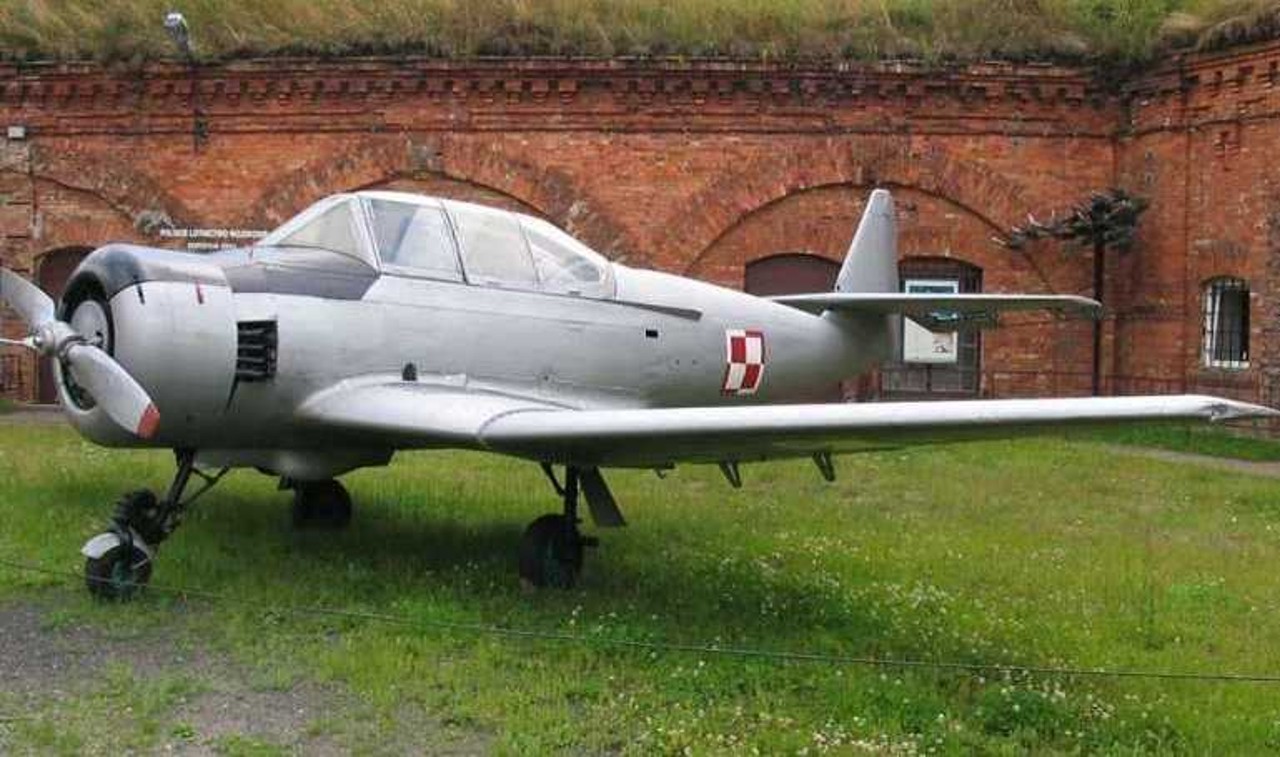
The TS-8 Bies served as the backbone of Polish military pilot training from 1958 to 1977, functioning as a crucial transition aircraft between basic and combat training phases. During its 19-year military career, the aircraft proved exceptionally reliable and became beloved by both pilots and maintenance technicians. After military retirement, the surviving aircraft transitioned to civilian aeroclubs where they continued training duties on behalf of the army, extending their operational lifespan well into the late 1970s.
Design and Development
Tadeusz Sołtyk, one of Poland's most accomplished aviation designers, conceived the TS-8 Bies during the late 1940s while working at Lotnicze Warsztaty Doświadczalne (LWD) in Łódź. Sołtyk's initials became the foundation for the aircraft's designation system, establishing a naming convention that would continue with subsequent designs. The aircraft represented a significant technological achievement for post-war Poland, featuring modern all-metal construction and indigenous powerplant integration.
Following the successful maiden flight of the first prototype on July 23, 1955, two additional prototypes joined the test program one year later. The development phase proved highly successful, with the prototypes establishing multiple international records in their class during 1956 and 1957.
Record-Breaking Performance
The TS-8 Bies prototypes demonstrated exceptional capabilities during their evaluation period, setting three significant international records that showcased Polish aviation engineering prowess. In 1956, the aircraft achieved a remarkable altitude record of 7,084 meters, demonstrating superior climb performance for its class. The following year proved even more impressive, with the aircraft establishing a closed-circuit distance record of 2,884 kilometers and achieving a speed of 317 kilometers per hour over a 2,000-kilometer closed circuit route.
These achievements garnered international attention and positioned Poland as a credible aircraft manufacturer on the global stage.
Manufacturing and Production
WSK-Mielec aviation plant undertook serial production beginning in 1957 with an initial batch of ten aircraft designated as the BI variant. These early production aircraft underwent extensive testing with aviation units before full-scale manufacturing commenced. Following successful evaluation, production continued with two refined variants: the BII and BIII models.
The BII variant dominated production numbers, with 229 of the 250 total aircraft built representing this configuration. Manufacturing concluded in 1960 after a concentrated three-year production run, making the TS-8 Bies a relatively limited but significant achievement in Polish aviation history.
International Recognition
Despite its technical success and record-breaking performance, the TS-8 Bies achieved limited export success in the competitive international training aircraft market. Poland marketed the aircraft extensively both domestically and internationally, with the prototype making its debut at the 1956 Poznań International Fair. International exposure continued in 1957 with displays at the Leipzig Trade Fair and the prestigious International Aviation Salon in Paris.
The production variant SP-GLH made aviation history as the first TS-8 Bies to appear in Western Europe at the 1957 Paris Air Salon. However, export orders remained minimal, with only two specially adapted aircraft delivered to Indonesia for tropical operations.
Technical Innovation
The TS-8 Bies incorporated several advanced design features that contributed to its exceptional performance and reliability. The all-metal construction provided structural integrity and longevity, while the Polish-designed engine ensured complete domestic production capability. The low-wing configuration optimized aerodynamic efficiency and contributed to the aircraft's impressive speed and altitude capabilities.
The single-seat layout focused the design on its primary mission as a transition trainer, preparing pilots for the demands of high-performance combat aircraft while maintaining the forgiving characteristics essential for training operations.
Legacy and Preservation
The TS-8 Bies established the foundation for Poland's subsequent aircraft development programs, most notably paving the way for the jet-powered TS-11 Iskra trainer developed in the mid-1950s. This progression from propeller to jet technology demonstrated the rapid advancement of Polish aviation capabilities.
Several examples survive today in various conditions. The Elbląg Aeroclub acquired serial number 0929 as a preserved specimen, completing restoration work in 2009. Another example, registered F-AYTS, achieved international recognition when displayed at the 2019 Meeting de l'Air at Cazaux in France, demonstrating continued international interest in this historically significant aircraft.
The TS-8 Bies remains a symbol of Polish aviation independence and technical capability, representing the nation's successful return to aircraft manufacturing after the devastation of World War II.