
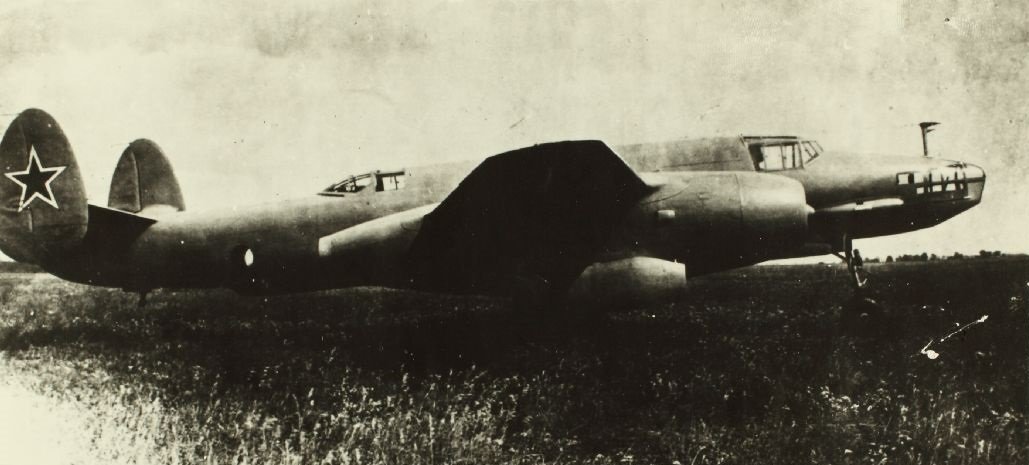
The Tupolev Tu-12 was a specialized experimental aircraft developed by the Soviet Union in the immediate aftermath of World War II. Designed by the Tupolev OKB under the leadership of Andrei N. Tupolev, the aircraft served as a critical interim step for Soviet engineers and aircrews to gain operational experience with jet-powered bombers before the introduction of purpose-built jet designs such as the Tu-14 and Tu-16.
Technically, the Tu-12 was not a clean-sheet design but rather a jet-powered conversion of the proven Tu-2 piston-engined bomber. The conversion process involved replacing the original piston engines with two turbojet engines, which were mounted in nacelles beneath the wings. While the aircraft retained much of the structural layout and crew arrangement of the Tu-2, the integration of jet power required significant adaptations to the aircraft's systems to handle the different performance characteristics of turbojet propulsion.
The sole Tu-12 prototype completed its first flight on 27 July 1947. Because it was intended strictly as a testbed for evaluating flight characteristics, jet handling, and potential bomber tactics, it never entered series production. The aircraft was operated exclusively by the Soviet Air Force in a trial and evaluation capacity. Throughout its testing phase, it provided the necessary data to refine procedures for future jet bomber operations, though it never participated in any combat operations or wars.
Due to its status as a single-prototype experimental aircraft, the Tu-12 left a legacy defined by its influence on subsequent designs rather than its operational record. Once its test career concluded, the aircraft was likely scrapped, as no surviving examples are known to exist in museums today. The project successfully demonstrated the feasibility of adapting existing airframes to jet power, a common transitional strategy employed by several global powers during the late 1940s.