
Strategic Dominance
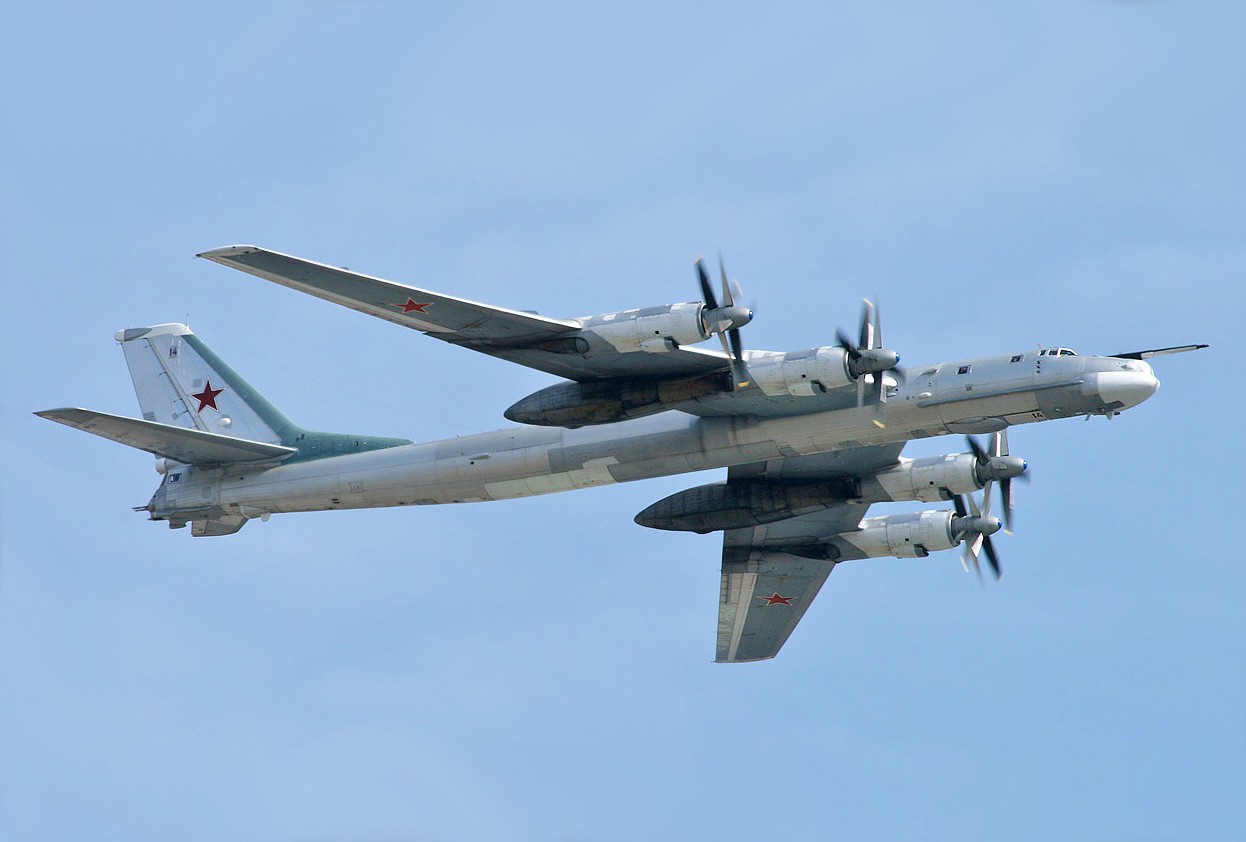
The Tu-95 emerged as the backbone of Soviet strategic nuclear deterrence, serving continuously from 1957 through today—a remarkable operational span exceeding 65 years. Approximately 500 units were manufactured between 1952 and 1994, with around 50 remaining operational with the Russian Aerospace Forces as of 2023. The aircraft's unprecedented longevity stems from its unique turboprop design, which delivers jet-like speed with exceptional fuel efficiency for transcontinental missions.
Combat Service and Modern Operations
While the Tu-95 served as a nuclear deterrent throughout the Cold War without seeing major combat, it finally entered active warfare on November 17, 2015, during Russia's intervention in Syria. The aircraft launched airstrikes and became the first platform to deploy the advanced Kh-101 cruise missile in combat on November 17, 2016. Various sub-variants served distinct roles: the original Tu-95 (NATO Bear-A) as a free-fall bomber, the Tu-95MS (Bear-H) from 1981 as a cruise missile carrier armed with Kh-55 missiles, and the latest Tu-95MSM variant, which first flew on August 22, 2020, with comprehensive avionics upgrades.
The Tupolev Legacy
Andrei Tupolev founded his design bureau in 1922, pioneering Soviet long-range aviation through projects like reverse-engineering the American B-29 into the Tu-4, which first flew in 1947. For the Tu-95 project, Tupolev assigned Nikolai Bazenkov to lead development starting in 1949, with objectives approved on July 11, 1951. The design team's decision to pursue turboprops over pure jets proved prescient, creating an aircraft capable of intercontinental range while maintaining subsonic efficiency. Today, Tupolev continues as part of the United Aircraft Corporation, a state-owned holding company established in 2006.
Revolutionary Powerplant
The Tu-95's four Kuznetsov NK-12 turboprops represent engineering excellence, each producing 12,000 equivalent shaft horsepower through contra-rotating co-axial propellers measuring 5.6 meters in diameter. Manufactured by the Kuznetsov Design Bureau (now United Engine Corporation), these engines entered production around 1954-1955, with later NK-12MV variants incorporating automatic propeller feathering systems following a fatal 1957 accident. The contra-rotating design eliminated torque effects while maximizing propulsive efficiency, enabling the Tu-95 to achieve speeds up to 830 kilometers per hour—faster than many contemporary jets.
Production Milestones
Series production commenced in January 1956 at Factory No. 18 in Kuibyshev (now Samara) under General Director Mitrofan Yevshin, though the first two production aircraft were completed in October 1955 for state testing. The initial production run concluded in 1959 with 173 aircraft plus two prototypes. Production resumed in 1981 for the Tu-95MS variant, continuing into the 1990s. Tragic setbacks marked early development: the first prototype crashed on May 11, 1953, killing test pilot Alexey Perelet and three crew members due to engine failure. The second prototype successfully flew on February 16, 1955, with pilot Mikhail Nukhtikov at the controls.
International Impact
Following the Soviet Union's dissolution, Ukraine inherited 23-29 Tu-95s, which were dismantled by 2001 under the Nunn-Lugar Cooperative Threat Reduction program. The aircraft gained global recognition at the 1955 Tushino Airshow, its public debut that demonstrated Soviet strategic capabilities. NATO's "Bear" designation became synonymous with Cold War tensions as these aircraft conducted regular patrols along Western borders, often intercepted by fighter jets in dramatic encounters that defined the era.
Enduring Service
Modernization efforts continue today, with Aviakor in Samara upgrading approximately three aircraft annually with advanced systems including SVP-24 navigation and targeting equipment. The Russian Aerospace Forces expects to operate the Tu-95 until at least 2040, testament to the design's fundamental soundness. Museum examples preserve the type's legacy at locations including Russia's Monino Air Force Museum and formerly at Ukraine's Poltava Museum before dismantlement. The Tu-95's unique sound—created by its massive contra-rotating propellers—remains instantly recognizable, earning it the nickname "the loudest aircraft in the world" and cementing its place in aviation history.