
Design Innovation and Market Impact
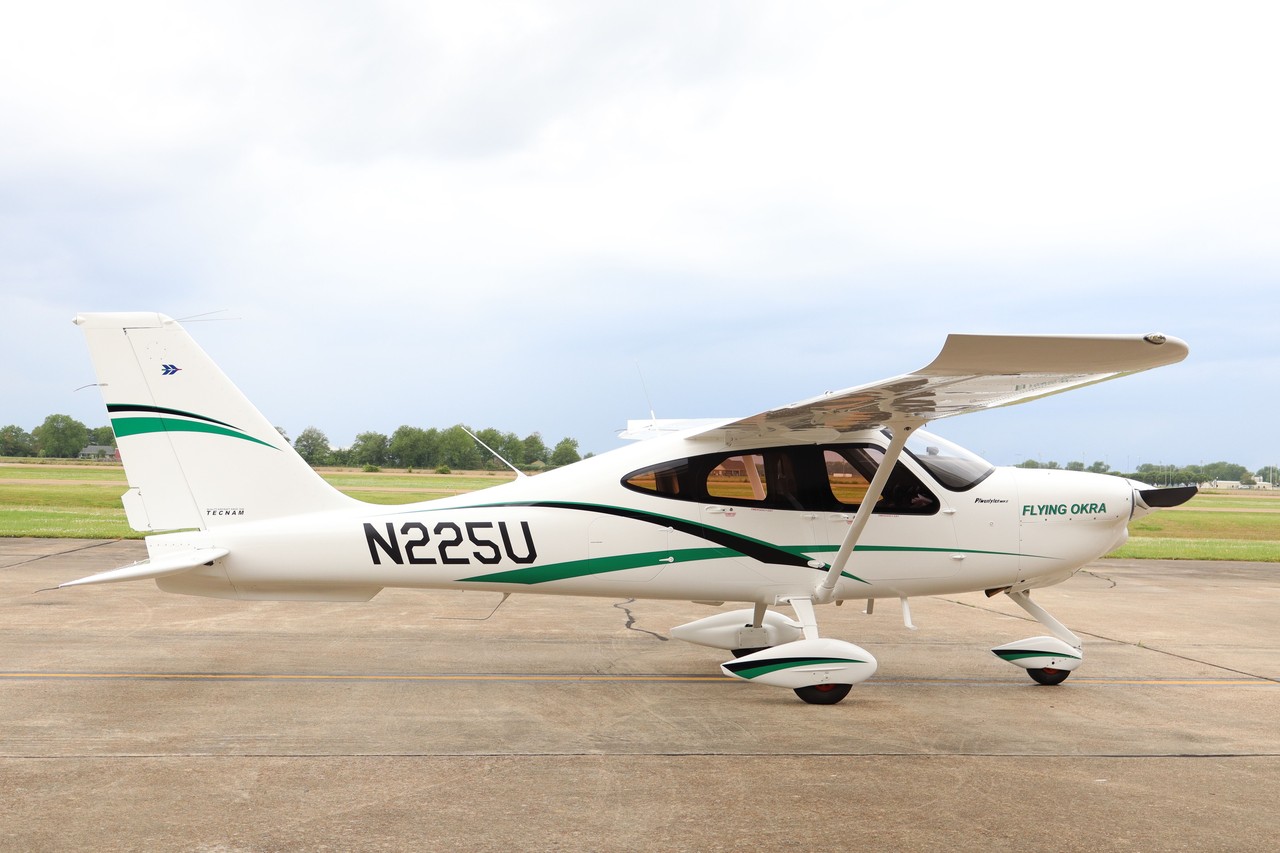
The P-2010's significance extends beyond its status as the first certified high-wing four-seater in half a century. Professor Luigi Pascale's design represents a breakthrough in composite-metal hybrid construction, combining an all-carbon fiber fuselage with traditional metal wings. This innovative approach delivered superior fuel efficiency while maintaining the structural integrity demanded by both EASA CS-23 and FAR 23 certification requirements. The aircraft accumulated more than 40 orders within months of its 2011 Aero Friedrichshafen debut, demonstrating immediate market acceptance.
Manufacturing Excellence
Tecnam's transformation from a subcontractor manufacturing ATR 42 tail sections and McDonnell Douglas MD-80 fuselage panels to a complete aircraft manufacturer represents one of European aviation's notable success stories. Founded in 1948 near Naples, the company operates two specialized facilities: a 60,000-square-meter Capua complex housing manufacturing and flight testing operations, and a Casoria facility dedicated to composite material production. Under Paolo Pascale's management direction, Tecnam established its American subsidiary in 2014, producing approximately six P-2010s monthly with one to two aircraft designated for U.S. customers.
Engineering and Performance
The P-2010's Lycoming IO-360-M1a powerplant delivers 180 horsepower at 2,700 RPM, propelling the aircraft to a cruise speed of 140 knots true airspeed. With a service ceiling of 19,500 feet and a climb rate of 787 feet per minute, the aircraft demonstrates performance characteristics competitive with the Diamond DA40 and Cessna Skyhawk. The wing design incorporates NACA63A aerofoil technology, while fuel tanks positioned behind the main wing spar enhance crash safety. An all-movable horizontal stabilator provides optimized aerodynamics and precise control authority throughout the flight envelope.
Operational Capabilities
Certified for day, night, VFR, and IFR operations, the P-2010 serves dual roles as both primary trainer and cross-country touring aircraft. Maximum range extends to 1,050 nautical miles at 75 percent power with standard 30-minute fuel reserves, enabled by fuel capacity ranging from 210 to 240 liters depending on configuration. The Continental CD-170-powered P-2010 TDI variant offers extended range capabilities with reduced fuel consumption, representing the longest-range aircraft in Tecnam's current fleet.
Market Position and Pricing
The P-2010's pricing structure reflects its advanced avionics options, ranging from approximately $250,000 for basic configurations to $345,000 for U.S.-specification aircraft with premium equipment packages. Fully equipped variants incorporating Garmin G1000 NXi integrated flight display systems with GFC700 autopilot capabilities command prices reaching $1.4 million. By 2014, more than 30 European deliveries had been completed, establishing the aircraft's presence in the competitive four-seat single-engine market segment.
Pilot Perspective
The P-2010's three-door configuration and generous cabin dimensions provide exceptional accessibility compared to traditional two-door competitors. Pilots appreciate the large, modular instrument panel accommodating both analog and advanced digital avionics installations. Takeoff performance includes a ground roll of 1,246 feet and total takeoff distance of 1,903 feet, while landing requirements are 853 feet ground roll and 1,772 feet total distance. These specifications enable operations from most general aviation airports while providing margins for challenging field conditions.
Legacy and Future
The P-2010's introduction marked Tecnam's successful transition from ultralight and twin-engine aircraft production to the demanding four-seat single-engine certification market. Professor Luigi Pascale's design philosophy, honoring the family legacy through the "P" designation while the "2010" represents the design study's completion year, demonstrates continuity with innovation. The aircraft's hybrid construction techniques have influenced subsequent light aircraft development, proving that composite-metal combinations can satisfy rigorous certification standards while delivering measurable performance improvements over traditional all-metal designs.