
Origins and Development
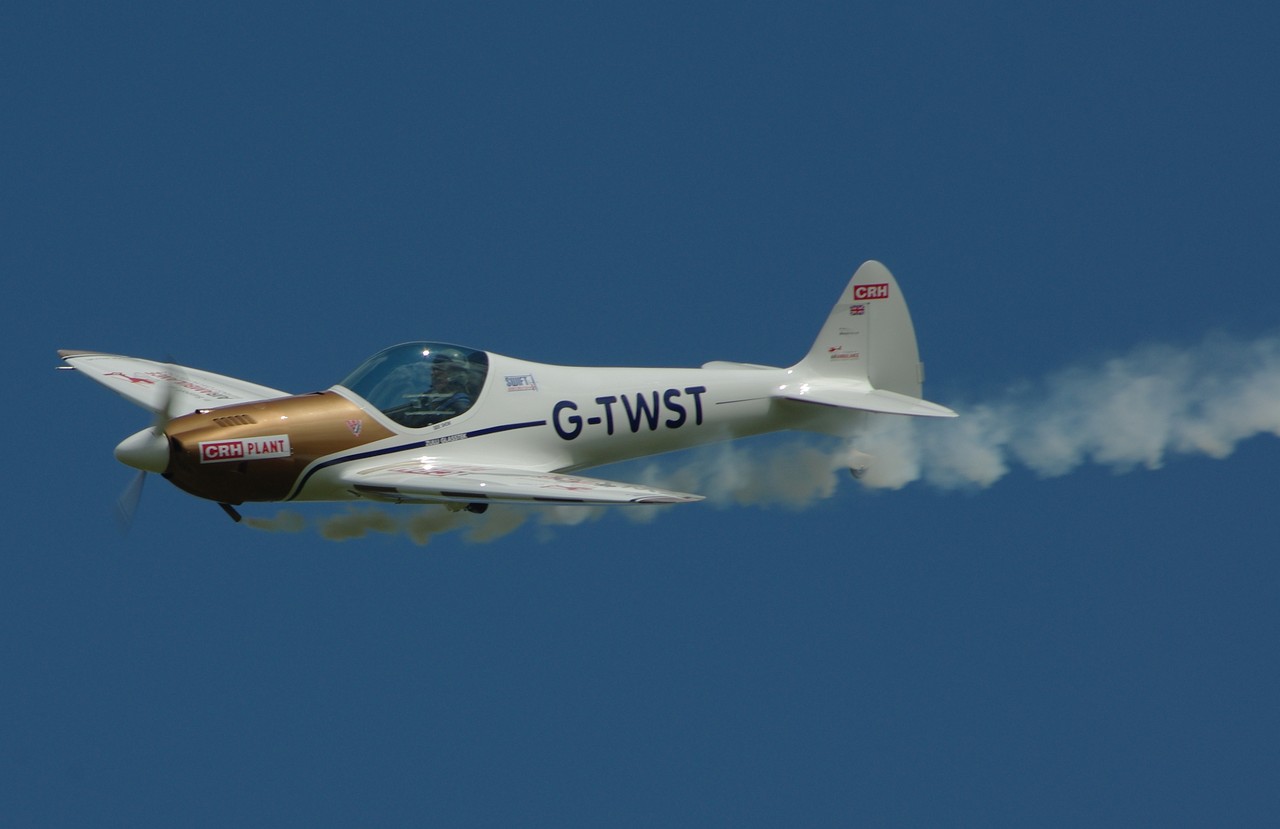
The Twister emerged from an unlikely beginning as a radio-controlled aerobatic model developed by brothers Matthias and Thomas Strieker in Germany. The success of their RC design prompted the duo to scale up their creation into a full-sized aircraft, deliberately incorporating the elliptical wings, fin, and tailplane that recalled the iconic Supermarine Spitfire. This aesthetic choice set the Twister apart from typical ultralight designs, creating a modern homebuilt aircraft with classic warbird appeal.
The prototype, bearing serial number 001 and registration D-MTMH, took to the skies for its maiden flight on September 30, 2000. The aircraft initially featured a compact 53.6-horsepower MidWest Wankel single-rotor rotary engine, which allowed for sleek engine cowling but proved problematic for production purposes due to reliability concerns.
The Manufacturer
Silence Aircraft GmbH was established in 2002 by the Strieker brothers in Verl, Germany, operating as part of their larger industrial composite manufacturing firm. The company leveraged their expertise in advanced materials to create an aircraft featuring honeycomb construction with carbon-Kevlar composite lining. Their efficient design approach utilized only one set of molds for both the wing and tailplane, reducing production complexity and costs.
By December 2011, Silence Aircraft had completed 21 Twister aircraft, maintaining steady if limited production. The company remained active as of 2013, continuing to offer both plans and kits to amateur builders worldwide.
Technical Innovation and Safety
The Twister incorporated numerous advanced safety features unusual for ultralight aircraft. Fuel tanks were strategically installed in the wings rather than the fuselage, protecting pilots from fuel leaks during emergency landings. The aircraft utilized capacitive fuel quantity sensors for reliable fuel level indication and maintained fuel system functionality even under negative g-loads.
Carbon fiber pushrods provided extraordinary stiffness for control linkages while maintaining light weight. The design featured large tail surface areas and an extended fuselage that delivered excellent in-flight stability and safe recovery characteristics from uncontrolled flight situations. Dynamic load testing demonstrated wing lifetime capability of 3,000 hours through 1.3 million load changes between 3g positive and 2.5g negative forces.
Engine Development and Variants
While the prototype's rotary engine was ultimately rejected, production aircraft adopted more reliable powerplants. The SA180 variant became the standard production model, powered by the 85-horsepower Jabiru 2200 engine. Alternative installations included the ULPower UL260i and UL260iSA engines producing 95 horsepower. The company also developed the Akron variant specifically for the United States market under Experimental aircraft certification rules.
By 2010, Silence Aircraft was developing an electric-powered version, reflecting industry trends toward sustainable aviation. The aircraft's design accommodated engines up to 94 horsepower while maintaining an empty weight of just 200 kilograms and maximum takeoff weight of 340 kilograms.
Performance and Capabilities
The Twister achieved impressive performance figures for an ultralight aircraft, reaching maximum speeds of 300 km/h with cruise speeds of 280 km/h. Its service ceiling extended to 16,400 feet, while fuel capacity of 80 liters (75 liters usable) provided substantial range capability.
The aircraft's aerobatic capabilities attracted particular attention from performance-oriented pilots. The symmetrical airfoil design and slotted flaps enhanced maneuverability, while the robust construction withstood aerobatic stresses that would challenge conventional ultralight designs.
Notable Operators and Recognition
The United Kingdom became a significant market for the Twister, with Peter Wells building the first UK example, registered as G-TWST. Wells subsequently constructed G-SWIP in 2008, fitted with an ULPower UL260iSA engine and developed into a full aerobatic aircraft complete with smoke system. This aircraft became instrumental in forming the British Twister Aerobatics Team in 2010.
Andy McKee achieved notable recognition by flying his Twister from England to North America and back, demonstrating the aircraft's cross-country capabilities. The type also appeared in the film "P-77," where Silence Aircraft served as technical consultants showcasing German carbon-fiber expertise.
Legacy and Current Status
The Silence Twister represents a successful fusion of modern composite construction techniques with classic aviation aesthetics. Its limited production numbers reflect the specialized nature of the amateur-built market rather than any design shortcomings. The aircraft demonstrated that ultralight designs could achieve both visual appeal and serious aerobatic performance while maintaining the safety margins expected of modern aircraft.
The British Twister Aerobatics Team continues to showcase the aircraft's capabilities at airshows, maintaining visibility for this distinctive German design in the competitive ultralight market.