
Conversion Program Origins
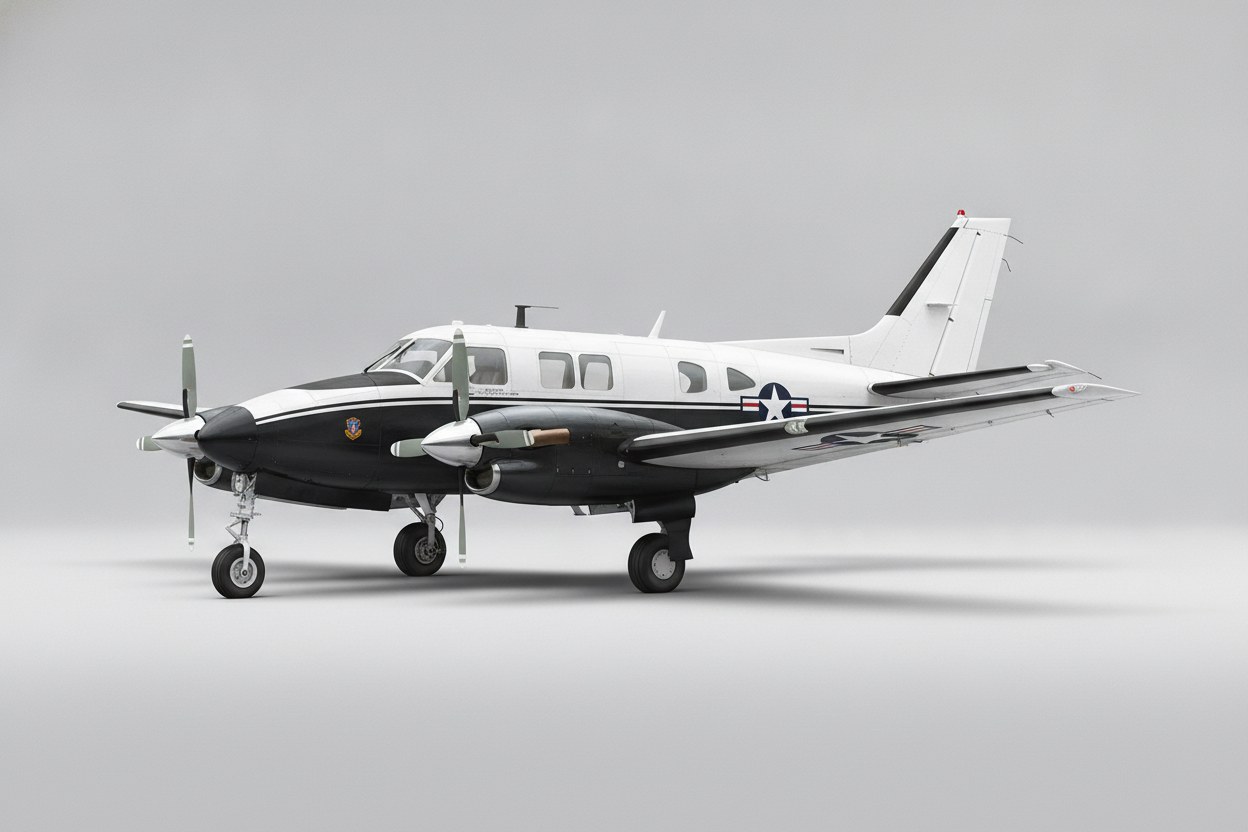
The U-21G Ute emerged from the U.S. Army's need to modernize its existing U-21A fleet rather than procure entirely new aircraft. Between 1966 and 1968, Beechcraft had delivered 110 U-21A aircraft to the Army, establishing a solid foundation of twin-turboprop utility aircraft. However, operational experience revealed opportunities for cockpit improvements that would enhance crew efficiency and mission effectiveness. Rather than ordering new aircraft, the Army elected to convert 17 existing U-21A airframes to the enhanced U-21G configuration.
Beechcraft's Military Heritage
Beechcraft Aircraft Corporation, founded in April 1932 in Wichita, Kansas by Walter H. Beech, had established itself as a premier manufacturer of military utility aircraft by the 1960s. After Walter's death in 1950, his wife Olive Ann Beech assumed leadership and guided the company through its most successful period. Under her direction, Beechcraft developed the Model 87, which became the foundation for the entire U-21 military family. The original Model 87 completed its maiden flight on January 24, 1964, and after ten months of testing, the Army accepted its first example as the NU-8F.
Technical Specifications and Performance
The U-21G retained the proven powerplant configuration of its predecessor, utilizing twin Pratt & Whitney PT6A-20 turboprop engines. Each engine delivered 550 shaft horsepower, providing the aircraft with a cruise speed of 210 knots and operational endurance exceeding five hours. The PT6A series had earned recognition for exceptional reliability, light weight, and maintainability, making it ideal for military operations in austere environments. The aircraft's maximum takeoff weight reached 9,650 pounds, with an empty weight of 5,300 pounds, allowing substantial payload capacity for personnel and equipment transport.
The cockpit modifications that distinguished the U-21G from its predecessor focused on improved instrumentation and crew interface design. These enhancements reflected lessons learned from Army operations and aimed to reduce pilot workload while increasing mission effectiveness. The standard crew consisted of two pilots, though the aircraft could accommodate two additional system operators depending on mission requirements.
Operational Service and Variants
The U-21G entered Army service as a utility transport, supporting a wide range of missions from personnel transport to logistics support. Its retractable tricycle landing gear and reversing propellers provided operational flexibility across various airfield conditions. In emergency configurations, the aircraft could accommodate medical evacuation missions with both litter and ambulatory patients.
Three U-21G aircraft received further modification with Guardrail I Electronic Intelligence systems, redesignating them as RU-21G aircraft. This electronic warfare variant represented the Army's growing emphasis on signals intelligence collection, particularly relevant during the Vietnam War era when electronic surveillance became increasingly critical to military operations.
The Broader U-21 Family Impact
While the U-21G represented a small portion of total U-21 production, it contributed to a larger military aviation success story. The King Air family, from which all U-21 variants derived, became the most successful aircraft in its class, with continuous production from 1964 to 2021. Approximately 7,600 King Air aircraft were delivered worldwide, accumulating over 63 million flight hours and outselling all turboprop competitors combined.
During the Vietnam War, various U-21 family members proved their worth in combat operations. The 138th Aviation Company, equipped with RU-21A variants, later deployed during Operation Desert Shield in 1990, flying hundreds of combat missions from Saudi Arabian bases during Desert Storm. These operations demonstrated the enduring value of the King Air platform for military intelligence gathering.
Post-Service Legacy
As military requirements evolved, the U-21G fleet gradually transitioned from active service. At least one U-21G was released from military service in 1996 and subsequently converted to civilian registry as N906HF by Dynamic Aviation of Bridgewater, Virginia in 2001. This conversion pattern allowed many former military aircraft to continue useful service in civilian roles.
The Valiant Air Command has preserved an RU-21A, a related variant, donated by the 138th Aviation Company Memorial Inc. for historical display. Aviation historians maintain comprehensive registries tracking surviving Beechcraft U-21 family aircraft, ensuring their contribution to military aviation history remains documented.
Engineering Excellence
The U-21G's limited production numbers should not overshadow its significance as an example of targeted military aircraft improvement. Rather than pursuing expensive new development programs, the conversion approach maximized existing investment while incorporating operational improvements. This philosophy of continuous enhancement helped establish Beechcraft's reputation for responsive customer support and practical engineering solutions that continue under Textron Aviation ownership today.