
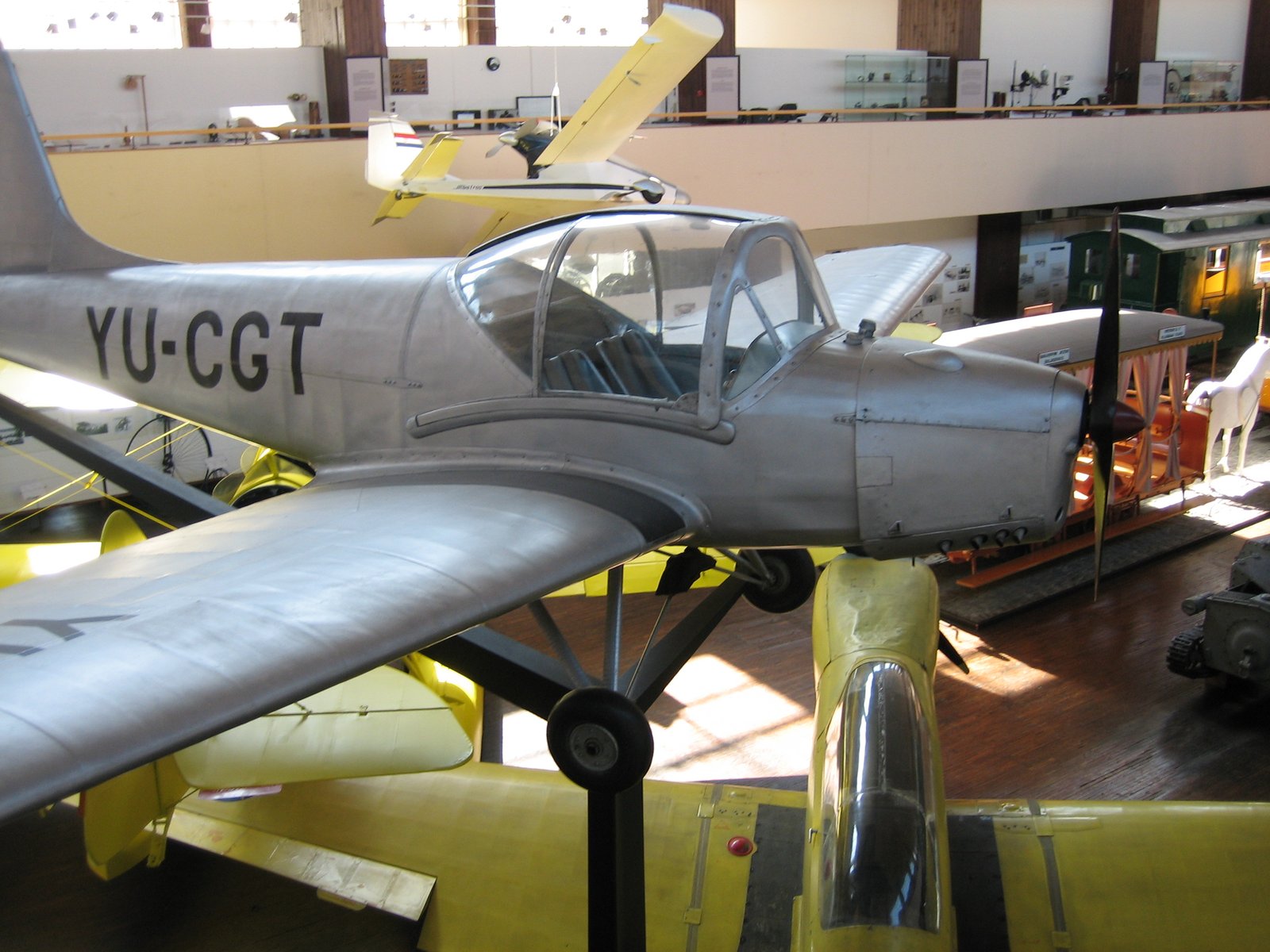
Development and Design
The UTVA-60 emerged from Yugoslavia's ambitious program to develop indigenous aviation capabilities in the post-war era. UTVA's design team initially created the UTVA-56 prototype, which completed its maiden flight on April 22, 1959. Following successful testing, engineers redesigned the aircraft to accommodate a more powerful engine, resulting in the production UTVA-60 variant.
The high-wing configuration proved ideal for the aircraft's intended utility missions, providing excellent visibility and stable flight characteristics essential for training, agricultural work, and short-field operations. This design philosophy reflected the practical needs of Yugoslav aviation, where versatility and reliability took precedence over speed or sophistication.
Military Service
The Yugoslav Air Force recognized the UTVA-60's potential and ordered approximately 35 aircraft for military service. These aircraft operated in various capacities until 1982, serving primarily as trainers and utility transports rather than combat aircraft. The military designated trainer variants as U-60-AT2, distinguishing them from other specialized configurations.
Beyond Yugoslavia's borders, Cambodia acquired four UTVA-60 aircraft, representing the type's modest export success. The aircraft never saw combat operations, instead fulfilling essential support roles that kept air forces operational during peacetime training and logistics missions.
The Manufacturer Legacy
UTVA Aviation Industry traced its origins to June 5, 1937, when it was established in Zemun before relocating to Pančevo by 1940. The company began manufacturing light piston-engine aircraft in 1939, positioning itself as Yugoslavia's primary producer of general aviation and training aircraft. As a state-owned enterprise, UTVA embodied the socialist federation's commitment to technological independence.
The company's history reflected Yugoslavia's turbulent 20th century. NATO bombing during the 1999 Kosovo conflict damaged UTVA's facilities, marking a low point in the manufacturer's fortunes. However, the company survived Yugoslavia's dissolution and continues operations today as UTVA Avio d.o.o., following the 2017 acquisition of 96 percent of its shares by Serbian defense firm Yugoimport SDPR.
Engine and Performance
The production UTVA-60 utilized the Lycoming O-480, a six-cylinder horizontally opposed engine delivering 260 horsepower. This American-built powerplant, manufactured by the Avco Corporation division, provided reliable performance and represented a significant upgrade from the prototype's original engine. The O-480's air-cooled design and favorable power-to-weight ratio made it an ideal choice for light utility aircraft of the era.
The engine selection demonstrated Yugoslavia's pragmatic approach to aviation development, combining indigenous airframe design with proven international components to achieve optimal performance and reliability.
Variants and Versatility
UTVA produced multiple specialized variants to maximize the aircraft's market appeal. The U-60-ATI served as a utility and air taxi platform, while the U-60-AT2 fulfilled training requirements. Agricultural operators could specify the U-60-AG variant, equipped for crop dusting and aerial application work. Medical services utilized the U-60-AM ambulance configuration, and a floatplane version expanded operational capabilities to water-based operations.
This variant proliferation reflected the aircraft's fundamental design soundness and adaptability. The high-wing configuration particularly suited agricultural and utility missions, where ground clearance and stability proved essential.
Production and Legacy
UTVA manufactured the type primarily during the 1960s at their Pančevo facility, though exact production totals remain undocumented. The aircraft preceded the more successful UTVA-66, which first flew in 1966 and achieved production of 130 units. The UTVA-60 also influenced the development of the UTVA-65, introduced in 1965 with 69 aircraft built specifically for agricultural roles.
The UTVA-60's legacy extends beyond production numbers to its role in establishing Yugoslavia's aviation industry credibility. As part of a family of indigenous designs, it demonstrated that smaller nations could develop capable aircraft suited to their specific operational requirements.
Current Status
No confirmed airworthy examples of the UTVA-60 remain in service today, and museum preservation appears limited. The type represents a significant chapter in Balkan aviation history, embodying the technical ambitions of socialist Yugoslavia during the Cold War era. Its development coincided with the broader non-aligned movement, as Yugoslavia sought technological independence from both Western and Soviet spheres of influence.
The aircraft's disappearance from active service reflects the broader decline of Yugoslavia's aviation industry following the country's breakup in the 1990s. However, its influence persists through UTVA's continued operations and the engineering expertise developed during its production, which contributed to subsequent aircraft developments in the region.