
Development and Design
The OV-10 Bronco emerged from the U.S. military's painful lessons learned during early counterinsurgency operations in Southeast Asia. In 1963, the Department of Defense issued a requirement for a Light Armed Reconnaissance Aircraft (LARA) that could perform forward air control, light ground attack, helicopter escort, and reconnaissance missions in environments where traditional jet aircraft proved inadequate.
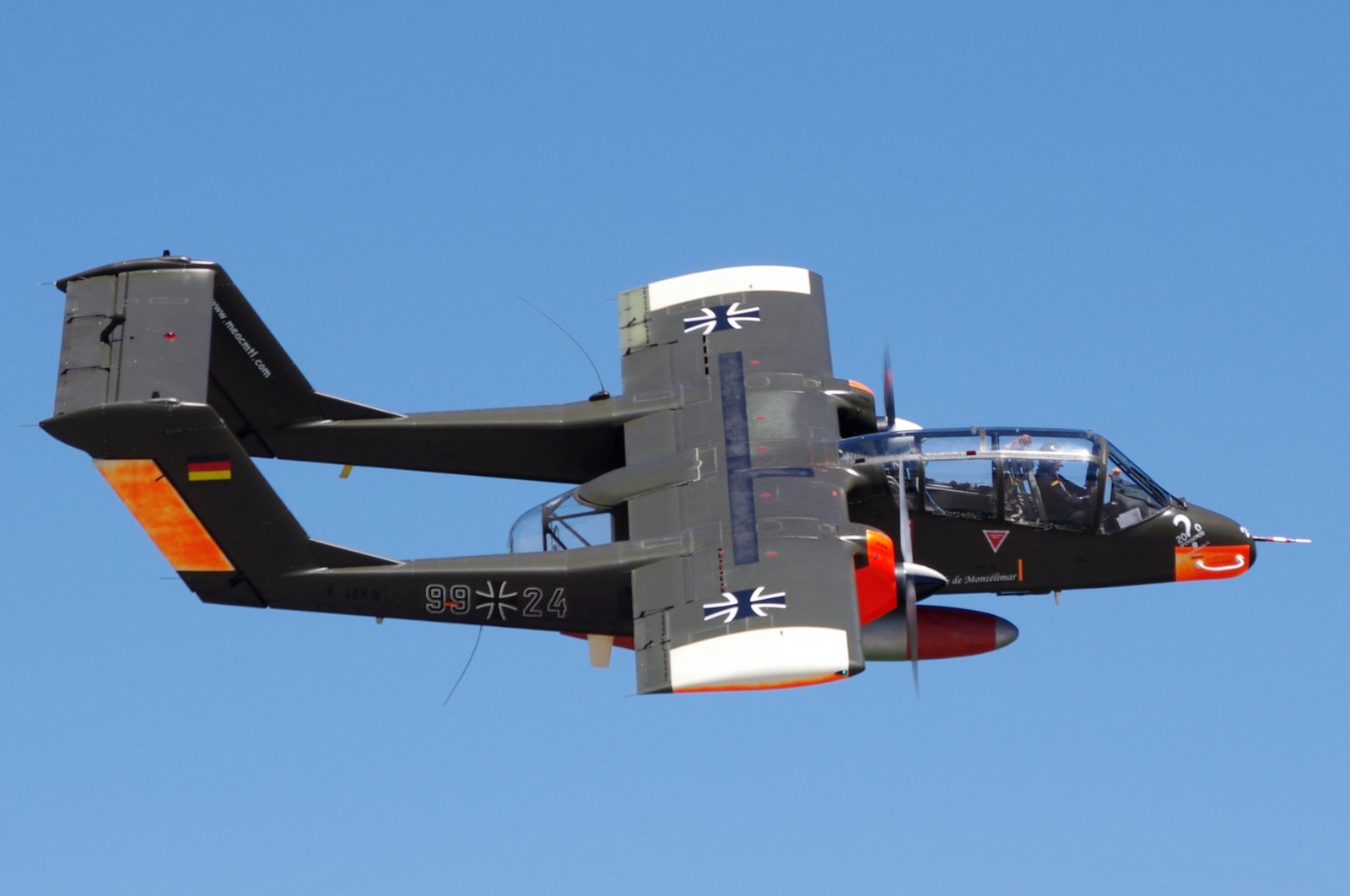
North American Aviation's design team, led by chief engineer K.O. Eckland, created an innovative twin-boom pusher configuration that maximized visibility and operational flexibility. The aircraft featured two Garrett T76-G-410/412 turboprop engines producing 715 shaft horsepower each, mounted in nacelles that also served as the attachment points for the twin booms extending aft to support the horizontal stabilizer.
Service History
The U.S. Air Force received its first production OV-10A Broncos in 1968, with the type entering combat operations over Vietnam in July 1968. The aircraft quickly proved its worth in the forward air controller role, where its exceptional low-speed handling characteristics and outstanding visibility allowed pilots to mark targets for faster jets while remaining in contact with ground forces.
During the Vietnam War, OV-10 Broncos flew more than 40,000 combat sorties, primarily with the 19th and 20th Tactical Air Support Squadrons. The aircraft's ability to loiter for up to three hours while carrying a full load of white phosphorus marking rockets made it invaluable for coordinating close air support missions. Marine Corps OV-10s operated from both established bases and forward airstrips, demonstrating the type's remarkable versatility.
International Operations
Beyond U.S. military service, the OV-10 found extensive use with allied nations facing similar counterinsurgency challenges. The Royal Thai Air Force operated 32 OV-10C aircraft against communist insurgents, while the Philippines Air Force used 24 OV-10As in operations against various rebel groups from the 1970s through the 2000s.
Germany received 18 specially configured OV-10B aircraft for target towing duties, featuring a distinctive glazed nose for the target controller operator. These aircraft served with the Luftwaffe's target facilities squadron at Decimomannu, Sardinia, from 1970 until 1990.
Technical Innovation
The Bronco's design incorporated several groundbreaking features that enhanced its operational effectiveness. The aircraft's high-mounted wing provided excellent ground clearance for ordnance while creating beneficial ground effect during short-field operations. Five external hardpoints could accommodate various combinations of rockets, bombs, gun pods, or auxiliary fuel tanks.
The tandem cockpit arrangement featured stepped seating with the pilot in front and observer elevated behind, both equipped with ejection seats and comprehensive flight controls. This configuration provided unparalleled visibility in all directions, essential for the forward air control mission.
Performance Characteristics
Pilots consistently praised the OV-10's docile handling characteristics and impressive short-field performance. The aircraft could take off in just 740 feet and land in even shorter distances thanks to its large flaps and excellent low-speed control authority. With a maximum speed of 281 miles per hour and a service ceiling of 24,000 feet, the Bronco could operate effectively across a wide range of altitudes and speeds.
The type's endurance capabilities particularly impressed operators, with typical missions lasting four to five hours when carrying external fuel tanks. This extended loitering ability proved crucial for forward air control missions, where rapid response to changing tactical situations often determined mission success.
Production and Variants
North American Rockwell manufactured 360 OV-10 Broncos between 1966 and 1976 across several variants. The basic OV-10A comprised the majority of production with 157 aircraft for the Air Force and 114 for the Marine Corps. The Navy received 16 OV-10D aircraft equipped with specialized night observation equipment and forward-looking infrared sensors.
The final production variant, the OV-10F, incorporated lessons learned from combat operations with improved avionics, increased fuel capacity, and provisions for night vision goggle compatibility. Indonesia received 16 of these enhanced aircraft, which served in counter-insurgency operations until the early 2000s.
Modern Legacy
While most military operators retired their Broncos by the 1990s, the type experienced a renaissance in civilian hands. The U.S. Bureau of Land Management and California Department of Forestry acquired surplus OV-10As for fire suppression coordination, where the aircraft's visibility and loitering capabilities proved equally valuable for spotting fires and directing firefighting aircraft.
Several OV-10s returned to military service in the 2010s when U.S. Special Operations Command conducted evaluation flights over Iraq and Syria, assessing the type's continued relevance for counterterrorism operations. These missions demonstrated that the Bronco's fundamental design advantages remained valid even in modern warfare scenarios.
Today, approximately 60 OV-10 Broncos remain in various states of airworthiness worldwide, with notable examples displayed at the National Museum of the United States Air Force in Dayton, Ohio, and the National Museum of Naval Aviation in Pensacola, Florida.