
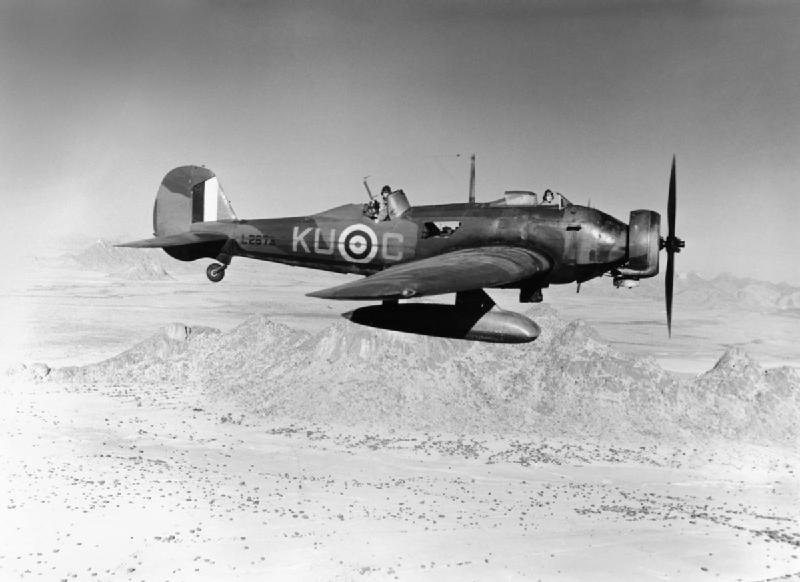
The Vickers-Armstrongs Vickers Wellesley was a British single-engined medium bomber developed in the 1930s. Its primary historical significance lies in its geodetic airframe, a lightweight metal lattice structure developed by Barnes Wallis. This design, derived from Wallis's work on the R100 airship, provided a high strength-to-weight ratio and exceptional damage tolerance, forming the structural foundation for later bombers such as the Wellington, Warwick, and Windsor.
The aircraft originated from Air Ministry Specification G.4/31, which sought a multi-role general-purpose aircraft. While Vickers initially won the competition with the Type 253 biplane, the company privately developed the Type 246 monoplane. The Type 246 featured a high aspect-ratio wing and geodetic construction in both the fuselage and wings, offering superior performance. Consequently, the Air Ministry replaced the biplane order with the monoplane, which entered service as the Wellesley under Specification 22/35. The prototype first flew on June 19, 1935, and the aircraft officially entered Royal Air Force (RAF) service in April 1937, with No. 76 Squadron at RAF Finningley being among the first to operate the type.
Produced between 1936 and 1938 at the Vickers-Armstrongs facility in Brooklands, Surrey, a total of 176 Wellesleys were built for the RAF. The aircraft was powered by a single Bristol Pegasus XX air-cooled radial piston engine, delivering 925 hp. Technical features included a manually operated retractable undercarriage and a crew of three consisting of a pilot, bomb-aimer, and rear gunner. The Wellesley could carry a bomb load of up to 2,000 lb and reached a maximum speed of 228 mph at 19,700 ft.
During the Second World War, the Wellesley was considered obsolete for European combat but remained valuable in the Middle East, East Africa, and Egypt. It performed bombing and reconnaissance missions against Axis targets. No. 47 Squadron utilized the type for maritime reconnaissance until September 1942. The aircraft is also remembered for a record-breaking flight in November 1938, when three aircraft from the Long-Range Development Unit flew 7,162 miles from Ismailia, Egypt, to Darwin, Australia, setting a world distance record for single-engined aircraft. The Wellesley was fully retired from RAF service in 1944. No complete airworthy or museum examples are known to survive today.