
Development and Design Philosophy
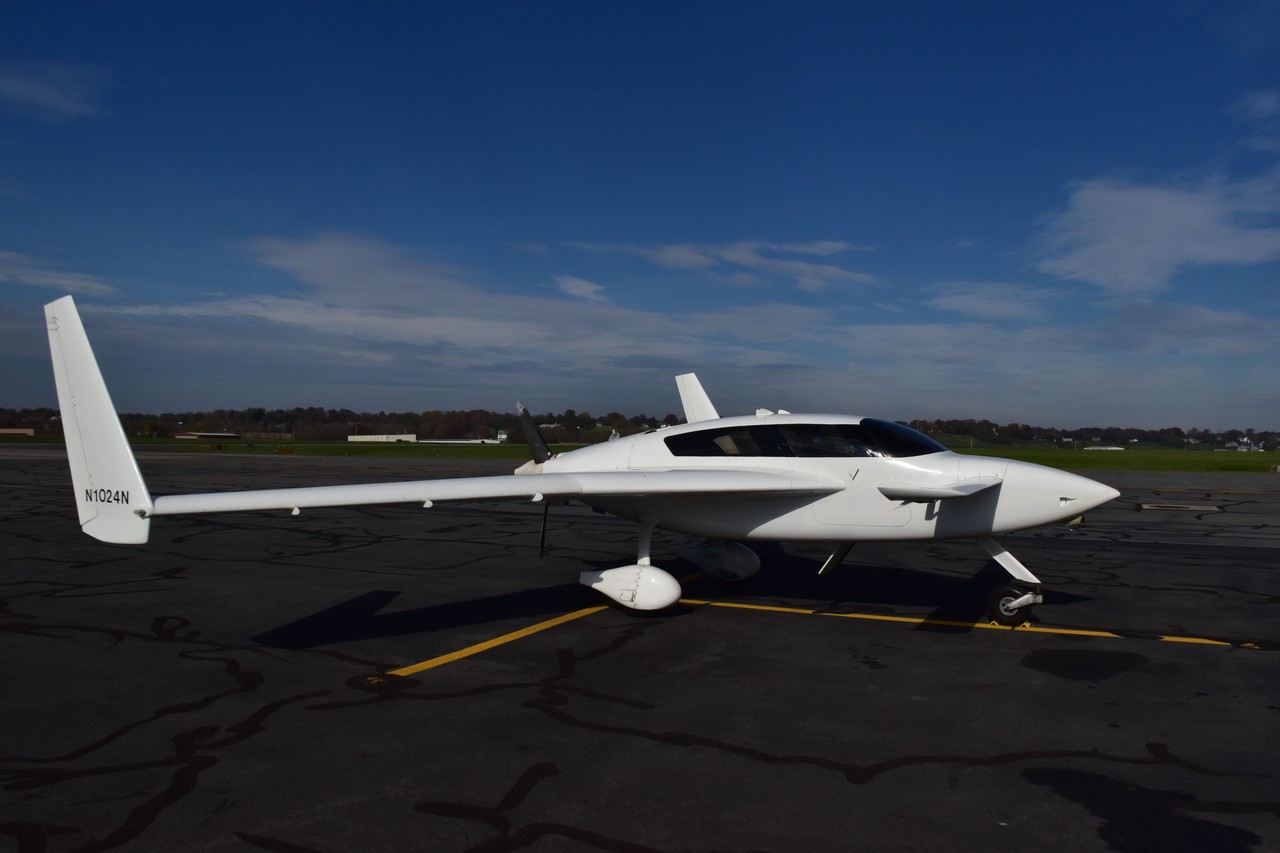
Danny Maher, an experienced Long-EZ builder, recognized the need for a larger canard aircraft in the mid-1980s. Working with a NASA engineer, Maher scaled up Rutan's proven Long-EZ design to accommodate four occupants, addressing the aerodynamic challenges of increased weight and forward loading. The collaboration resulted in a larger canard equipped with a Fowler flap elevator system, hinged low to extend chord length during deflection and maintain control authority with two 250-pound pilots in the front seats.
The prototype, registered N401DM with serial number DMO040, required just seven months to construct before its maiden flight in summer 1985. Flight testing concluded by mid-October 1985, validating the design's performance predictions. Maher incorporated practical solutions from his marine background, including Morse marine-style aileron cables and Datsun B210 brake cylinders, demonstrating the innovative approach typical of experimental aircraft development.
Market Introduction and Evolution
Velocity Aircraft debuted the design at Sun-n-Fun in Lakeland, Florida, in early 1986, where it generated immediate interest among homebuilders seeking high-performance alternatives. Initial kits sold for approximately $18,000 with an estimated 800-1000 hour build time, making serious performance accessible to dedicated amateur builders. The original model featured a 43.5-inch wide, 41-inch high, and 81-inch long fuselage, optimized for both pilot comfort and aerodynamic efficiency.
The company expanded its offerings throughout the 1990s, introducing the Model 173 in 1992 with refinements to address deep stall characteristics through 60-inch leading edge cuffs on early production aircraft below serial DMO115. The XL variant debuted in March 1997, followed by the SE (Standard Elite) as an entry-level four-seat option. By December 2011, builders had completed and flown 88 SE-FG fixed-gear variants and 180 SE-RG retractable-gear models.
Powerplant and Performance
The Velocity SE accommodates two Lycoming engine options: the IO-320 producing 160 horsepower or the more powerful IO-360 generating 200 horsepower. Both four-cylinder, horizontally-opposed, air-cooled engines feature fuel injection for consistent power delivery and operational reliability. The IO-360 equipped SE-RG achieves a cruise speed of 187 knots (215 mph) at 75 percent power while maintaining a climb rate of 1,200 feet per minute.
With a maximum range of 1,000 nautical miles at 65 percent power and a service ceiling of 20,000 feet, the SE provides genuine cross-country capability. The aircraft's 60-gallon fuel capacity supports extended flights, while its 60-knot stall speed and 70-knot landing speed enable operations from shorter runways. The design's structural strength allows for impressive load factors of +12/-7 G, though normal category operations remain within conventional limits.
Manufacturing and Business Development
Duane Swing assumed leadership as CEO in 1992, guiding the company through its expansion phase and variant development. Under his direction, Velocity Aircraft developed increasingly sophisticated models, including turbocharged versions and eventually the ambitious Twin variant, which completed its first flight on March 13, 2012. In 2006, Velocity Aerospace formed with intentions to purchase the company and pursue type certification in China, though Velocity Aircraft continued independent operations.
The company's innovative approach extended beyond the basic SE model. The XL Turbo, first built in 2007, incorporated a Continental TIO-550 engine known as "Turbo Charlie," achieving true airspeeds exceeding 250 knots. This variant demonstrated the design's scalability and potential for even higher performance applications.
Operational Impact and Legacy
The Velocity SE changed homebuilt aviation by proving that amateur builders could construct sophisticated, airline-speed aircraft. The kits sold "like hotcakes" following the 1986 introduction, according to contemporary reports, establishing a new standard for four-seat homebuilt performance with cruise speeds ranging from 190-220 mph depending on variant and engine selection.
Perhaps the most dramatic demonstration of the design's capabilities came through XCOR Aerospace's Rocket Racer variant. This modified Velocity incorporated an XR-4K14 rocket engine producing 1,500 pounds of thrust using liquid oxygen and kerosene propellants. The rocket-powered version completed its first full flight on October 29, 2007, and performed demonstration flights at EAA AirVenture Oshkosh 2008 and Mojave Spaceport, inspiring the Rocket Racing League concept.
Current Status
Velocity Aircraft continues kit production today, maintaining an active owner database and supporting the substantial fleet of completed aircraft. The SE variants represent the foundation of a larger family that includes the XL and Twin models, each serving different segments of the high-performance homebuilt market. With at least 268 SE variants completed by 2011 and production continuing, the design has established itself as a lasting success in experimental aviation, proving that innovative engineering and practical manufacturing can democratize high-performance flight.