
Revolutionary Design Philosophy
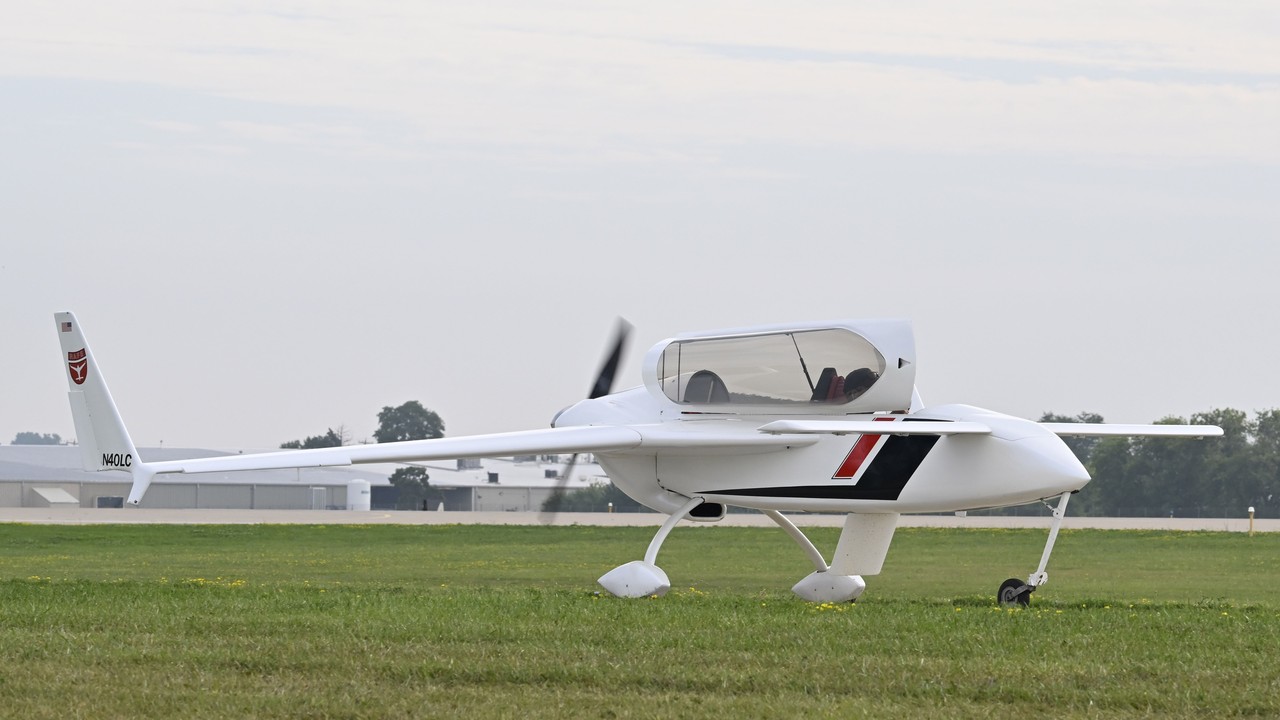
The VariEze emerged from Burt Rutan's determination to create a stall-resistant aircraft that amateur builders could construct using innovative moldless composite techniques. Drawing upon his experience with the earlier VariViggen, Rutan developed the Model 31 prototype in just four months, with the aircraft making its maiden flight on May 21, 1975. The second prototype, designated Model 33 and registered N4EZ, incorporated significant improvements including a larger wing, ailerons, and the reliable Continental O-200 engine, debuting at the Oshkosh airshow in July 1976.
Technical Innovation
The VariEze's canard configuration placed a small wing ahead of the main wing, ensuring that the forward surface would stall first and pitch the nose down, making traditional stalls impossible. This revolutionary safety feature, combined with the pusher propeller arrangement, created an aircraft that was nearly spin-proof. The moldless composite construction technique allowed homebuilders to create lightweight, smooth surfaces using fiberglass cloth and foam without expensive tooling, democratizing high-performance aircraft construction for the first time.
Performance Excellence
Powered by the Continental O-200 engine producing 100 horsepower, the VariEze delivered exceptional performance metrics that rivaled factory-built aircraft costing many times more. At 75 percent power, the aircraft cruised at 200 mph while achieving fuel economy equivalent to 40 miles per gallon. The prototype established a class distance record of 2,635 kilometers on August 4, 1975, piloted by Dick Rutan, Burt's brother and former Air Force test pilot. Another notable achievement came when the prototype flew 1,638 miles in over 13 hours, demonstrating the aircraft's remarkable range capabilities.
Production and Market Impact
Rutan Aircraft Factory began selling plans and kits in July 1976, with homebuilders worldwide embracing the revolutionary design. By the end of 1979, more than 3,000 plan sets had been sold, and by late 1980, approximately 2,000 VariEzes were under construction with about 300 flying. The aircraft's success established Rutan as a leading innovator in general aviation and proved that amateur builders could construct sophisticated, high-performance aircraft using composite materials.
The Designer and Company
Elbert L. "Burt" Rutan, an aeronautical engineer and former Air Force test pilot, founded Rutan Aircraft Factory at Mojave Airport, California, around 1974. RAF specialized in providing plans and kits for homebuilders, pioneering affordable composite construction techniques that had previously been limited to advanced military and commercial projects. The company operated successfully through the early 1980s, with Rutan ceasing plan sales in 1985 following legal complications related to a Long-EZ crash. By 1982, Rutan had established Scaled Composites to pursue advanced aerospace projects, including the Voyager aircraft and SpaceShipOne.
Engine Heritage
The Continental O-200 engine that powered most VariEzes represented one of general aviation's most successful powerplants. Manufactured by Continental Motors (now Continental Aerospace Technologies), the O-200 series entered production in the 1940s and continued for over 70 years, with more than 32,000 units produced by the time production ceased in 2012. This air-cooled, flat-four engine proved ideal for the VariEze application, providing reliable power while maintaining the aircraft's excellent fuel economy.
Legacy and Influence
The VariEze's success directly led to the development of the Long-EZ, which became the most-built homebuilt aircraft type in history. The aircraft's influence extended far beyond its production numbers, establishing canard configuration and composite construction as viable options for homebuilders worldwide. Many VariEzes remain active today, testament to their sound design and construction quality. Notable examples include the prototype N4EZ, which accumulated more than 700 flight hours before being donated to the Mid-America Air Museum in Liberal, Kansas, and another example in the Smithsonian National Air and Space Museum collection.
Cultural Impact
The VariEze fundamentally changed experimental aviation by proving that amateur builders could construct aircraft with performance exceeding many factory-built designs. Its influence can be seen in numerous subsequent homebuilt designs that adopted canard configurations, composite construction techniques, or both. The aircraft's combination of safety, performance, and buildability established new standards for kit aircraft and inspired a generation of homebuilders to undertake ambitious projects that previously would have been considered impossible for amateur construction.