
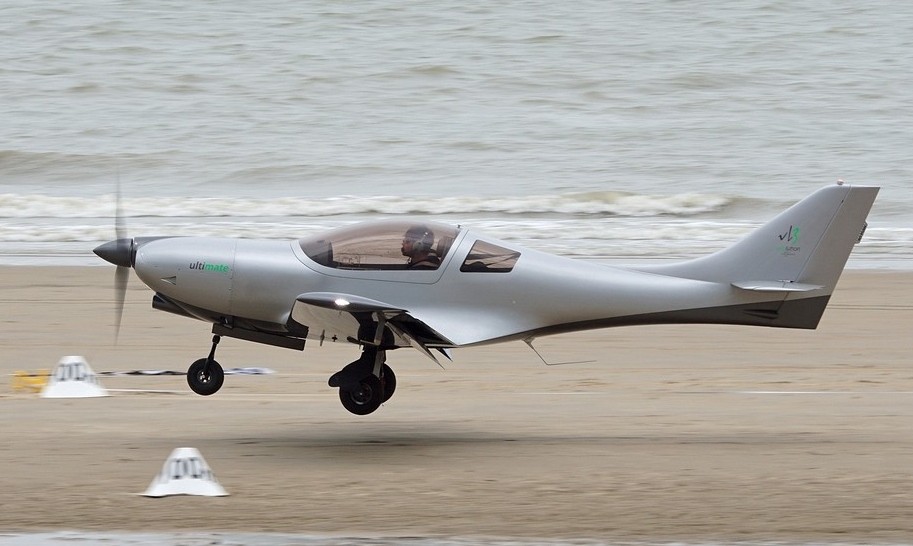
Manufacturing Heritage and Company Evolution
The VL-3 Evolution's development story spans three decades and two manufacturers. Originally designed by Vanessa Air and produced by Aveko of Brno, Czech Republic, the aircraft entered production in the mid-1990s as an ambitious project to create a fast, efficient ultralight. Aveko operated successfully until 2012, when the company collapsed following a fatal accident in South Africa two years earlier.
JMB Aircraft, operated by brothers Jean-Marie and Jean-Baptiste Guisset, had initially served as Aveko's exclusive distributor for France and Belgium, handling an impressive 85 percent of total Aveko production. When Aveko failed, JMB seized the opportunity to acquire the entire operation in 2012, relocating manufacturing to modern facilities in Choceň, Czech Republic. The company established multiple 2,000 square meter production buildings dedicated to VL-3 manufacturing.
Production Success and Market Penetration
Under JMB's ownership, the VL-3 Evolution has achieved remarkable commercial success. Production expanded from the original modest output to 45 aircraft per year by 2019. By 2022, JMB had delivered more than 500 VL-3s worldwide and achieved a production rate of one aircraft every four days. This represents a significant increase from the original Aveko era, when approximately 200 examples had been delivered globally.
The aircraft has secured certification in 21 countries across six continents, including the Czech Republic, Germany, Belgium, France, Norway, Portugal, Poland, the Baltic States, South Africa, United States, Italy, Slovakia, Turkey, Hungary, Romania, Canada, Israel, Australia, New Zealand, and Spain. This broad international acceptance demonstrates the design's versatility and appeal across diverse aviation markets.
Engine Evolution and Performance
The VL-3 Evolution's performance capabilities stem from its progression through increasingly powerful Rotax powerplants. The initial configuration employed the Rotax 912ULS, a four-cylinder horizontally-opposed engine producing 80 kW (100 horsepower). JMB subsequently offered the turbocharged Rotax 914, which provided a 30 km/h (19 mph) cruise speed increase at 2,743 meters (9,000 feet) altitude.
In 2018, JMB introduced the fuel-injected Rotax 912iS, offering improved performance, reduced fuel consumption, and lower noise levels. The following year brought the most powerful option: the Rotax 915TSi producing 105 kW (141 horsepower). In 2021, JMB expanded beyond traditional piston engines by offering the Turbotech TP-R90 turbine engine, featuring a doubled time between overhaul compared to piston alternatives.
Design Innovation and Records
The VL-3 Evolution incorporates several advanced features uncommon in the ultralight category. Its retractable tricycle landing gear contributes significantly to its exceptional cruise performance, while an airframe-mounted emergency parachute system provides additional safety margins. The aircraft's composite construction achieves remarkable weight efficiency, with the fuselage alone weighing just 36 kilograms (79 pounds).
The design's performance potential was dramatically demonstrated in 2005 when a VL-3 established a world speed record for two-seat ultralight aircraft, achieving 274.78 km/h (170.74 mph). This record validated JMB's marketing claim of producing the "world's fastest side-by-side ultralight aircraft."
Operational Characteristics and Pilot Appeal
With a never-exceed speed of 305 km/h (190 mph) and a maximum cruise speed of 270 km/h (168 mph), the VL-3 Evolution delivers airline-like performance in an ultralight package. Its gentle stall speed of 55 km/h (34 mph) provides excellent low-speed handling characteristics, while the impressive rate of climb of 366 meters per minute (1,200 feet per minute) enables rapid altitude gains.
The aircraft's operational flexibility extends to fuel capacity options, with standard tanks holding 90 liters (20 Imperial gallons) or optional 120-liter (26 Imperial gallon) tanks enabling a maximum range of 2,400 kilometers (1,491 miles). Fuel consumption remains economical at up to 18 liters per hour, making long-distance flights both practical and affordable.
Global Expansion and Training Operations
JMB Aircraft established flight training operations in Belgium to support VL-3 pilots and demonstrate the aircraft's capabilities. The company's expansion into markets like Australia, where Global Aviation Products imported the first example (registration 24-1549, construction number 275) in late 2018, illustrates the aircraft's growing international presence.
The VL-3 Evolution's combination of high performance, modern avionics compatibility, and reasonable operating costs has made it popular among both recreational pilots seeking cross-country capability and flight schools requiring advanced training platforms. Its certification across multiple regulatory frameworks from Europe to North America, Africa, and Oceania positions it as one of the most successful modern ultralight designs.