
Design and Development
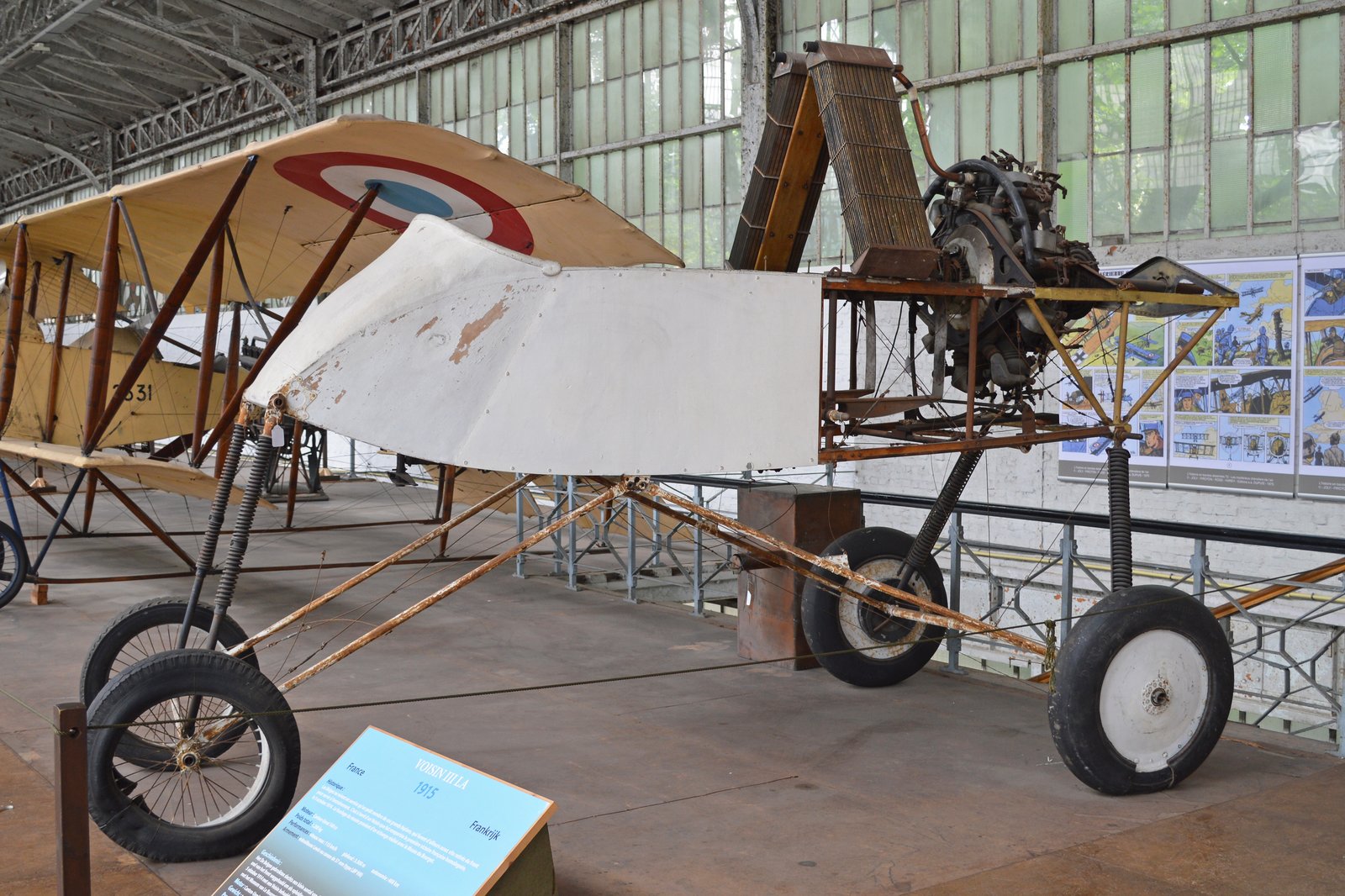
The Voisin III was developed by the company founded by brothers Gabriel and Charles Voisin. A pusher biplane, the aircraft was characterized by its light steel tube frame and canvas covering. To support its structure, the design incorporated a fixed quadricycle landing gear. The pusher configuration was a defining feature, providing the crew with unobstructed forward views, which made the aircraft highly effective for early-war reconnaissance, artillery spotting, and ground attack missions. The aircraft was designed as a two-seat platform and was capable of carrying a bomb load of up to 150 kg (330 lb) in certain configurations.
Technical Specifications
The aircraft was most commonly powered by a 120 hp Salmson M9 water-cooled radial piston engine. However, the type was not limited to a single powerplant, as some versions were equipped with Canton-Unne engines. This versatility in engine options supported its wide deployment across various Allied fronts during the early years of the conflict.
Production and Manufacturing
The Voisin III was produced by Aéroplanes Voisin (later Société Anonyme des Aéroplanes G. Voisin), a company established in 1905. Following the death of Charles Voisin in 1912, the firm continued under the leadership of Gabriel. While exact production totals vary by source, it is reported that over 850 airframes were built in France alone. Additional licensed production took place in several other countries, including Belgium, Italy, Romania, Russia, and the United Kingdom. Production and frontline service are noted to have ceased by November 1918.
Military Service
Entering combat in September 1914, the Voisin III became a staple of French military aviation, utilized for day and night bombing, observation, and training. It was also operated by other Allied forces, including Serbia, Russia, Italy, Belgium, and the British Commonwealth. The aircraft is credited with achieving the first French aerial victory over a German aircraft on 5 October 1914. Additionally, the Voisin III participated in the attack on the BASF chemical works at Ludwigshafen, Germany, on 26 May 1915. Although highly successful in the early stages of the war, the design eventually became vulnerable to faster enemy fighters.