
Development and Design Origins
The AP-68TP-600 A-Viator emerged from the successful Partenavia P-68 lineage, which began when the original P-68 first flew on May 25, 1970, and received type certification on November 17, 1971. Italian manufacturer Partenavia recognized the need for a turbine-powered variant that could operate in regions where conventional aviation gasoline was scarce or unavailable, leading to the development of the A-Viator as a stretched and strengthened evolution of the basic design.
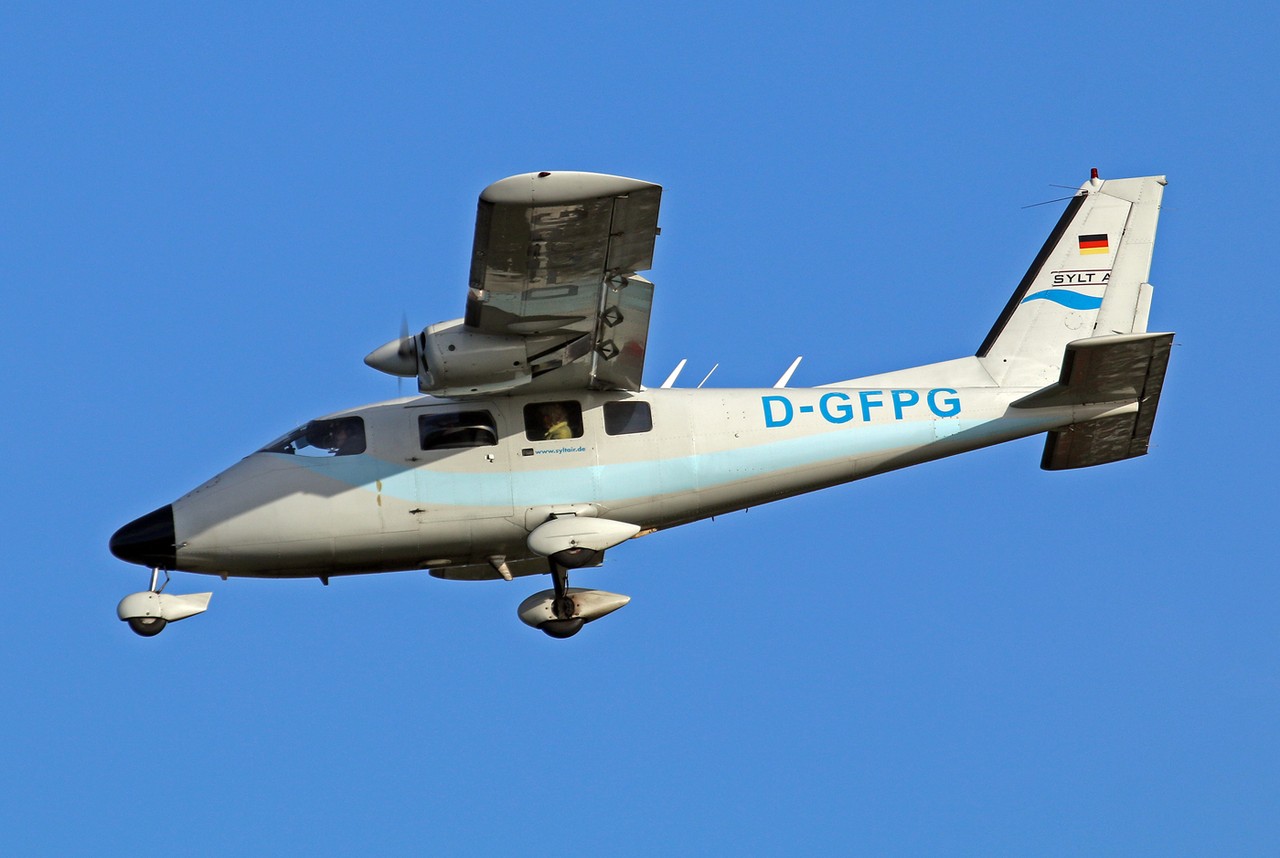
The transformation involved significant modifications to the original airframe. Engineers lengthened and reinforced the fuselage to create additional cabin space, extending the overall length to 11.27 meters. The nose section was redesigned to accommodate camera installations for surveillance and aerial work missions, reflecting the aircraft's intended versatility beyond passenger transport.
The Manufacturer
Vulcanair SpA, based in Casoria, Italy, acquired the assets and type designs of the bankrupt Partenavia in 1998, inheriting a rich aviation heritage. The original P-68 series had established a reputation for rugged construction and reliability in diverse operating conditions. When Vulcanair assumed control, the type certification for the entire P-68 family transferred to the new company, ensuring continuity of production and support.
Vulcanair's stewardship has maintained production of the A-Viator series, with manufacturing records showing continuous output from at least 2007 through 2023. The company has positioned the aircraft for multiple market segments, emphasizing its suitability for private operations, charter services, advanced surveillance missions, and specialized aerial work.
Engine and Technical Specifications
The A-Viator's powerplant consists of two Rolls-Royce 250-B17C turboshaft engines, each delivering 245 kilowatts (328 horsepower). The Rolls-Royce 250 series represents a mature and proven turbine family with extensive service history in both helicopter and fixed-wing applications. This engine selection provides the crucial capability to operate on turbine fuel, eliminating dependence on aviation gasoline in remote locations.
The aircraft maintains the high-wing configuration of its piston-powered predecessors, featuring a rectangular all-metal wing with integral fuel tanks. The design incorporates conventional dual flight controls operating through cables and push rods, electrically actuated flaps, and hydraulically driven retractable landing gear with nitrogen-charged emergency extension capability. A modern glass cockpit and 28-volt electrical system powered by two 150-amp starter-generators provide contemporary avionics integration and reliable power distribution.
Performance Characteristics
With a maximum takeoff weight of 3,000 kilograms (6,569 pounds), the A-Viator demonstrates respectable performance metrics for its class. The aircraft achieves a maximum speed of 295 kilometers per hour (245 mph) at 3,658 meters (12,000 feet), with a typical cruise speed of 315 kilometers per hour (196 mph). The service ceiling reaches 7,580 meters (25,000 feet), while single-engine operations remain possible up to 3,874 meters (11,400 feet).
Climb performance includes a two-engine rate of 427 meters per minute (1,550 feet per minute), degrading to 82 meters per minute (270 feet per minute) on a single engine. The aircraft requires a takeoff roll of 400 meters (1,312 feet) and can land in 320 meters (1,050 feet). With maximum fuel, the A-Viator achieves a range of 1,575 kilometers (978 miles).
Cabin Configuration and Capabilities
The fuselage extension created a cabin measuring 5.29 meters (17 feet 4 inches) in length with a total volume of 6.5 cubic meters (230 square feet). This space accommodates a maximum of nine passengers plus two pilots, making the A-Viator suitable for commuter operations and charter services. The empty weight of 1,680 kilograms (3,704 pounds) allows for a maximum useful load of 1,345 kilograms (2,965 pounds).
Stall characteristics include speeds of 139 kilometers per hour (86 mph) without flaps and 128 kilometers per hour (80 mph) with full flaps deployed, providing reasonable approach speeds for operations into shorter airfields.
International Operations
The A-Viator has found operators across multiple continents, with documented examples serving in Austria, Denmark, the Netherlands, Poland, and the Seychelles. In Australia, the first example (VH-PNW, construction number 9010) arrived on January 31, 2011, consigned to AirItalia Australia Pty Ltd as the regional distributor. This aircraft appeared at the Australian International Airshow at Avalon, Victoria in March 2011, though it failed to generate local sales and subsequently moved to Switzerland as HB-LRZ before final registration in Germany as D-ISGS.
Current Status and Pricing
Vulcanair has maintained A-Viator production into the 2020s, with the most recent documented examples manufactured in 2023. The retail price was established at $2,600,000 USD (€2,040,220), positioning the aircraft in the premium twin-turboprop market segment. The combination of turbine reliability, generous cabin space, and operational flexibility continues to attract operators requiring versatile aircraft capable of passenger transport, cargo hauling, and specialized mission profiles in challenging environments where fuel availability favors turbine over piston power.