
Design Genesis and Development
Burt Rutan conceived the VariViggen during his student years at California Polytechnic State University in 1963, drawing inspiration from the Swedish Saab 37 Viggen fighter and the North American XB-70 Valkyrie. Through the 1960s, Rutan conducted extensive wind tunnel testing, built scale models, and performed innovative experiments using a station wagon-based test rig to validate his canard-delta wing concept. His primary objective centered on creating a stall-resistant aircraft with docile handling characteristics suitable for amateur construction.
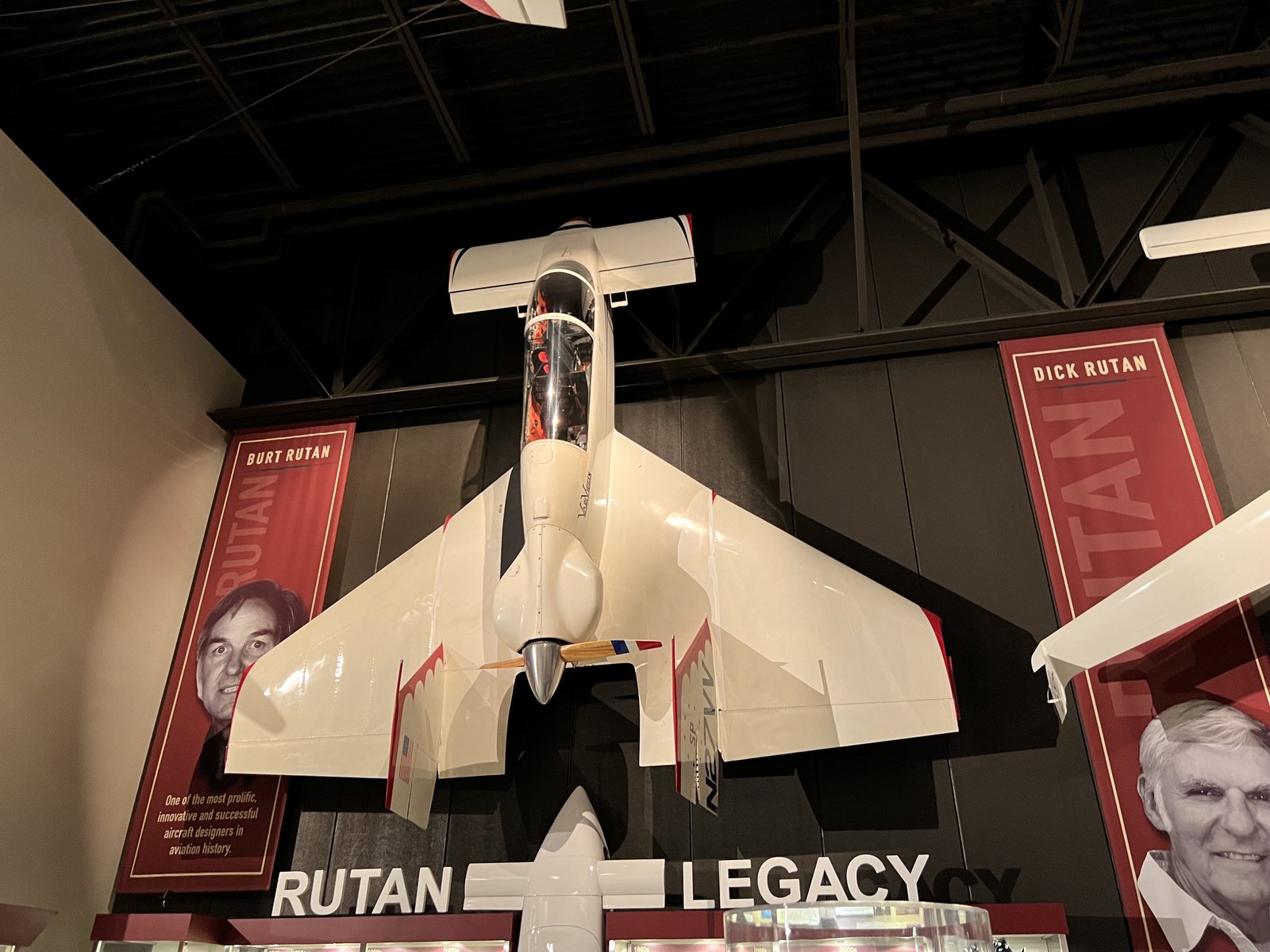
The prototype, designated Model 27 and registered N27VV, emerged from Rutan's garage workshop in Lancaster, California. Construction utilized conventional materials including plywood skinning, spruce wing spars, and Ceconite fabric covering—materials familiar to homebuilders of the era. The aircraft incorporated several revolutionary features for 1970s homebuilts: a canard foreplane for pitch control and inherent stall resistance, pusher propeller configuration, electrically retractable landing gear, and tandem seating providing fighter-like visibility.
Flight Testing and Public Debut
Rutan personally conducted the VariViggen's maiden flight in May 1972 from Newton, Kansas, marking the beginning of an extensive 150-hour test program. After completing 75 test hours, he debuted the aircraft at EAA Oshkosh 1972, where its unconventional appearance and innovative design philosophy captured the experimental aviation community's attention. The prototype's striking resemblance to military fighters, combined with its docile handling characteristics, demonstrated that radical configurations could be successfully executed by amateur builders.
During testing, Rutan proved the design's versatility by undertaking a 3,000-mile vacation flight spanning five days with 16 intermediate stops. This journey validated the aircraft's cross-country capability and structural integrity while demonstrating its practical utility beyond mere experimental status.
Production and Market Response
The Rutan Aircraft Factory began selling VariViggen plans around 1972, ultimately distributing over 600 plan sets through the late 1970s and early 1980s. However, the aircraft's construction complexity and unconventional configuration challenged many amateur builders, resulting in only approximately 20 completed aircraft from the hundreds of plan sets sold. The production version, designated Model 32 VariViggen SP, incorporated refinements including extended fuselage length, increased wingspan, and efficiency-enhancing winglets.
The Rutan Aircraft Factory Legacy
Burt Rutan established the Rutan Aircraft Factory around 1974-1975 after departing Bede Aircraft, initially operating from his garage before expanding operations. RAF pioneered numerous homebuilt aviation concepts throughout the 1970s and 1980s, including the revolutionary composite VariEze and Long-EZ designs that followed the VariViggen. The company's emphasis on canard configurations and unconventional thinking influenced an entire generation of experimental aircraft designers.
Rutan Aircraft Factory evolved into Scaled Composites in 1982 when Rutan partnered with investors for larger projects. Scaled Composites continues operations today, having achieved fame for developing SpaceShipOne and numerous other innovative aerospace vehicles.
Technical Specifications and Performance
The VariViggen's powerplant consisted of a Lycoming O-320-A2A or O-320-AZA flat-four engine producing 150 horsepower, mounted in pusher configuration behind the cockpit. A two-bladed Hegy wooden fixed-pitch propeller measuring 5 feet 10 inches in diameter provided thrust. This arrangement delivered a maximum speed of 144 knots true airspeed with a normal cruise speed of 131 knots.
The aircraft's empty weight reached 1,020 pounds with a gross weight limitation of 1,700 pounds, providing useful load capacity for two occupants and baggage. The delta wing platform measured 19 feet in span, while overall length reached 16 feet 10 inches and height measured 6 feet 2 inches.
Cultural Impact and Media Appearances
The VariViggen achieved unexpected fame beyond aviation circles when the prototype appeared in the 1975 cult film "Death Race 2000," introducing the design to mainstream audiences. This media exposure highlighted the aircraft's futuristic appearance and reinforced its image as a revolutionary departure from conventional general aviation designs.
Current Status and Museum Preservation
Fewer than five VariViggens remain airworthy today following accidents and the natural attrition of aging experimental aircraft. A September 2006 crash in New Brunswick, Canada, caused by fuel contamination, further reduced the surviving population.
The original prototype N27VV found permanent preservation at the EAA AirVenture Museum in Oshkosh, Wisconsin, where Burt Rutan donated it in 1988. The aircraft occupies a place of honor as the foundational design that launched one of aviation's most innovative careers, representing the beginning of the canard revolution in homebuilt aviation and foreshadowing Rutan's later achievements in composite construction and unconventional aircraft design.