
Production and Manufacturer History
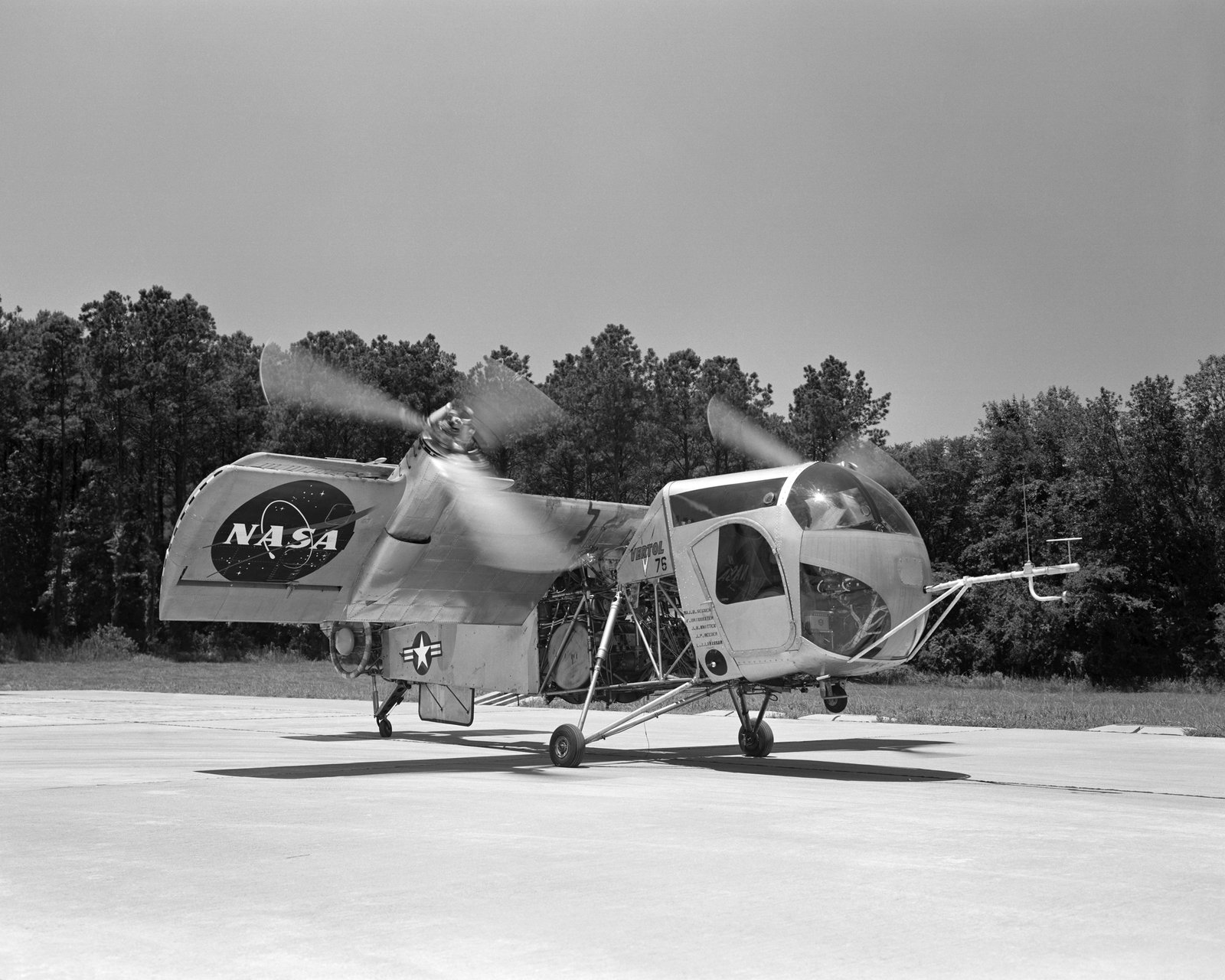
The Piasecki VZ-2, designated as Model 59, was an experimental prototype developed in the mid-1950s. Only one aircraft was constructed, with production occurring between 1956 and 1957. The aircraft was designed and built by the Piasecki Aircraft Corporation in the Philadelphia region of Pennsylvania. It is important to distinguish the builder from the earlier Piasecki Helicopter Corporation; the latter was renamed the Vertol Corporation in early 1956 and was later acquired by Boeing in 1960. Piasecki Aircraft Corporation was founded by Frank N. Piasecki around 1955–1956 as a dedicated R&D and prototype firm, and it continues to operate as a privately held aerospace company today.
Design and Technical Specifications
Under the leadership of Frank N. Piasecki, the VZ-2 was engineered as a research vehicle to explore tilt-duct VTOL concepts. The aircraft featured a high wing that could rotate as a single unit, with two propellers enclosed in tilting ducts located at the wingtips. This configuration allowed the aircraft to transition between vertical lift and conventional horizontal flight. For low-speed and hover control, the VZ-2 utilized a hybrid system where the propeller slipstream was deflected over the tail and other control surfaces, transitioning to standard aerodynamic controls as speed increased.
The aircraft was powered by a single Lycoming O-360-A1A four-cylinder, air-cooled, horizontally-opposed piston engine mounted in the fuselage. This engine produced 180 hp and drove the two wingtip ducted fans via a system of shafts and gearboxes. The VZ-2 had a length of approximately 25 ft 7 in, a height of 10 ft 6 in, and a wingspan ranging between 23 ft 8 in and 24 ft. The ducted fans each measured approximately 6 ft in diameter. The aircraft's empty weight was between 2,100 and 2,200 lb, with a maximum takeoff weight of approximately 3,000 to 3,100 lb.
Flight Testing and Performance
The VZ-2 performed its first tethered hover on August 13, 1957, with free flight following later that year. It was operated as a joint testbed for the U.S. Army Transportation Research Command and the NASA Langley Research Center. Performance data indicated a maximum level flight speed of roughly 150 mph and cruise speeds between 120 and 130 mph. The aircraft had an estimated range of 250 to 300 miles and a service ceiling of approximately 10,000 ft.
Legacy
As a research-only aircraft, the VZ-2 never saw combat or commercial service. However, it was one of the earliest successful tilt-wing/tilt-duct aircraft, predating later designs like the Bell XV-15. The flight data it provided on takeoff, landing, and transition regimes proved invaluable for subsequent VTOL research. The sole surviving prototype is preserved in the collection of the Smithsonian Institution’s National Air and Space Museum.