
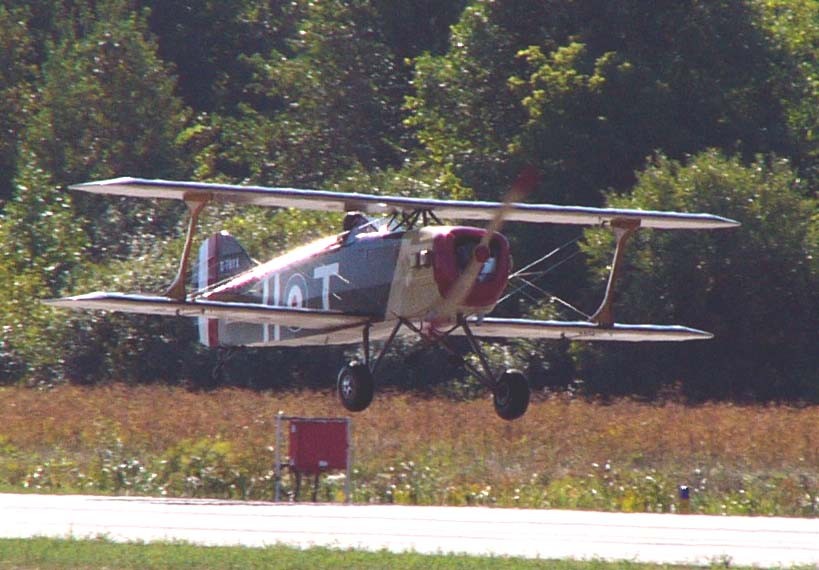
Design Philosophy and Development
Donald Wolf began developing the W-11 Boredom Fighter in July 1976 with a clear mission: create an affordable, fun-to-fly aircraft that would evoke the golden age of aviation while remaining buildable by amateur constructors. Working from his base in Huntington, New York, Wolf deliberately styled the aircraft to resemble the World War I SPAD S.XIII, complete with open cockpit and classic biplane proportions.
Prototype construction commenced in August 1977, culminating in the aircraft's maiden flight on August 30, 1979. Wolf's design philosophy centered on simplicity and nostalgia, using traditional materials and construction techniques that home builders could master without industrial tooling or specialized facilities.
Construction and Technical Innovation
The W-11 employs all-wood construction throughout, featuring spruce spars and ribs with a Warren truss fuselage design. The airframe is fabric-covered and built as a single-bay braced biplane with NACA 4412 wing sections incorporating 1 degree of dihedral. This conventional approach ensures predictable handling characteristics while maintaining the authentic 1920s aesthetic Wolf sought to achieve.
The fixed tailwheel landing gear utilizes rubber bungee shock absorption and 6.00-6 wheels, contributing to the aircraft's vintage appearance and ground handling characteristics. The open cockpit accommodates a single pilot with provision for 8 pounds of baggage storage aft of the seat.
Powerplant and Performance
Most W-11 examples utilize the Continental A65 four-cylinder, horizontally-opposed, air-cooled engine producing 65 horsepower. This reliable powerplant, manufactured by Continental Motors from the 1930s through 1960s, drives a two-blade fixed-pitch wooden propeller, typically a Lewis measuring 43 by 72 inches. The fuel system holds 15 gallons with a 1-gallon oil capacity.
With an empty weight of 473 pounds and maximum gross weight of 770 pounds, the Boredom Fighter delivers spirited performance. Maximum speed reaches 118-120 mph, while cruise speed ranges from 100-110 mph. The aircraft stalls at just 42 mph, enabling operations from short grass strips. Service ceiling extends to 16,000 feet with an initial climb rate of 1,200 feet per minute. Range capabilities span 440-506 miles depending on configuration and conditions.
Production and Global Reach
Unlike conventional aircraft manufacturers, Wolf markets the W-11 exclusively as plans for homebuilders through his individual design effort. Since 1979, over 300 sets of plans have been sold worldwide, though only approximately 30 aircraft have reached completion and registration. This completion rate reflects the substantial time and skill investment required for amateur construction.
Builders have tackled W-11 projects across multiple continents. Notable examples include Peter J.D. Gronow's construction in Carmarthen, Wales in 1986, Christopher M. Bunn's project in Pen-Y-Fai, Wales completed in 2003, and Australian registration 19-8410 built in Latrobe Valley, Victoria, later sold to a Moruya, New South Wales owner in 2016.
The Designer's Vision
Donald Wolf continues marketing plans from his Cedar Drive address in Huntington, maintaining contact through modern channels including email and a dedicated website. His persistent involvement with the design reflects a passion project rather than commercial enterprise, keeping the W-11 available for new generations of builders seeking the challenge of creating their own vintage-style aircraft.
The designation "Boredom Fighter" captures Wolf's fundamental objective: providing aviators with an engaging, hands-on project that culminates in an aircraft delivering pure flying enjoyment reminiscent of aviation's pioneering era.
Aviation Media Recognition
The W-11 has garnered attention in aviation publications, particularly through the Experimental Aircraft Association's Sport Aviation magazine. Notable coverage includes a 1981 article titled "Single Seat, All Wood, 65 HP, WWI," followed by features in 1991, 1997 highlighting a Subaru-powered variant, and a 2005 article by Matt Ellis. This media exposure has helped maintain awareness of the design among homebuilding enthusiasts.
Legacy and Current Status
While exact numbers of airworthy examples remain uncertain, the W-11's plans-built nature ensures continued potential for new construction. The design represents a successful bridge between World War I aesthetics and modern amateur building techniques, proving that nostalgic aircraft concepts can find dedicated followings among builders seeking alternatives to contemporary designs. The Boredom Fighter stands as testament to individual innovation in recreational aviation, demonstrating how a single designer's vision can inspire builders worldwide to create their own piece of aviation history.