
Development and Innovation
The WA-40 emerged from Société Wassmer's ambitious entry into aircraft manufacturing. Founded in 1905 as an aircraft repair facility, the company established its design department in 1955 after building over 300 Jodel aircraft under license. The WA-40 represented their first original design, targeting the growing market for modern light aircraft with advanced features previously reserved for larger, more expensive machines.
The aircraft's most significant innovation was incorporating retractable tricycle landing gear into a lightweight wooden-wing design. This combination was unusual for the era, as most retractable-gear aircraft featured all-metal construction. The WA-40's mixed construction—wooden wings paired with a steel tube fuselage covered in fabric—kept weight and costs manageable while delivering the performance benefits of retractable gear.
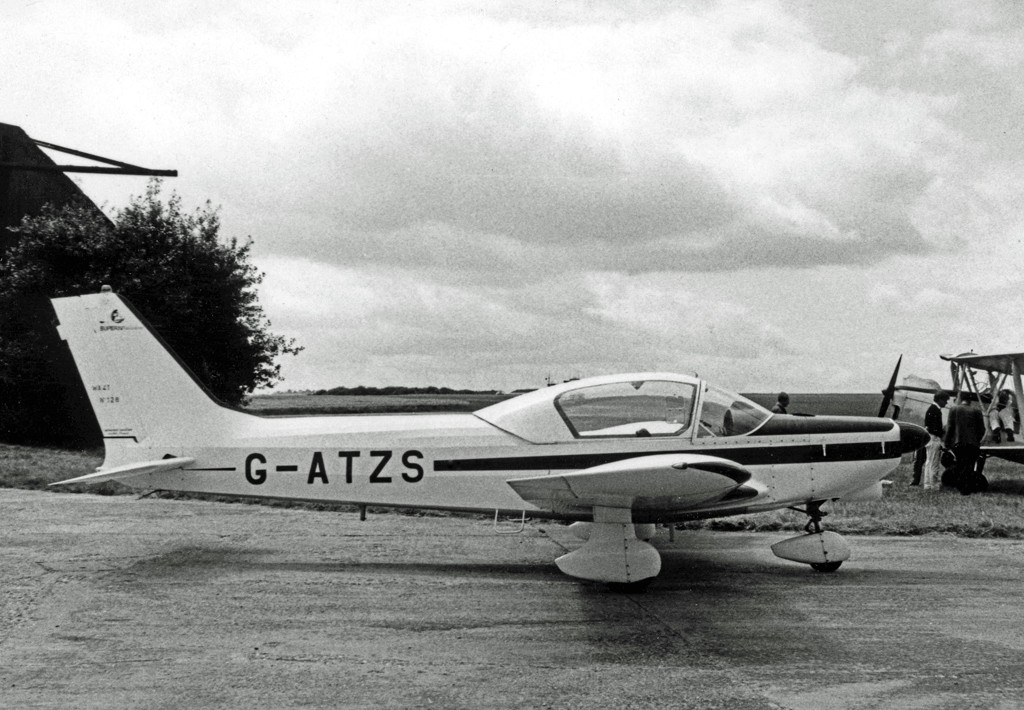
French certification came on June 9, 1960, just over a year after the prototype's maiden flight. The design proved successful enough to spawn several variants, including the improved WA-40A with a distinctive swept vertical tail introduced from the 53rd aircraft onward. This variant first flew in January 1963 and received certification that March.
Technical Excellence
Powered by the reliable Lycoming O-360-A1A engine producing 180 horsepower, the WA-40 featured a constant-speed propeller that optimized performance across different flight phases. The aircraft's NACA 63.618 airfoil section provided efficient lift characteristics, while the 6.2:1 aspect ratio wing delivered good cruise performance.
With an empty weight of 740 kilograms and maximum takeoff weight of 1,200 kilograms, the aircraft offered respectable payload capability. Its 220-liter fuel capacity provided adequate range for the typical general aviation missions of the 1960s. The cockpit accommodated a pilot plus four passengers, making it suitable for both private ownership and flying club operations.
Production Variants
Wassmer developed several variants to meet different market needs. The basic WA-40 and improved WA-40A Super IV formed the backbone of production, with 180 aircraft built combining both models. Additionally, 50 examples of the original WA-40 Super IV were manufactured alongside the two prototypes.
Recognizing that some operators preferred simpler, less expensive aircraft, Wassmer introduced the WA-41 Baladou in 1965. This variant featured fixed landing gear, reducing both initial cost and maintenance complexity. Sixty examples were produced by 1970, proving the wisdom of offering multiple configurations.
At the premium end, the WA 4/21 Prestige debuted in March 1967 with a more powerful 250-horsepower Lycoming IO-540-C4B5 engine. This variant included advanced features like autopilot capability, electric flaps, and full IFR instrumentation. The Prestige's McCauley constant-speed propeller measured 1.88 meters in diameter, optimized for the increased power output. Twenty-five Prestige aircraft were completed by 1970.
The CERVA Connection
In 1971, Wassmer partnered with Siren SA to form CERVA, developing an all-metal derivative designated CE-43 Guépard. This collaboration aimed to modernize the basic WA-40 design with contemporary construction methods. However, follow-on projects including the CE-44 Cougar and CE-45 Léopard never reached production due to Wassmer's deteriorating financial situation.
Manufacturer's Decline
Despite producing innovative designs, Société Wassmer faced mounting financial pressures throughout the 1970s. The company became insolvent in September 1977, ending production after manufacturing approximately 315 aircraft across all WA-40 variants. The timing was particularly unfortunate, as general aviation was entering a period of significant growth that would benefit other manufacturers.
Operational Service
The WA-40 served primarily in private hands and flying clubs throughout Europe. Its combination of modern features and reasonable operating costs made it attractive to serious private pilots and training organizations. Aircraft like F-GTFN and OO-GRH (construction number 102) became familiar sights at European airports during the type's operational heyday.
However, the aircraft's service record included at least one notable accident. On July 22, 2001, WA-40 OY-DHV, built in 1962, was involved in a fatal crash near Lichfield, Hampshire, during a private flight. Such incidents, while tragic, were not uncommon among general aviation aircraft of the era.
Legacy and Current Status
The WA-40's production run of 315 aircraft was respectable for a specialized light aircraft, though modest compared to more successful contemporaries. Today, surviving examples are increasingly rare, with at least one aircraft, F-GTFN, documented in enthusiast records. The type's combination of wooden construction and specialized components makes maintenance challenging, contributing to attrition over the decades since production ended.
While the WA-40 never achieved the commercial success of aircraft like the Piper Cherokee or Cessna Cardinal, it represented an important chapter in French general aviation. Its innovative approach to combining traditional and modern construction techniques influenced subsequent designs and demonstrated that smaller manufacturers could compete with established firms through thoughtful engineering and attention to market needs.