
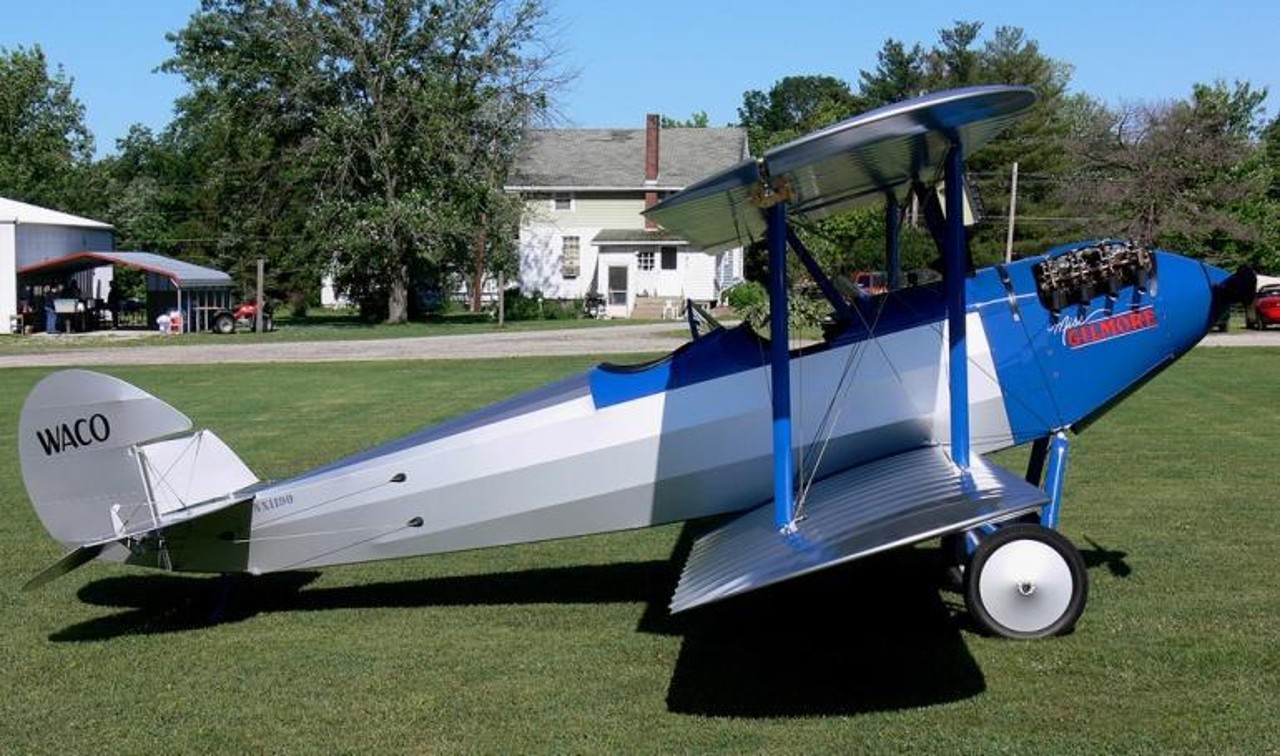
Service History
The WACO 9 dominated the barnstorming circuit throughout the mid-1920s, offering professional pilots a reliable alternative to aging Curtiss JN-4 Jennys that had flooded the civilian market after World War I. Priced initially at $2,500 and later reduced to $2,025, the aircraft provided superior performance and structural integrity that made it the preferred choice for aerial entrepreneurs offering passenger rides at county fairs and airfields across America. Two WACO 9s participated in the prestigious Ford National Reliability Air Tours of 1925 and 1926, events designed to demonstrate the viability of commercial aviation to skeptical investors and government officials.
Beyond barnstorming, the type found utility in early commercial operations. Pacific Air Transport operated one example (construction number 218, registration NC139) as an air mail carrier, contributing to the expansion of postal aviation that would eventually spawn the airline industry. The aircraft's three-seat configuration proved ideal for passenger operations, with two travelers sharing the front cockpit while the pilot occupied the rear position for optimal visibility and weight distribution.
The Manufacturer
The Advance Aircraft Company emerged from the ashes of the Weaver Aircraft Company of Ohio in the early 1920s, with key personnel Clayton Brukner and Elwood "Sam" Junkin transitioning to the new enterprise. Operating from Troy, Ohio, the company would evolve into the WACO Aircraft Company around 1929, becoming one of America's most successful biplane manufacturers for over two decades. The WACO 9 and its successor, the Model 10, established the company's reputation for building robust, affordable aircraft that met the needs of civilian operators.
The company thrived through the 1930s, producing dozens of biplane variants that became synonymous with American general aviation. However, changing market demands following World War II proved challenging, and WACO ceased operations in 1947. Today, an unrelated company called WACO Aircraft Corporation produces new biplanes inspired by the classic 1920s and 1930s designs, using traditional construction techniques to serve the vintage aviation enthusiast market.
Engine & Technical Details
Elwood "Sam" Junkin spearheaded the WACO 9's design with assistance from Clayton Brukner, focusing on creating a sturdy workhorse that could withstand the rigors of daily commercial operation. The aircraft's most significant innovation was its welded steel-tube fuselage, replacing the wood-and-wire construction typical of earlier designs. This structural approach provided superior durability and crashworthiness, critical factors for pilots operating in challenging conditions with paying passengers.
The standard powerplant was the 90-horsepower Curtiss OX-5, a liquid-cooled V8 engine that had powered thousands of JN-4 trainers during World War I. Manufactured by the Curtiss Aeroplane and Motor Company from 1915 through the 1920s, surplus OX-5 engines remained plentiful and affordable, making them attractive to cost-conscious operators. Alternative engine options included the 100-horsepower Curtiss OXX-6, the 150-horsepower Hispano-Suiza, and the uprated 160-horsepower Curtiss C-6.
The aircraft featured upper-wing ailerons that extended outboard of the wing structure, initially in a conventional design that was later enlarged to the distinctive "elephant-ear" configuration by 1926 to improve roll authority. This modification enhanced the aircraft's handling characteristics, particularly important for pilots performing aerobatic demonstrations to attract customers.
Pilot Perspective
Pilots praised the WACO 9 for its predictable handling characteristics and forgiving flight envelope, essential qualities for aircraft operating from marginal airfields with minimal maintenance support. The type's low stall speed of 32 miles per hour provided excellent short-field performance, while its maximum speed of 92 miles per hour offered reasonable cross-country capability for the era. Cruising speed of 79 miles per hour and range between 375 and 400 miles made the aircraft practical for both local operations and longer demonstration tours.
The open-cockpit configuration, while exposing occupants to the elements, provided excellent visibility and the sensory experience that passengers sought from their aerial adventures. The wide front cockpit accommodated two adult passengers comfortably, while the pilot's rear position offered optimal control authority and forward visibility for takeoffs and landings.
Production & Legacy
Approximately 270 WACO 9 aircraft rolled off the production line in Troy, Ohio between 1925 and 1926, representing a significant commercial success for the young Advance Aircraft Company. The type's market acceptance validated the company's design philosophy and established WACO as a major force in American general aviation manufacturing.
The WACO 9 achieved another aviation milestone in 1928 when it became the first aircraft equipped with aluminum floats manufactured by the EDO Corporation, pioneering the use of this lightweight material for seaplane applications. This development expanded the aircraft's operational flexibility and demonstrated its adaptability to specialized roles.
By 2007, approximately 10 WACO 9 aircraft remained in existence, with several examples maintaining airworthy status in the United States and five preserved in museums. The Western Antique Aeroplane and Automobile Museum houses the historically significant construction number 218 (NC139), the former Pacific Air Transport mail plane, in flying condition. The National Air and Space Museum has preserved a red and black WACO 9 with its original OX-5 engine, which was exhibited in 1982 and now resides in storage at the Silver Hill facility in Maryland.
The WACO 9's legacy extends far beyond its production numbers, as it launched one of America's most successful aviation companies and symbolized the adventurous spirit of 1920s barnstorming that brought aviation to rural communities across the nation.