
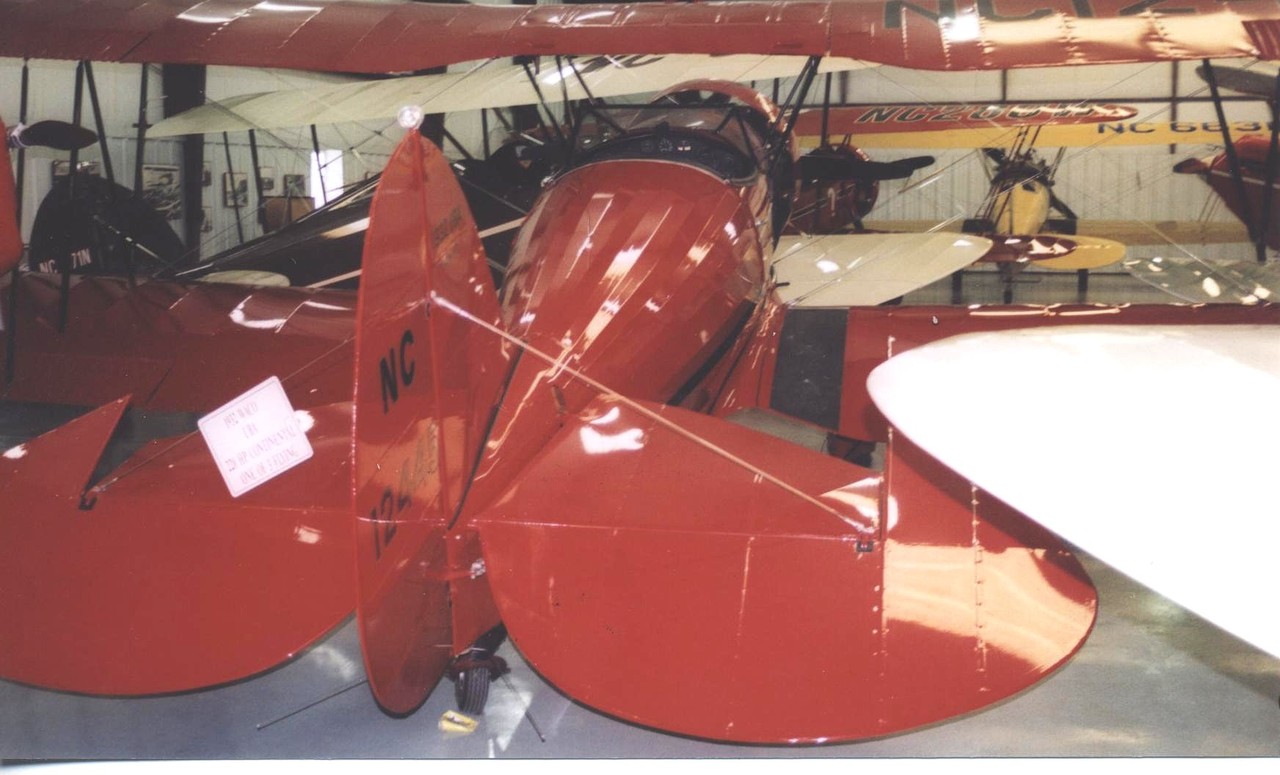
The Business Pilot's Biplane
The WACO PBA emerged during a pivotal period in American aviation when manufacturers struggled to maintain sales following the 1929 stock market crash. WACO Aircraft Company responded by developing the A series as an affordable alternative to their larger, more expensive F series biplanes. The PBA represented the company's strategy to capture the market of businessmen and private pilots who desired cross-country capability without the higher costs associated with larger aircraft.
Design Philosophy and Configuration
Unlike many contemporary aircraft that featured tandem seating, the PBA adopted a side-by-side open cockpit arrangement that proved popular with flying clubs and private owners. This configuration enhanced the aircraft's appeal for instruction and recreational flying, while maintaining the sporting image that WACO cultivated throughout the 1930s. The aircraft incorporated baggage capacity and cross-country range capabilities that distinguished it from purely recreational designs of the era.
The PBA's 175-horsepower Jacobs L-4MA radial engine positioned it in the middle range of the A series lineup, which spanned from the 100-horsepower KBA equipped with a Kinner K-5 engine to the 210-horsepower UBA powered by a Continental powerplant. This engine selection provided reliable performance for the utility role while maintaining operational economy that attracted cost-conscious operators.
WACO Aircraft Company Legacy
The manufacturer behind the PBA had established itself as America's dominant small aircraft producer by the late 1920s. Originally founded as Weaver Aircraft Company in 1920 in Lorain, Ohio, by George "Buck" Weaver, Elwood "Sam" Junkin, Clayton "Clayt" Bruckner, and Charles "Charlie" William Meyers, the company relocated to Troy, Ohio, in 1923. Operating as Advance Aircraft Company while retaining the WACO brand, it officially became WACO Aircraft Corporation in 1929.
By 1927, WACO had achieved remarkable market dominance with their WACO Nine design, introduced in 1925, selling 276 units by 1927 and capturing over 40 percent of the United States small aircraft market. Throughout its 28-year production history, the company developed 62 different models and maintained the largest number of registered aircraft among American manufacturers. This success positioned WACO as the leading competitor in the civilian aircraft market during the interwar period.
Production and Market Position
The PBA's production run lasted only from 1932 to 1933, with at least 11 aircraft completed at the Troy, Ohio, manufacturing facility. This relatively small production number reflected both the challenging economic conditions of the early Depression years and the specialized market segment the aircraft targeted. The PBA competed alongside other A series variants including the IBA, RBA, and UBA models, each tailored to different performance and price points within the utility biplane category.
The aircraft's design influenced the development of the related PLA "Sportsman" variant introduced in 1933, which featured a longer, wider fuselage to accommodate higher useful loads. This evolution demonstrated WACO's responsiveness to customer feedback and market demands during the challenging economic period.
Operational Service
The PBA served exclusively in civilian roles, primarily with private pilots and businessmen who valued its high-performance characteristics within the utility airplane category. Flying clubs adopted the type for its combination of speed, handling qualities, and the practical advantages of side-by-side seating for instruction and recreational flying. The aircraft's sporting appeal and cross-country capability made it particularly attractive to pilots seeking adventure and practical transportation during an era when commercial airline service remained limited.
Unlike some WACO designs that found military applications, such as the U.S. Navy's purchase of XJW-1 variants in 1934 for parasite fighter experiments with airships USS Akron and Macon, the PBA remained focused on the civilian market throughout its service life.
Surviving Legacy
Today, surviving PBA examples exist in small numbers, with at least one notable specimen displayed at the Historic Aircraft Restoration Museum at Dauster Field near St. Louis, Missouri. The aircraft represents an important chapter in WACO's pre-World War II dominance of American civilian aviation, bridging the gap between affordable ownership and performance capability during the challenging post-Depression recovery period.
The PBA's legacy extends beyond its limited production numbers, symbolizing the innovation and market adaptability that characterized American aircraft manufacturers during the 1930s. While WACO ceased aircraft production in 1946 and withdrew from manufacturing in June 1947 due to postwar market conditions and high development costs, Classic Aircraft Corporation revived WACO designs in 1983, continuing the brand's tradition under the modern WACO Aircraft Corporation.