
Military Ambitions and Export Focus
The WACO D series emerged from the company's aggressive push into military markets during the early 1930s, a dramatic departure from their successful civilian aircraft business. Waco designed the D as a multipurpose military platform capable of performing at least twelve distinct functions, including fighter operations, bombing missions, observation duties, and photographic reconnaissance. This ambitious scope reflected the company's desire to compete for lucrative military contracts after achieving only minimal previous sales to military customers, such as a single Waco 9 sold to the U.S. Army Air Service in 1926.
Rather than securing American military adoption, the D series found its primary market through exports. Uruguay purchased six JHD variants powered by 365-horsepower Wright J-6-9 Whirlwind engines, representing the most significant military sale for the series. Additional export fighter versions included the S3HD-A and WHD models, though production numbers remained limited across all variants.
The Waco Aircraft Company Legacy
The Waco Aircraft Company operated for twenty-seven years from 1920 to 1947, during which it produced sixty-two different aircraft models and led competitors in registered aircraft numbers during its peak years. Founded in 1919 by Clayton J. "Clayt" Brukner, Elwood "Sam" Junkin, Charles "Charley" William Meyers, and George "Buck" Weaver, the company originally operated as the Weaver Aircraft Company before adopting the WACO name.
The company built its reputation on reliable biplanes that proved popular with businessmen, postal services, and explorers, particularly the post-1930 cabin models. However, the D series represented a significant gamble on military contracts that never materialized domestically. Following World War II, Waco's attempts to market new designs like the Model W Aristocraft failed due to market conditions and rising costs, leading the company to cease manufacturing operations in June 1947.
Engine Specifications and Variants
The D series utilized exclusively radial engines, primarily from Wright Aeronautical with one variant featuring a Pratt & Whitney powerplant. The CHD variant incorporated a 250-horsepower Wright J-6-7 Whirlwind engine, while the export-focused JHD boosted power to 365 horsepower with the Wright J-6-9 Whirlwind. The WHD variant featured the more powerful Wright R-975-E3 producing 450 horsepower, and the S3HD utilized a Pratt & Whitney R-985 engine rated at 420 horsepower, later upgraded to 450 horsepower as indicated by the "3" designation in the model name.
These high power outputs, ranging from 250 to 450 horsepower, enabled the multipurpose military roles Waco envisioned for the aircraft. The Wright J-6 Whirlwind engines had established reputations for reliability in early military applications, though the rapid advancement of military aviation technology quickly rendered the biplane configuration obsolete.
Limited Service Record
The D series achieved minimal military service, with no significant U.S. military adoption beyond prototype evaluations. The aircraft's military career remained confined to export sales, primarily the six JHD aircraft delivered to Uruguay for fighter operations. In 1934, Waco developed related models designated XJW-1 (UBF-2) for the U.S. Navy's parasite fighter program aboard the airships USS Akron and Macon, though these represented a separate development from the core D series.
The timing of the D series proved unfortunate, as military aviation underwent rapid technological advancement during the 1930s. The single-bay biplane configuration, while featuring aggressive military styling for its era, quickly became obsolete as monoplane fighters with superior performance entered service worldwide.
Remarkable Survival
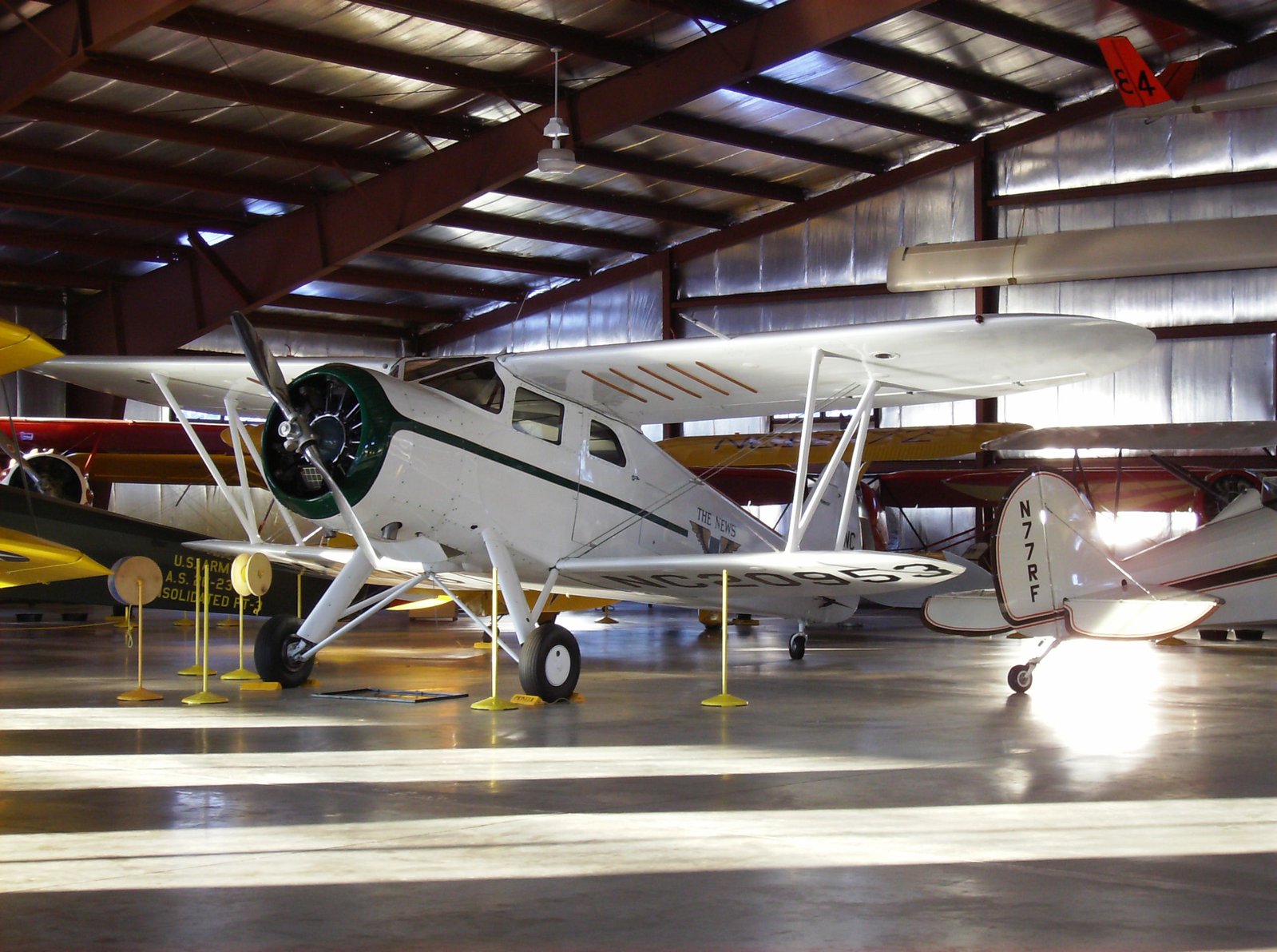
Despite the series' commercial failure and limited production, at least one civilian D model survives today as the last of its type. This remarkable aircraft has remained airworthy for over eighty of its ninety-one years, serving as a testament to WACO's construction quality and engineering. The surviving aircraft demonstrates the durability that made WACO biplanes popular in civilian markets, even as military customers rejected the design.
The D series ultimately represents a fascinating footnote in American aviation history, illustrating both the challenges of breaking into military markets and the rapid pace of technological change during the 1930s. While Waco would later achieve significant success producing CG-4A gliders for D-Day operations, manufacturing 1,074 units at their Troy facility, the D series remains a reminder of the company's earlier military ambitions and the single surviving example continues to honor that legacy in the skies today.