
Service History
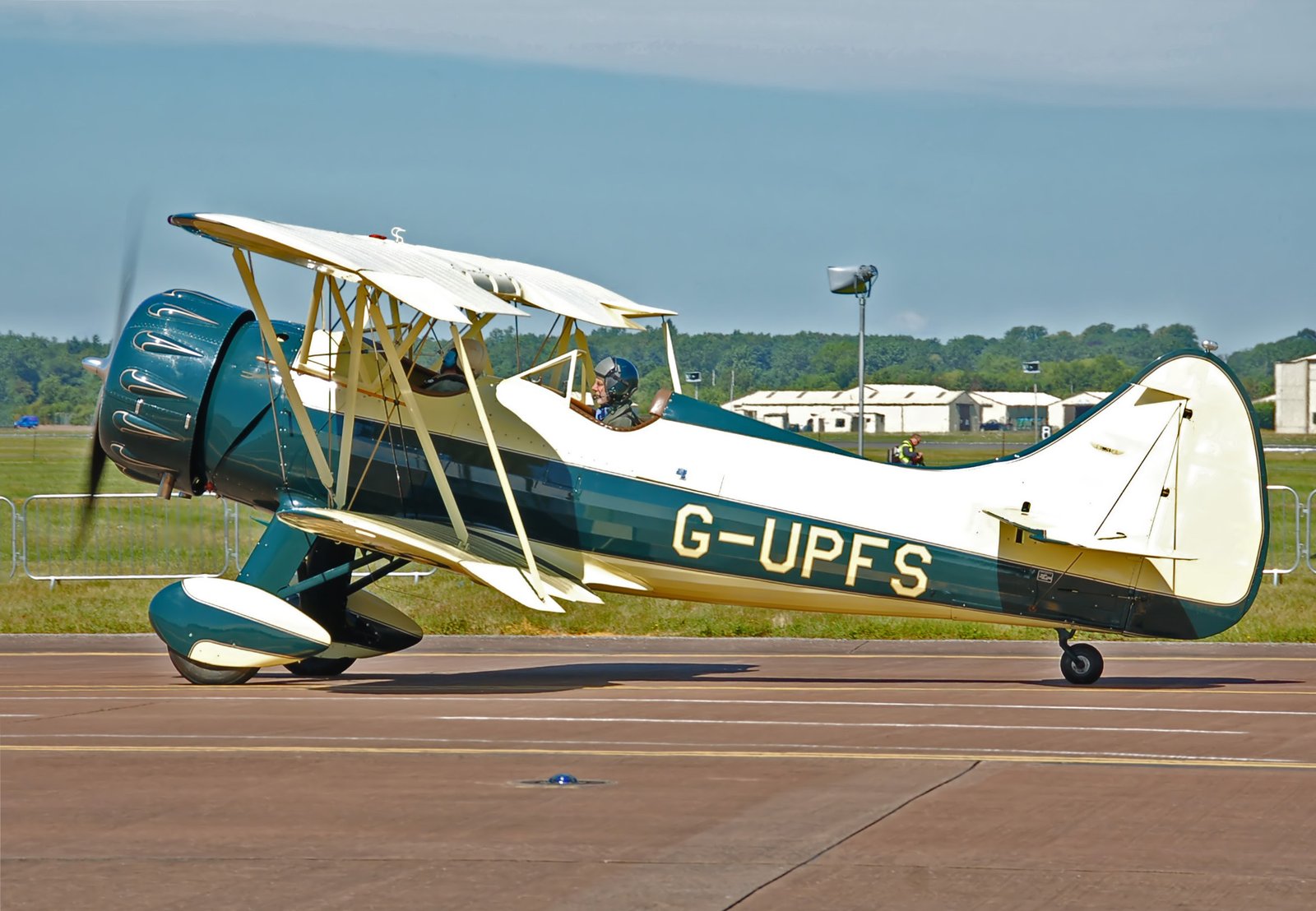
The WACO G-series biplanes emerged during aviation's transition from open cockpit to enclosed cabin aircraft, serving primarily the civilian market from 1937 through the early 1940s. These aircraft filled a specialized niche for operators requiring comfortable passenger transport while maintaining the rugged reliability that made WACO famous. The series found favor among corporate operators and wealthy private owners across 35 countries where WACO aircraft operated.
Limited military evaluation occurred during World War II, with three EQC-6 variants serving the U.S. Navy and Coast Guard under the designation J2W-1. However, like most WACO cabin models, the G-series remained predominantly civilian throughout its operational life.
The Manufacturer
The Waco Aircraft Company, originally founded as the Weaver Aircraft Company of Ohio in 1920 by George "Buck" Weaver in Lorain, Ohio, had established itself as America's premier biplane manufacturer by the time the G-series entered production. Operating from their main facility in Troy, Ohio since the late 1920s, WACO produced 62 different models over 28 years, achieving total production exceeding 10,000 aircraft.
The company's success stemmed from their systematic approach to biplane design, offering numerous engine and configuration options to meet diverse customer requirements. By 1937, when the G-series debuted, WACO had already produced over 1,623 examples of their popular Model 10 and was transitioning toward more sophisticated cabin designs as the aviation market matured.
WACO ceased aircraft production in June 1947 due to the postwar aviation slump and high development costs of their "Aristocrat" prototype. The original company dissolved, though an unrelated modern WACO Aircraft Corporation founded in 1983 continues producing YMF-5 reproductions in Battle Creek, Michigan.
Engine & Technical Details
The G-series variants utilized proven radial engines optimized for civilian operations. The EGC-7 and EGC-8 models, representing 38 of the total G-series production, employed the Wright R-760 seven-cylinder radial engine producing 320 horsepower. This powerplant, manufactured by Curtiss-Wright during the 1930s and 1940s, provided the reliability essential for passenger-carrying operations.
Alternative variants included the DQC-6 with a 285-horsepower Wright R-760, and the ZGC-7/ZGC-8 series powered by Jacobs L-5 engines producing 285 horsepower. The Jacobs powerplants, manufactured by the Jacobs Aircraft Engine Company, were noted for their smooth operation and became increasingly popular among civilian operators.
The steel-tube framework construction, pioneered by WACO designer Elwood "Sam" Junkin in the earlier Model 9, provided structural integrity while maintaining reasonable manufacturing costs. This design philosophy carried through to the G-series, combining traditional biplane ruggedness with modern enclosed cabin comfort.
Performance & Pilot Perspective
The G-series aircraft delivered cruise speeds between 150-170 mph with ranges exceeding 1,000 miles, making them practical for medium-distance passenger transport. Service ceilings above 10,000 feet provided operational flexibility, while climb rates approaching 1,200 feet per minute ensured adequate performance for the era.
Pilots appreciated the predictable handling characteristics inherited from WACO's extensive biplane experience. The enclosed cabins represented a significant comfort advancement over open-cockpit predecessors, accommodating 1-2 crew members and 3-4 passengers in weather-protected environment.
The radial engine installations provided excellent reliability records, crucial for commercial passenger operations. Unlike some contemporary designs struggling with cooling issues, the G-series maintained consistent powerplant temperatures through carefully engineered cowling designs.
Production & Legacy
Total G-series production reached approximately 77 aircraft across all variants, with the EGC-7/EGC-8 accounting for 38 examples, the ZGC-7/ZGC-8 contributing 28 aircraft, and the DQC-6 adding 11 examples. While modest compared to WACO's mass-production models like the 1,623-unit Model 10 run, the G-series represented important technological evolution toward modern cabin aircraft.
The series demonstrated WACO's ability to adapt traditional biplane construction to evolving market demands for passenger comfort and operational sophistication. However, by 1940, the biplane era was ending as monoplane designs offered superior performance and efficiency.
Today, surviving G-series aircraft remain highly valued among vintage aviation enthusiasts, with several dozen WACO biplanes of various models maintaining airworthy status worldwide. Notable examples appear in museums including collections at the National Air and Space Museum, while organizations like the National WACO Club preserve the company's technical heritage and operational history.