
Design and Development
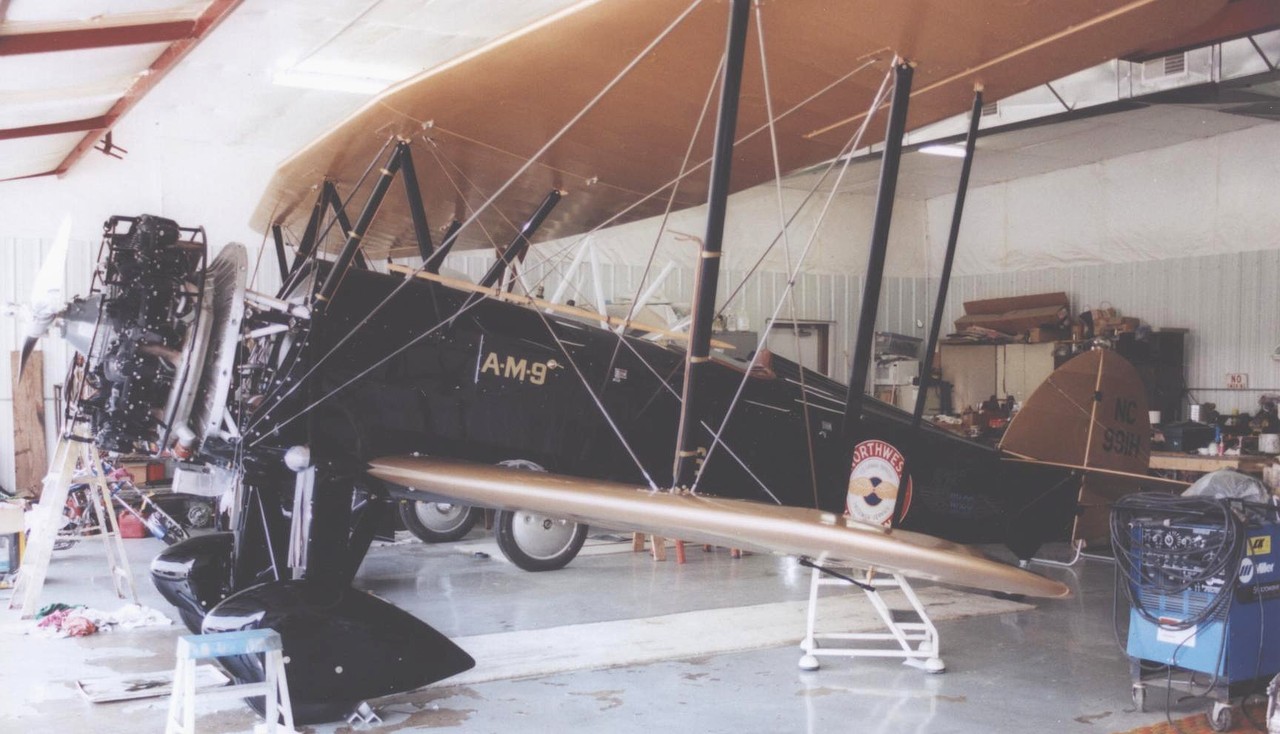
The JWM emerged from WACO's systematic approach to developing specialized variants of their successful biplane designs. Engineering teams at the company's Troy, Ohio facility took their proven ASO airframe and extended the fuselage by 14 inches, creating dedicated mail compartments positioned forward and aft of the pilot's seat. Each compartment featured lockable covers to secure valuable postal cargo during flight operations.
This stretched configuration addressed the specific needs of contract airmail carriers who required maximum cargo capacity while maintaining the reliability and performance characteristics that made WACO aircraft popular among commercial operators. The company equipped the JWM with the powerful Wright R-975 engine, a nine-cylinder air-cooled radial producing 330 horsepower—significantly more power than the 220-horsepower Wright J-5 that powered the original ASO design.
Limited Production and Service
Production of the JWM remained extremely limited, with conflicting records indicating either one or two aircraft completed during 1929. This minimal production reflected the highly competitive nature of the airmail business, where carriers often preferred proven designs with established service records over newer, unproven variants.
The documented survivor, registered as NX8550, eventually found service with the Art Davis Air Circus rather than in mail operations. This career change from postal service to barnstorming entertainment illustrated the flexible nature of general aviation aircraft during the 1930s, when economic pressures forced many aircraft into alternative roles as the airmail industry consolidated.
The WACO Aircraft Company Legacy
WACO Aircraft Company, originally founded as the Weaver Aircraft Company in 1920, had established itself as a leading manufacturer of general aviation aircraft by the time the JWM entered production. The company's relocation to Troy, Ohio in 1923 positioned it strategically in the Midwest aviation manufacturing corridor.
During its 27-year operational period from 1920 to 1947, WACO developed 62 different aircraft models and became one of America's most prolific general aviation manufacturers. The company achieved particular success with designs like the Waco Nine, which sold 276 units by 1927 and became a mainstay of barnstorming operations across the country. WACO aircraft operated in 35 countries, serving diverse roles from private sport flying to military training.
The company's focus shifted dramatically during World War II, when it became a major producer of military gliders, including the CG-4A Hadrian troop transport. However, the post-war aviation market collapse and high development costs for new designs forced WACO to cease aircraft manufacturing in June 1947. The original company transitioned to contract manufacturing until 1963, ending nearly five decades of aviation involvement.
Technical Specifications and Performance
The Wright R-975 engine that powered the JWM represented the evolution of Wright Aeronautical's successful Whirlwind radial engine series. This powerplant provided the additional thrust needed to maintain performance despite the aircraft's increased weight and drag from the stretched fuselage configuration.
As a single-seat aircraft, the JWM required pilots to handle all navigation, communication, and flight operations independently while managing mail cargo. The dual-compartment arrangement allowed for organized loading and unloading at postal facilities, though specific payload capacity figures have not survived in available records.
Preservation and Modern Status
Only one JWM survives today, preserved at the Historic Aircraft Restoration Museum at Dauster Field near St. Louis, Missouri. The aircraft displays the colorful "Art Davis Air Circus" markings that reflect its entertainment industry service rather than its original postal transport mission.
This sole survivor represents one of the rarest aircraft in the extensive WACO family, overshadowed by mass-produced models like the Waco 10 series, which achieved production numbers exceeding 1,600 units. The JWM's obscurity reflects both its limited production and its specialized role in a rapidly evolving segment of commercial aviation.
The aircraft serves as a reminder of the experimental nature of late-1920s aviation, when manufacturers regularly developed specialized variants to serve emerging market niches. While the JWM failed to achieve commercial success, it demonstrated WACO's engineering capabilities and willingness to adapt proven designs for specific operational requirements.